
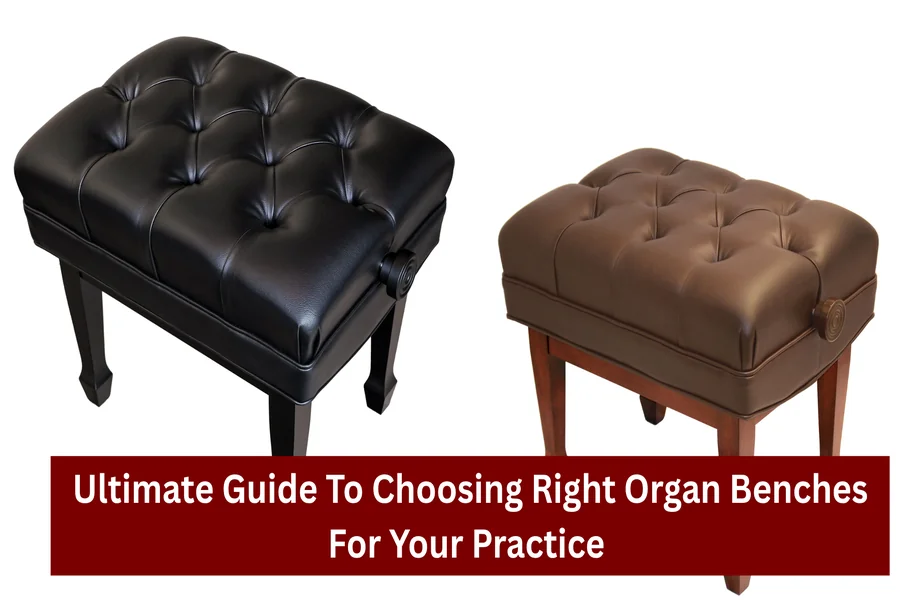

The organ bench is more than just a seat—it’s a crucial part of a musician’s performance experience.
Whether you are an organist with years of experience or a beginner learning how to use the pedals and keys, the right bench can affect your comfort level, posture, and playing technique a great deal.
If the bench you’re sitting on is warped and poorly outfitted, your back may hurt, and you may feel fatigued. Furthermore, your ability to play expressively may be hampered due to the discomfort of your bench. Conversely, the perfect organ bench helps enhance your control, endurance, and accuracy.
This guide looks at the essential features of an organ bench you should keep in mind, such as height, material, adjustability, ergonomics, design, and more, so that you can choose the organ bench that is ideal for you.
Understanding Importance of Proper Organ Bench
An organist must have the right organ bench in order to be successful. An organ bench is not just a normal chair or piano stool. This type of bench has to account for the demands of organ playing, specifically using feet and hands at the same time. The right height and placement of a bench enable a player to move across multiple keyboards (manuals) while controlling the pedalboard accurately.
Similarly, comfort and balance are key. An organist must not strain while playing for long periods of time. A well-designed bench fosters this condition by providing stable support in an upright position. Because of this alignment, fatigue does not occur in the lower back, legs, and shoulders if benches aren’t too high or too low or unstable. Moreover, the right bench helps you develop a consistent technique so you are able to transition between keys and pedals easily.
Professional musicians don’t only need an organ or piano, but a decent bench too, as it’s what they sit on to play.
4 Things You Should Look For When Choosing Right Organ Bench
Below are things you should look for when choosing the right organ bench.
1. Choosing Right Height and Dimensions
Choosing an organ bench requires taking the height and size into account.
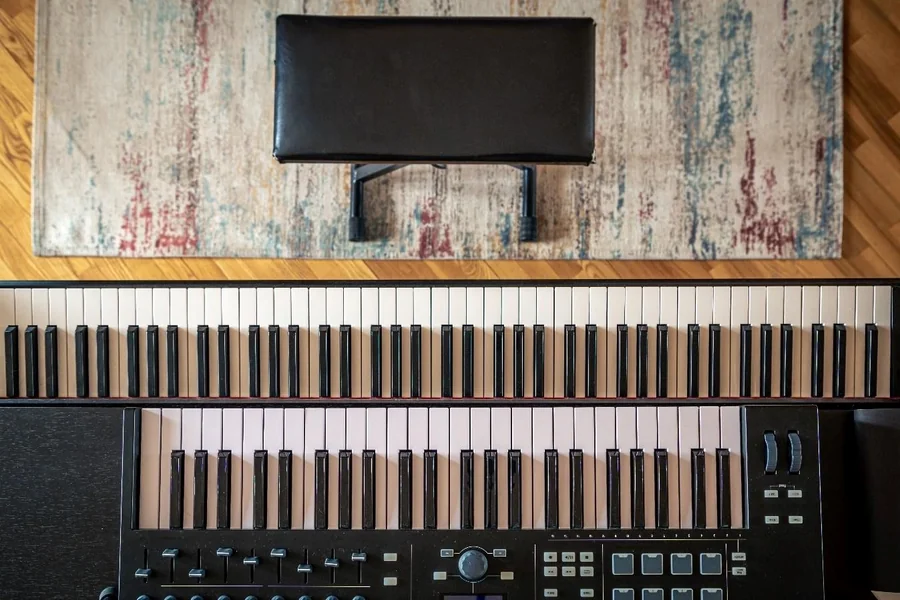
Every player’s body is different, so one size never fits all. The optimum height enables you to reach the pedals without unnecessary stretching or bending. You may not be able to manage pedal control properly due to loss of balance from the height of the bench. If your seat is too low, your legs will become crunched up, and this is uncomfortable.
The height of the organ benches mostly ranges from 25 inches to 30 inches. But most benches made today come with an adjustable mechanism to allow players to set their height as per convenience. The bench should also be of sufficient width and depth, especially for instruments with multiple manuals.
2. Exploring Adjustable vs. Fixed Benches
Most organ benches are adjustable or fixed. Both have benefits and are suited to different settings as per preferences.
Adjustable benches add versatility. As such, they suit institutions, churches, or practice spaces where multiple players use the same instrument. Most benches have a mechanical or hydraulic device that permits users to easily increase or decrease the height. The adaptable design allows each player to find their best posture and pedal reach for maximum comfort and efficiency.
On the other hand, professional organists who have set up their equipment choose to use fixed benches. You can count on a flat bench for stability and durability without moving parts.
3. Materials and Build Quality
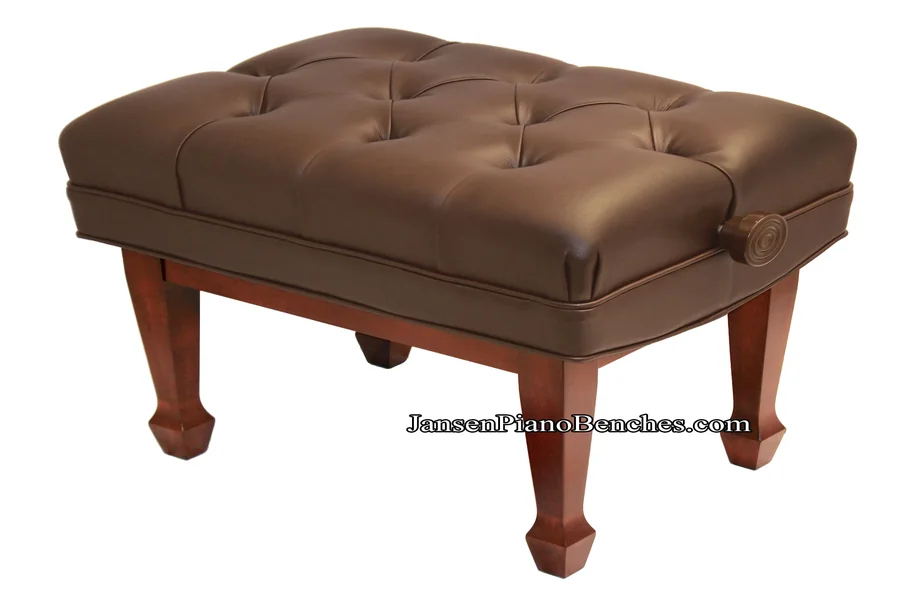
The durability, look, and comfort of an organ bench are affected by its materials and make. Traditionally, organ benches were constructed of solid hardwoods such as oak, maple, or mahogany. This allows for strength along with an attractive hardwood finish. The bench is made of quality wood, which will not wobble or creak when used for years. This is essential to remain focused during practice for long hours.
The finish and upholstery also contribute to comfort. Some types of benches come with padded tops covered in leather or thick vinyl for a comfortable seat over long playing hours.
4. Aesthetic Design and Compatibility with Your Organ
Although comfort and functionality are of primary importance, do not forget what the organ bench looks like. It is essential to coordinate the design and finish of the bench with your organ console.
At churches, concert halls, or home studios, the bench often becomes an aesthetic component of the staging. When the color, wood grain, and style are the same, the instrument looks nicer, and it encourages you to practice more.
Some modern benches are sleek and minimalist, while others feature old-world craftsmanship to match classic pipe organs. You might also notice benches with storage compartments for music sheets or accessories.
Conclusion
The organ bench you choose is not a small decision. It is a key element to your playing comfort and playing technique. The ideal bench provides support to the body, maintains proper posture, and ensures smooth movement of hands and feet for extended practice.
You can choose the right one after considering the height and adjustment features, materials used, ergonomic design, and style or design of the bench. Your bench is more than a seat. It is an extension of your musical expression and physical stability.
No matter if you are a student, a performer, or a professional organist, taking time to choose the proper organ bench is worth it. You will have comfort, durability, and artistry in every note that you play.