
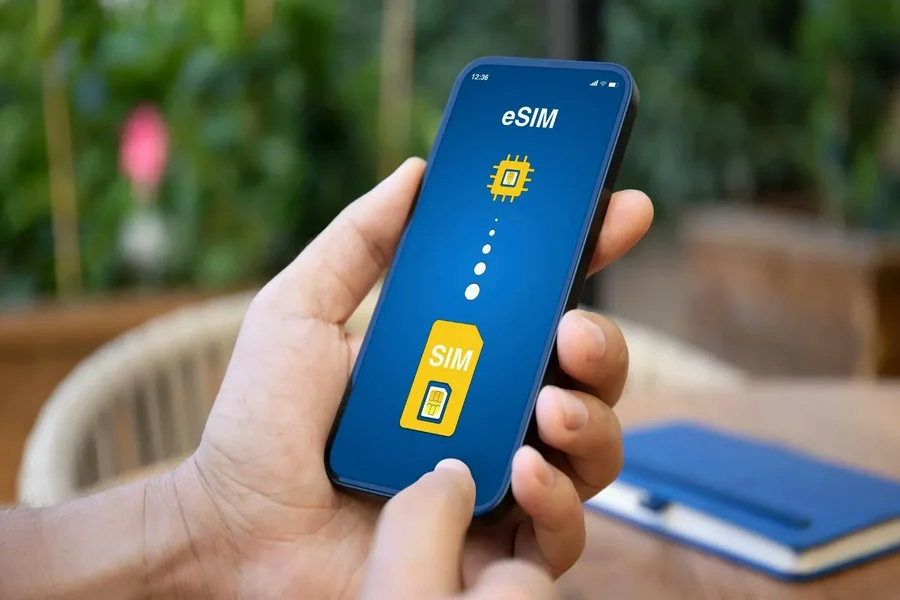

For decades, our entire mobile existence—our phone number, our ability to connect, and even our most fundamental digital identity—has been shackled to a tiny, easily-lost piece of plastic: the Subscriber Identity Module (SIM) card. This relic of a bygone era represents a centralized model of connectivity, where Mobile Network Operators (MNOs) dictated access, pricing, and geography.
If you wanted to travel, you endured the hassle of swapping cards, the anxiety of exorbitant roaming fees, or the frustration of searching for a local carrier store. This physical dependency gave traditional operators enormous control over a user’s global mobile life.
Today, this paradigm is collapsing. The new standard is the eSIM, or embedded SIM—a reprogrammable chip built directly into a device. This quiet revolution is far more than a convenience upgrade; it is a fundamental shift that puts control of mobile identity back into the hands of the user. The movement towards this digital liberation is being accelerated by forward-thinking platforms.
Tools like eSIM Plus are not just selling data plans; they are providing the infrastructure for a truly autonomous global connection, allowing users to instantly switch networks and reclaim control over their access. This shift from physical constraint to digital flexibility is a key enabler for a more secure, decentralized, and globally connected future.
From Ownership to Access: The Shift in Connectivity Paradigm
The traditional SIM card was a purchase—you owned the card, and by extension, you were locked into the operator’s ecosystem associated with that physical object. The eSIM model is different. It is built on a principle of “access as a service”.
With an eSIM, users no longer own a piece of a carrier; they lease a digital profile onto a secure chip embedded in their device. This reprogrammability is the core of the unshackling. It allows users to store multiple carrier profiles simultaneously—a profile for their home network, another for cross-border travel, and perhaps a third for a specific IoT device—and switch between them instantly with a tap. This freedom fosters hyper-personalization, enabling users to choose micro-tariffs optimized for specific tasks or short periods, moving away from restrictive, one-size-fits-all monthly packages. Travelers and residents looking for seamless connectivity can benefit from the best eSIM for India, ensuring reliable service across cities and regions without the hassle of physical SIM cards.
This shift mirrors the evolution of computing from desktop software licenses (physical ownership) to cloud subscriptions (flexible access). The eSIM transforms the mobile phone from a fixed endpoint into a flexible connectivity hub, programmable and adaptable to any geopolitical boundary or usage need.
The Invisible Backbone: Powering the IoT Ecosystem
The most profound impact of the eSIM may not be in consumer travel, but in the Machine-to-Machine (M2M) and Internet of Things (IoT) sectors. The current scale of the IoT—projected to connect billions of devices—makes the logistics of physical SIM cards utterly impractical.
Imagine a fleet of self-driving delivery vehicles operating across three countries. With physical SIMs, each vehicle would require manual card swaps or complex roaming agreements. With industrial-grade eSIMs (eUICC), the devices can be provisioned remotely, globally, and at scale. This capability is critical for:
- Smart сities. Streetlights, environmental sensors, and traffic cameras can be deployed anywhere in the world and activated instantly with a local network profile, optimizing costs and reliability.
- Global logistics. Shipping containers and assets can automatically connect to the best available network in every port they visit, ensuring an unbroken data chain crucial for supply chain transparency.
- Autonomous systems. Agricultural equipment or drones can switch networks based on signal strength or required bandwidth, a necessity for real-time operation where connectivity failure is not an option.
eSIM technology provides the secure, flexible, and remote infrastructure needed for the next generation of global, ubiquitous smart devices. As one expert noted, the M2M segment currently dominates the eSIM market, highlighting its pivotal role in industrial automation and the connected economy.
Security, Sovereignty, and Digital Freedom
Beyond convenience and scale, the eSIM offers substantial advancements in security and user sovereignty.
Enhanced Security
Physical SIM cards are susceptible to SIM-swapping fraud, a method where a scammer convinces a carrier to transfer a phone number to their own device, often bypassing two-factor authentication. Because the eSIM profile is cryptographically tied to the embedded chip in the device, it is significantly harder to clone or transfer without multiple layers of digital authentication. The identity credentials within the eSIM are stored in a tamper-resistant, secure element, offering a higher degree of protection than a standard removable plastic card. Travelers visiting Japan are increasingly choosing an eSIM Japan because it combines robust security features with seamless connectivity, making it easier to stay connected safely while navigating one of the world’s most technologically advanced cities.
User Sovereignty and Decentralization
The ability to instantly choose and switch carriers grants the user unprecedented control. In a traditional system, if your carrier service falters, you are powerless until your contract is up. With eSIM, the power dynamic shifts: poor service can be instantly penalized by the user switching providers. This competitive pressure drives quality and transparency.
Furthermore, the technology aligns perfectly with the burgeoning Decentralized Identity (DID) movement. When combined with technologies like blockchain, the eSIM can become a secure, cryptographically verified root of trust for a user’s mobile identity. This paves the way for a future where you can connect to a network or prove your identity without handing over personal data to a centralized authority, marking a true step toward digital freedom. The eSIM acts as the crucial hardware-based identity layer that authenticates the user in a decentralized world.
The Future: The Invisible Connective Tissue
The trajectory of this technology is clear: the physical SIM slot is destined to become obsolete. Major device manufacturers are already driving this change, with some flagships in certain regions already shipping as eSIM-only devices.
As this happens, mobile connectivity will become an invisible, seamless utility. The choice of a network will be abstracted away from hardware and driven purely by software logic. The user will simply choose their desired coverage area and price point, and the device (or an aggregator platform) will manage the profile provisioning automatically.
Platforms that currently facilitate this transition, such as eSIM Plus, will evolve into global Mobile Identity Providers, managing vast portfolios of profiles not just for travelers, but for entire fleets of autonomous vehicles, drone networks, and IoT devices. The focus will shift entirely to data management, security, and global coverage consistency.
By 2030, the global market for eSIM is projected to be valued well over $20 billion, solidifying its position as the dominant form of connectivity across smartphones, wearables, and industrial applications.
Unlocking Our Chip
The shift to eSIM is a defining moment in modern technology, marking the end of the mobile carrier’s stranglehold on our digital identity. It is more than just eliminating roaming fees; it is about establishing a foundation for user sovereignty, robust IoT infrastructure, and advanced digital security. The physical SIM card is a relic of the past; the future is an invisible, programmable chip that finally puts users in charge of their global digital lives.