

For many English learners, vocabulary acquisition is not the hardest part—retention is. New words are often memorized in isolation, reviewed briefly, and then quickly forgotten. Despite the popularity of flashcards and word lists, learners frequently struggle to recall vocabulary in real conversations or writing.
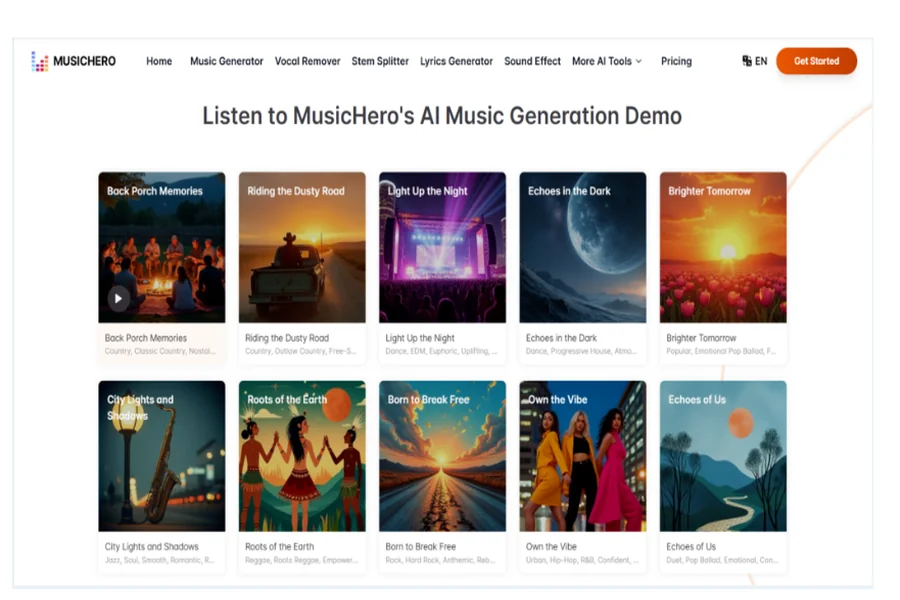
Recently, there has been increasing interest in using creative, multisensory tools to support language learning. One emerging approach is text-to-music AI, which allows learners to turn words, phrases, or short texts into songs. By combining rhythm, repetition, and emotion, an AI music generator can help learners form stronger memory connections than traditional methods alone. Tools like MusicHero.ai illustrate how AI music generation technology can be used not as entertainment, but as a practical solution for improving vocabulary retention.
How Text-to-Music AI Supports Vocabulary Retention
Remembering vocabulary becomes easier when words are learned in context rather than as isolated items. Text-to-music AI helps bridge this gap by transforming vocabulary, short phrases, or example sentences into structured audio. Instead of silently reading or repeating a word, learners hear it embedded in rhythm and melody. This process encourages deeper cognitive processing, which is essential for long-term memory. Compared with traditional memorization techniques, an AI music generator from text engages both language and auditory systems at the same time, making recall more natural and automatic.
Another reason text-to-music AI supports vocabulary retention is repetition without monotony. When learners listen to AI-generated songs multiple times, repetition feels less mechanical and more enjoyable. This is especially effective for high-frequency vocabulary and everyday expressions that benefit from repeated exposure. By using an AI music generator, learners can turn passive listening into active reinforcement—helping new words move from short-term memory into practical, usable language.
What Makes MusicHero.ai Useful for Language Learners
Text-to-Music Generation for Contextual Vocabulary Learning
Unlike traditional memorization tools, MusicHero.ai allows learners to turn words, phrases, or short sentences directly into music. By using text to music AI, vocabulary is no longer learned in isolation but embedded in meaningful, memorable contexts. This makes it easier for learners to recall words naturally when speaking or writing, rather than translating them word by word.
AI Lyrics Generator for Building Natural Sentence Patterns
Vocabulary retention improves when learners see how words function inside real sentences. The built-in AI lyrics generator helps expand simple descriptions into complete, well-structured lyrics, reinforcing grammar, collocations, and common sentence patterns. This approach supports deeper understanding beyond definitions, especially for learners aiming to improve fluency.
Customizable Styles to Strengthen Emotional Memory
MusicHero.ai allows learners to adjust style, mood, and vocal presence, helping them personalize the learning experience. Emotional engagement is a proven factor in memory formation, and using an AI music maker to match music with personal preferences makes vocabulary practice more engaging. Learners are more likely to revisit and remember words tied to music they enjoy.
Reinforce Pronunciation and Word Stress
Accurate pronunciation depends on more than knowing how a word looks—it requires repeated exposure to correct sounds, stress, and rhythm. By listening to vocabulary embedded in AI songs, learners can hear how words are naturally pronounced and stressed within a flowing structure. This makes it easier to notice pronunciation patterns and self-correct over time.
How to Use AI Music Maker for Vocabulary Learning
Step 1: Choose the Right Vocabulary or Text
Start by selecting a short article, paragraph, or set of words that you want to remember. Ideally, choose content you already find interesting, as familiarity helps comprehension. You can also use the AI lyrics generator to input specific words you want to memorize and let the tool create unique lyrics that naturally include them. This step ensures that vocabulary appears in context, which is far more effective than memorizing isolated word lists.
Step 2: Turn Text into Music with AI Music Generator
Next, paste your chosen text or generated lyrics into a text-to-music AI tool and generate a simple song or melody. Using an AI music generator allows you to adjust mood or style based on personal preference, making the learning experience more engaging. This transformation helps learners associate vocabulary with rhythm and emotion, strengthening memory connections.
Step 3: Reinforce Memory Through Repeated Listening
Once the music is generated, listen to it regularly and try to recall the words or phrases without looking at the original text. This repeated exposure helps move vocabulary from short-term to long-term memory. When used consistently, an AI music maker like MusicHero.ai turns passive listening into an active vocabulary review method that fits easily into daily study routines.
Other Practical Ways AI Music Generators Can Support English Learning
Learning Idioms and Fixed Expressions Through Songs
Idioms and fixed expressions are often difficult to remember because their meanings are not literal. By turning them into short songs with an AI song generator, learners can hear idioms used naturally within a rhythmic structure. This makes abstract expressions easier to recall and helps learners remember not just the meaning, but also how and when to use them correctly in context.
Using AI Music as Purposeful Study Music
Many learners listen to study music or relaxing music while reviewing English, but this audio is usually disconnected from what they are learning. An AI music generator allows learners to replace generic background tracks with music that actually contains target vocabulary or sentences. This creates a more focused learning environment where listening time reinforces language input instead of competing with it.
Improving Listening Skills with Personalized Language Content
Listening practice is more effective when the content matches the learner’s level and interests. With a text-to-music AI, learners can generate songs based on familiar topics or recently studied texts. This makes listening practice more comprehensible and less frustrating, especially for learners who struggle with overly complex native audio materials.
Supporting Writing Practice Through AI-Generated Lyrics
Writing often feels intimidating because learners are unsure how to structure sentences naturally. Using an AI lyrics generator, learners can turn simple ideas into complete, well-formed lyrics, providing clear examples of sentence flow and word choice. This use case helps learners improve writing confidence while reinforcing vocabulary and grammar patterns in a creative, low-pressure way.
Conclusion: Making Vocabulary Stick with Text-to-Music Learning
Vocabulary retention remains a challenge for many English learners, not because of a lack of effort, but because words are often learned without enough context, repetition, or emotional engagement. As this article has shown, text-to-music AI offers a different way to approach vocabulary learning by combining language with rhythm, structure, and sound. When words are experienced through music rather than memorized in isolation, recall becomes more natural and durable.
Used thoughtfully, an AI music generator can complement traditional study methods by turning vocabulary practice into an active listening experience. Rather than replacing established techniques, text-to-music learning expands the toolkit available to learners who want more effective and engaging ways to make new vocabulary truly stick.