
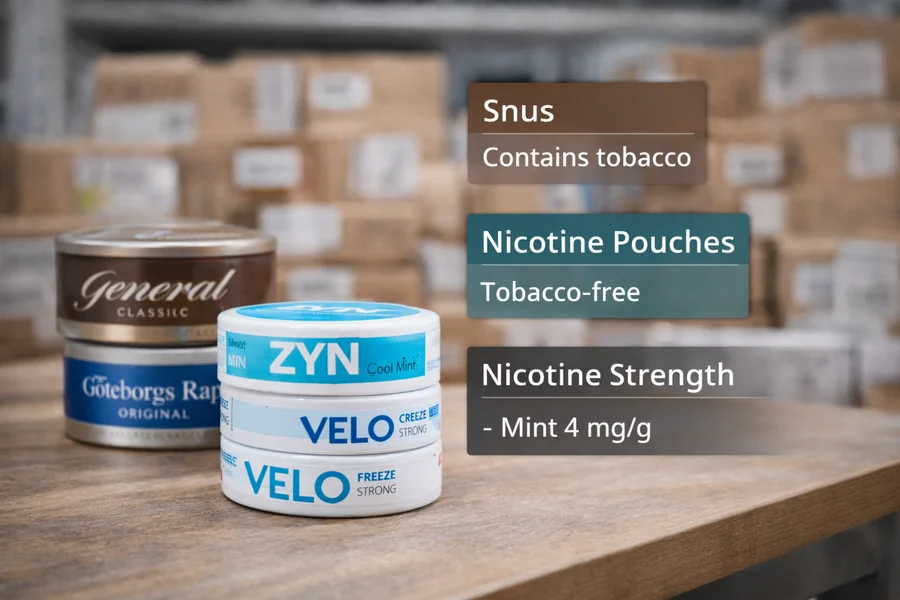

In everyday English, we lean on idioms to say a lot in a few words—“read the fine print,” “the devil is in the details,” or “don’t judge a book by its cover.” That mindset applies surprisingly well to snus and nicotine pouches, where a single term on a label can change what a product is, how it’s marketed, and what rules apply.
Because nicotine products are regulated and age-restricted in many markets, the goal (especially for businesses) isn’t hype—it’s clarity. If you’re a retailer or webshop operator, understanding the vocabulary helps you make safer purchasing decisions, communicate accurately with adult customers, and reduce compliance headaches.
Snus vs. nicotine pouches: why definitions aren’t just semantics
People often use “snus” as an umbrella term, but product categories can differ by market and by how the product is made or presented. That’s why you’ll see multiple terms used in wholesale catalogs, product descriptions, and customer queries.
When you evaluate product listings, pay attention to:
- How the product is described (snus, nicotine pouches, “tobacco-free,” etc.)
- Any mention of nicotine strength or format
- Whether the supplier frames the offering for business customers (B2B) and responsible distribution
This kind of language isn’t just marketing—it’s often a clue to how organized (or not) the supplier is about documentation, catalog structure, and consistent supply.
The “fine print” checklist for retailers and webshops
If you sell regulated products, the purchasing process should look more like procurement than impulse buying. A reliable supplier makes it easier to stay consistent: stable stock, clear commercial terms, and support when you have questions.
Here’s a practical checklist many businesses use when comparing options:
- Clear B2B positioning: Who is the offer for—retailers/webshops/distributors?
- Catalog clarity: Can you browse by collections/brands without confusion?
- Fulfillment reliability: Stated focus on fast fulfillment and stable supply (and evidence in operations/support)
- Support access: Named contact or reachable sales channel for business questions
- Responsible selling alignment: Your own age-gating and compliance practices match the markets you serve (this is on you, but the supplier relationship should support it)
Finding a structured wholesale partner
If you’re researching wholesale options, it helps to start with platforms that explicitly describe how they serve businesses—because it usually means clearer workflows and fewer surprises. PouchConcept, for example, describes itself as a wholesale distributor for retailers, webshops, and distributors, emphasizing competitive pricing, stable supply, and fast fulfillment.
To review how one B2B platform structures its offering and messaging, you can look at this snus supplier overview and compare it against the checklist above.
When the language is clear, the expectations tend to be clearer too—and in categories like snus, that clarity is often what keeps operations smooth, customers satisfied, and compliance questions manageable.