
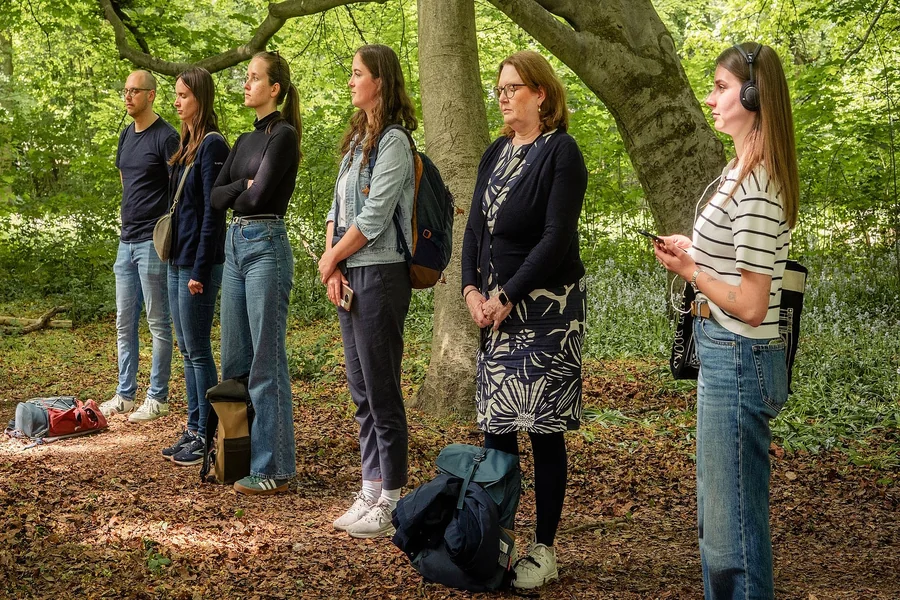

Acoustic ecology starts with a deceptively simple premise: every environment has a sound signature, and that signature carries information about the health, character, and activity of that place. It’s a field that began with composer R. Murray Schafer in the late 1960s, when he started documenting the sonic environment of Vancouver and noticed that the ratio of natural to human-made sound was shifting in ways that were measurable — and meaningful.
What Schafer and his colleagues at the World Soundscape Project established was that listening to an environment analytically, rather than just functionally, reveals things that visual observation misses entirely. That insight has since traveled well beyond environmental research, influencing how sound designers, documentary filmmakers, urban planners, and audio archivists think about the relationship between place and sound.
The Three-Part Framework That Changed How We Listen
Schafer introduced a vocabulary for talking about soundscapes that remains in wide use today. The framework divides environmental sounds into three categories: geophony (non-biological natural sounds like wind, water, and weather), biophony (sounds produced by living organisms), and anthrophony (sounds produced by human activity). The third category — anthrophony — is where acoustic ecology gets most complicated, and most relevant to audio practitioners.
Human-generated sound dominates most of the environments we move through daily. Traffic, machinery, construction, conversation, music leaking from headphones, HVAC systems running in every building — these sounds layer on top of each other into a dense, often chaotic texture that the brain learns to filter out through habituation. That filtering is useful for daily function, but it makes careful listening harder.
Acoustic ecologists argue that this habituation comes with a cost: we stop paying attention to what our sonic environment is communicating, and we lose the ability to notice when it changes in significant ways. Relearning deliberate listening is central to the discipline.
Why Human Sound Is the Most Revealing Layer
Of the three soundscape categories, anthrophony tells you the most about a specific place and moment in time. The particular mix of human sounds in an environment — their density, their character, their rhythm — encodes social and economic information that’s difficult to capture any other way. A busy market in the morning sounds fundamentally different from the same space at closing time, and both sound different from a market in a different city or decade.
This is part of why acoustic ecologists, documentary sound recordists, and oral historians treat human ambient sound as primary source material rather than background noise. Crowd murmur, distant footsteps, the cadence of overlapping conversation — these textures locate a scene in time and space more precisely than almost any other audio element.
For sound designers and post-production editors, this presents both a challenge and an opportunity. Recreating a convincing human environment requires layering with care: too sparse and the space feels empty; too dense and it becomes unreadable. Knowing where to find human sound effects that are recorded with enough dynamic range and textural variety to actually build from — rather than just fill space — makes a significant difference in how the final mix reads.
How Acoustic Ecology Informs Sound Design Practice
The practical applications of acoustic ecology thinking in sound design are more direct than they might first appear. Designers who understand soundscape composition — the relationship between foreground, background, and keynote sounds — make better layering decisions. They think about what a space should sound like as a whole, rather than just what individual effects to drop into a timeline.
Keynote sounds, in Schafer’s framework, are the sounds so consistent in an environment that they shape how everything else is perceived — like low traffic rumble in an urban scene, or ocean surf on a coastal location. Getting the keynote layer right sets the perceptual context for every other sound in the mix. When it’s wrong, the entire soundscape feels slightly unmoored, even if no single effect is obviously out of place.
Sound Archives as Ecological Records
One dimension of acoustic ecology that rarely gets discussed outside specialist circles is its archival function. Recordings made for documentary or design purposes become historical documents over time — sonic snapshots of places and cultures that no longer exist in the same form.
Urban soundscapes from fifty years ago sound dramatically different from their modern equivalents. Species-rich natural environments that have since been degraded left recordings behind that now function as ecological baselines. The act of careful sound recording, regardless of its immediate purpose, contributes to a record of how the world sounded at a particular moment. That’s a responsibility worth taking seriously.