
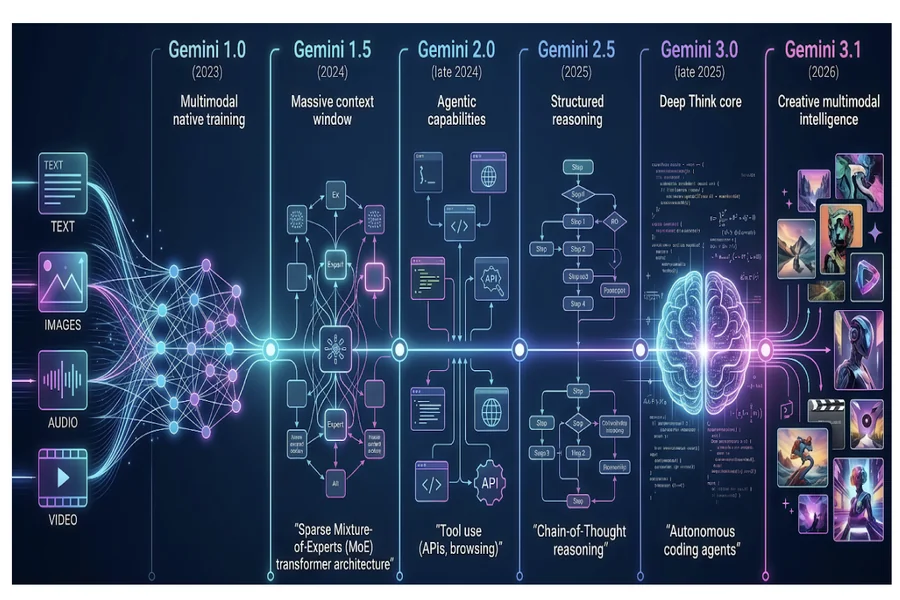

Human communication relies heavily on visual shorthand—such as political cartoons, illustrated books, and digital memes—where text and imagery merge to create figurative meaning. Because traditional computer vision and language pipelines analyze these assets in isolation, they often miss the cultural context and deliver inaccurate, literal translations.
To bridge this gap, digital lexicographers and developers can leverage the Gemini 3 Pro API to build automated processing pipelines. By evaluating text and graphics simultaneously within a unified semantic space, this multi-modal interface accurately interprets, categorizes, and translates complex cultural metaphors at scale.
Deconstructing Visual Metaphors via the Gemini 3 API Multimodal Architecture
Idioms are famously difficult for software to process because their meaning cannot be derived from the literal definitions of individual words. When these expressions are translated into graphic formats, the complexity doubles. Traditional computer vision can identify a physical “cat” and a physical “bag,” but it fails to realize that an illustration of a cat escaping a bag signifies a revealed secret.
The native multi-modal structure of the Gemini 3 API changes this workflow by evaluating visual assets and text blocks within the same operational layer. In practical linguistic engineering applications, this unified architecture delivers three major benefits:
- Cross-Modal Semantic Alignment: Instead of running image classification and text analysis sequentially, the model maps the relationships between visual elements and written prose simultaneously. This prevents the model from dropping the figurative context.
- Contextual Sifting of Graphic Clues: Idiomatic expressions often contain subtle visual variations depending on the era or region. The API leverages its large 1 million token input context window to hold extensive cultural dictionaries and stylistic rules in memory, using them to ground its analysis of the artwork.
- Resolution of Ambiguity: A graphic depicting a person running could be literal or metaphorical (“running out of time”). By assessing surrounding narrative text, structural captions, and the visual composition together, the system determines the true intent with high accuracy.
Deploying Vision Ingestion Streams Using Gemini 3 Pro API Documentation
Building a scalable localization pipeline for illustrated literature or digital media archives requires an organized integration strategy. Based on standard technical specifications, developers can interface directly with the production endpoint using standard authentication protocols to manage mixed-media data streams smoothly.
Implementing the Uniform Multi-Modal Ingestion Schema
The integration framework simplifies mixed payloads by utilizing a unified messaging structure. Rather than requiring distinct data pipelines or specialized parsing logic for raw text, vector graphics, or physical document scans, all assets are processed through a single, consistent architecture.
By setting the execution parameters to ingest visual media natively alongside textual data, development teams can pass high-resolution graphic frames, historical text scans, and editorial sketches synchronously with their targeted text prompts. This architecture allows the core engine to analyze complex visual metaphors within their broader narrative contexts without fragmented processing logic or decoupled data streams.
Utilizing Standardized Formats for Linguistic Databases
Converting creative visual expressions into a stable database requires predictable, clean system outputs. The interface supports this capability by allowing engineering teams to enforce a strict runtime template layout that guides the underlying model’s reasoning pattern.
When parsing extensive collections of illustrated materials, developers can define strict operational structures to extract specific thematic metadata—such as identifying surface-level objects, mapping underlying cultural sentiment, and selecting equivalent localized phrases. The core engine aligns its analytical breakdown directly with this predefined blueprint, generating uniform outputs that populate digital dictionaries or translation management systems automatically without requiring secondary engineering intervention.
Navigating Gemini 3 Pro API Protocol Restrictions and Production Deployment
When constructing multi-modal pipelines for public research or large-scale digital publishing, engineering teams must configure their operational environments carefully to ensure runtime stability, control latency, and maintain data integrity.
Understanding Mutually Exclusive Operational Parameters
According to the pipeline development guidelines, certain analytical processing capabilities are structurally incompatible and cannot be invoked simultaneously within the same payload. Specifically, real-time web verification services and external macro tool automation function as mutually exclusive operations.
A single programmatic request cannot trigger both features; workflows requiring dynamic web checking must be kept entirely separate from internal execution routines. Furthermore, combining strict output layout enforcement with external interactive tool paths in a single data transmission is completely unsupported, meaning developers must design their data validation pipelines to execute sequentially based on the primary system requirement.
Sandbox Testing and Key Safety
Before running high-volume automation across extensive media catalogs, development teams should utilize isolated environments to refine prompt engineering and validate data compliance. Testing small asset batches ensures the model correctly links visual components to their broader cultural meanings before opening the infrastructure to enterprise-scale processing.
Throughout this implementation lifecycle, securing system credentials remains critical. Production operations should manage their unique Gemini 3 Pro API key strictly through secure server environment variables and automated rotation protocols rather than embedding access credentials within shared code repositories.
Cost Analysis and Budgeting: Evaluating the Gemini 3 Pro API Price
The long-term viability of AI-driven linguistic research and multi-modal localization depends heavily on computational overhead. When scaling up to process millions of image tokens, illustrated archives, or high-resolution graphic datasets, standard context-based pricing models can quickly overwhelm a project’s financial planning.
Official Gemini 3 Pro API Pricing
Standard official pricing models scale up rapidly as the data volume increases per request. For smaller multi-modal payloads under 200k tokens, official baseline rates average $2.00 per 1M input tokens and $12.00 per 1M output tokens. However, when handling extensive text archives or high-context graphic materials that exceed the 200k token threshold, these official rates double to $4.00 per 1M input tokens and $18.00 per 1M output tokens, significantly inflation the operational cost of comprehensive semantic analysis.
Democratizing High-Context Media Analysis via Kie.ai
To remove these financial barriers for localized translation studios and digital dictionary creators, utilizing optimized infrastructure through Kie.ai offers an economically predictable flat-rate alternative. Kie.ai completely removes the penalty for large data payloads, delivering standard multi-modal processing at a fixed rate of $0.50 per 1M input tokens and $3.50 per 1M output tokens, regardless of the context size or graphic volume.
H3: Quantifying the Budget Savings for Lexicography
For academic institutions, independent translators, and digital publishers, implementing this optimized access route results in a 70-75% reduction in token processing overhead compared to standard high-context pricing tiers. By significantly reducing the financial burden of large-scale semantic inference, teams can reallocate their limited financial resources away from infrastructure maintenance and toward active cultural research, manual software refinement, and high-quality content curation.
Conclusion: The Future of Cultural Ingestion
Moving from literal text processing to native multi-modal analysis marks a significant advance in computational linguistics. By using high-capacity context windows and unified vision-text architectures, developers can process complex, culturally dependent visual metaphors without fragmentation errors. This structured approach ensures that the nuanced relationships between imagery and written language are accurately preserved and categorized across digital platforms.
For development teams and language researchers preparing to deploy high-volume extraction pipelines, complete integration details, code examples, and the full Gemini 3 Pro API documentation can be found through specialized developer portals.