
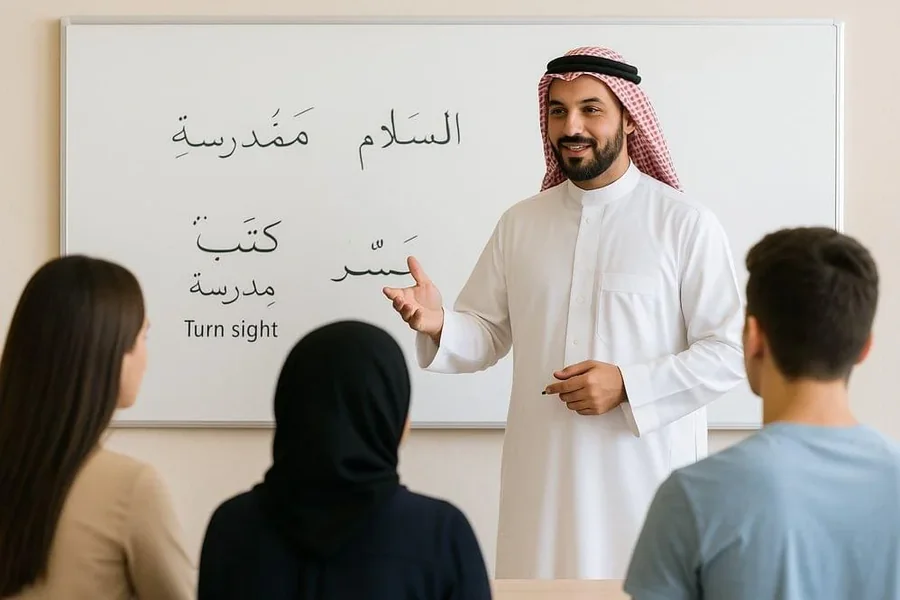

Starting a conversation in Arabic can feel exciting, but it can also feel confusing for beginners. You may know how to say hello, but what comes after that? How do you ask someone’s name? How do you respond politely? And, just as important, how do you end the conversation without sounding too formal, too abrupt, or unnatural?
Arabic conversations usually follow simple social patterns. People greet each other warmly, exchange polite questions, introduce themselves, and often close with kind wishes or farewell phrases.
Once you learn these basic steps, you can handle many everyday situations with more confidence. If you want to explore more ways to close a friendly chat, you can also learn how to say see you later in arabic and use it naturally with friends, classmates, or Arabic-speaking colleagues.
Understanding Formal vs. Informal Arabic Conversations
Before you start speaking, it helps to understand the difference between formal and informal Arabic. Formal Arabic, often called Modern Standard Arabic, is used in writing, education, news, speeches, and formal settings. It is understood across the Arab world, but people do not usually use it in full for casual daily conversations.
Informal Arabic refers to spoken dialects, such as:
- Egyptian Arabic
- Levantine Arabic
- Gulf Arabic
- Moroccan Arabic.
These dialects vary from country to country, but many basic greetings and polite expressions are widely understood.
For beginners, it is useful to learn clear Modern Standard Arabic phrases first, then add common spoken versions later. This gives you a strong base and helps you communicate respectfully in different Arabic-speaking contexts.
Common Arabic Greetings for Starting a Conversation
Most Arabic conversations begin with a greeting. Some greetings work in both formal and informal settings, while others suit a specific time of day. The phrases below give beginners a practical starting point.
| Arabic | Pronunciation | Meaning | Use |
|
السَّلَامُ عَلَيْكُمْ |
as-salāmu ʿalaykum | Peace be upon you | A polite greeting used in many Arab and Muslim communities. |
|
وَعَلَيْكُمُ السَّلَام |
wa ʿalaykumu as-salām | And peace be upon you | The usual reply to as-salāmu ʿalaykum. |
|
صَبَاحُ الخَيْر |
ṣabāḥu al-khayr | Good morning | A common morning greeting. |
|
صَبَاحُ النُّور |
ṣabāḥu an-nūr | Morning of light | A warm reply to ṣabāḥu al-khayr. |
|
مَسَاءُ الخَيْر |
masāʾu al-khayr | Good evening | A common evening greeting. |
|
مَرْحَبًا |
marḥaban | Hello | A simple greeting that most learners can use right away. |
How to Introduce Yourself in Arabic
After greeting someone, the next step is often a short introduction. Arabic introductions can stay simple. You do not need long sentences to sound natural.
| Arabic | Pronunciation | Meaning | Use |
|
اِسْمِي أَحْمَد |
ismī Aḥmad | My name is Ahmad | Use ismī before your name. It works for male and female speakers. |
|
أَنَا سَارَة |
anā Sarah | I am Sarah | A short, natural way to introduce yourself. |
|
أَنَا مِنْ كَنَدَا |
anā min Kanadā | I am from Canada | Use anā min plus a country or city. |
|
أَنَا طَالِب |
anā ṭālib | I am a student | Used by a male speaker. |
|
أَنَا طَالِبَة |
anā ṭālibah | I am a student | Used by a female speaker. |
|
أَتَعَلَّمُ العَرَبِيَّة |
ataʿallamu al-ʿarabiyyah | I am learning Arabic | A helpful sentence when you want others to speak slowly. |
Saying Your Name
The easiest way to say your name is ismī, which means my name. You can say ismī Daniel or ismī Layla. This form is clear and works well in formal and informal situations. You can also use anā before your name, especially in a relaxed conversation.
The two words work for both male and female speakers.
Asking Someone’s Name
Arabic often changes depending on whether you speak to a male or female. Notice the difference in the ending, -ka for make, -ki for female.
| Arabic | Pronunciation | Meaning | Use |
|
مَا اسْمُكَ؟ |
mā ismuka? | What is your name? | Use this when speaking to a male. |
|
مَا اسْمُكِ؟ |
mā ismuki? | What is your name? | Use this when speaking to a female. |
|
تَشَرَّفْتُ بِمَعْرِفَتِكَ |
tasharraftu bimaʿrifatika | Nice to meet you | Use this when speaking to a male. |
|
تَشَرَّفْتُ بِمَعْرِفَتِكِ |
tasharraftu bimaʿrifatiki | Nice to meet you | Use this when speaking to a female. |
How to Keep a Conversation Going in Arabic
Once you greet someone and introduce yourself, you can keep the conversation going with simple questions.
The following questions ask about the general wellbeing, where people are from, and what language they speak.
| Arabic | Pronunciation | Meaning | Use |
|
كَيْفَ حَالُكَ؟ |
kayfa ḥāluka? | How are you? | Use this when speaking to a male. |
|
كَيْفَ حَالُكِ؟ |
kayfa ḥāluki? | How are you? | Use this when speaking to a female. |
|
أَنَا بِخَيْر، شُكْرًا |
anā bikhayr, shukran | I am fine, thank you | A simple answer to how are you. |
|
مِنْ أَيْنَ أَنْتَ؟ |
min ayna anta? | Where are you from? | Use this when speaking to a male. |
|
مِنْ أَيْنَ أَنْتِ؟ |
min ayna anti? | Where are you from? | Use this when speaking to a female. |
|
هَلْ تَتَكَلَّمُ الإِنْجْلِيزِيَّة؟ |
hal tatakallamu al-inglīziyyah? | Do you speak English? | Useful when you need help during a conversation. Use with males. |
|
هَلْ تَتَكَلَّمين الإِنْجْلِيزِيَّة؟ |
hal tatakallameen al-inglīziyyah? | Do you speak English? | Useful when you need help during a conversation. Use with females. |
|
أَتَكَلَّمُ العَرَبِيَّة قَلِيلًا |
atakallamu al-ʿarabiyyah qalīlan | I speak a little Arabic | A useful sentence for learners who want to practice. |
How to End a Conversation in Arabic
Ending a conversation politely matters just as much as starting one. Arabic speakers often use farewell phrases, prayers, or kind wishes before leaving. A simple bye may work, but a warmer phrase can sound more natural.
One of the most common farewell phrases is maʿa as-salāmah, which means goodbye or go safely. Another useful expression is ilā al-liqāʾ, which means see you again or until we meet again. These phrases help you close a conversation in a friendly way without sounding sudden.
Common Farewell Phrases
The following farewell phrases are practical for everyday Arabic. Some are general, while others change depending on whether you speak to a male or female.
| Arabic | Pronunciation | Meaning | Use |
|
وَدَاعًا |
wadāʿan | Goodbye | A direct farewell. It can sound more final than other options. |
|
مَعَ السَّلَامَة |
maʿa as-salāmah | Goodbye / go safely | A warm and common phrase for leaving. |
|
إِلَى اللِّقَاء |
ilā al-liqāʾ | See you again | A slightly formal farewell that learners can use safely. |
|
أَرَاكَ لَاحِقًا |
arāka lāḥiqan | See you later | Use this when speaking to a male. |
|
أَرَاكِ لَاحِقًا |
arāki lāḥiqan | See you later | Use this when speaking to a female. |
|
أَرَاكَ قَرِيبًا |
arāka qarīban | See you soon | Use this when speaking to a male. |
|
أَرَاكِ قَرِيبًا |
arāki qarīban | See you soon | Use this when speaking to a female. |
|
يَوْمٌ سَعِيد |
yawmun saʿīd | Have a happy day | A simple good wish when ending a conversation. |
When you speak with Arabic speakers, you may notice that conversations often end with good wishes. This reflects the warm and social nature of Arabic communication. Instead of only saying goodbye, people may wish each other safety, happiness, success, or a blessed day.
To sound more thoughtful in daily conversations, it also helps to learn how do you say have a good day in arabic and use it when leaving a shop, ending a call, or saying goodbye to a friend.
Final Tips for Speaking Arabic Naturally
To speak Arabic more naturally, start with short phrases and repeat them often. Do not wait until you know perfect grammar. Real conversations begin with simple words used at the right time.
First, learn greetings and replies together. If someone says as-salāmu ʿalaykum, answer with wa ʿalaykumu as-salām. If someone says ṣabāḥu al-khayr, answer with ṣabāḥu an-nūr. This helps you avoid awkward pauses.
Second, pay attention to gender forms. Arabic often changes when you speak to a male or female. For example, kayfa ḥāluka is for a male, while kayfa ḥāluki is for a female. You do not need to master every form at once, but noticing the pattern will help you improve.
Finally, practice conversation in small steps: greeting, name, one question, and farewell. A complete beginner conversation can be very short and still useful. Over time, these phrases will feel more natural, and you will feel more confident when you start and finish conversations in Arabic.