
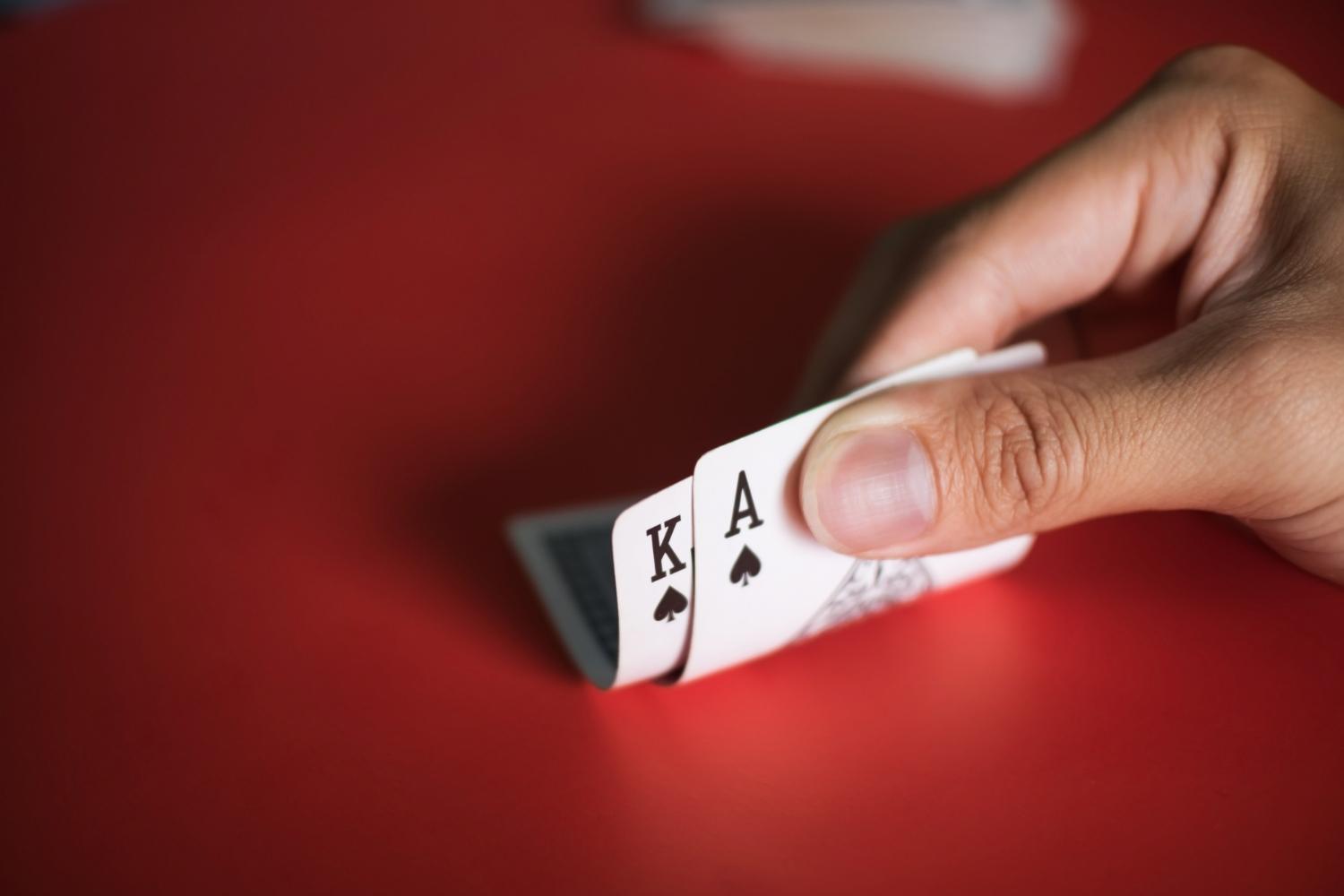

An advanced learner of English can hold a technical conversation, read a contract, and write a clear email, and then sit in a meeting where somebody says the company is going to double down, and understand every word and none of the sentence.
This happens because a surprising proportion of professional English is built out of gambling. Not sport, not war, not sailing, though all three contribute. Card tables. The vocabulary arrived over four centuries, it settled so deeply that native speakers no longer hear the metaphor, and it is now impossible to sit through a strategy discussion without it.
Why English Runs on Card Tables
Metaphors enter a language from wherever a culture spends its attention, and for a very long stretch of English history a great many people spent theirs on cards and dice.
The result is a layer of vocabulary that native speakers deploy without any awareness of its origin. They are not thinking about gambling. They have no picture in their heads. The words have gone dead, in the technical sense: they function as ordinary abstract terms and have entirely lost their scene.
That is precisely what makes them difficult. A live metaphor can be worked out from context. A dead one cannot, because there is nothing left to work out. You simply have to know.
The Six Idioms Learners Reliably Misuse
Double down. From blackjack, where a player doubles the original stake and accepts exactly one further card. In modern usage it means to commit harder to a position, and it almost always carries a whiff of stubbornness. Learners use it as a neutral synonym for increasing effort. It is not neutral. If your manager says the team is doubling down, somebody in that room thinks it is a mistake.
Hedge your bets. To back more than one outcome so that no single result ruins you. The trap is that hedging in finance means something adjacent but technical, and hedging in linguistics means using cautious, evasive language. Three meanings, one word, and learners collide with all three.
Up the ante. The ante is the forced stake paid before any cards are dealt. To up the ante is to raise what is at risk. It is misspelled as “up the anti” with depressing regularity, including by native speakers.
Play your cards close to your chest. To conceal your intentions. Americans say vest. Nobody agrees on which, everybody understands both.
When the chips are down. At the decisive moment, when losses are real. Not, as it is sometimes used, when things are merely difficult.
All bets are off. Previous predictions no longer apply because conditions have fundamentally changed. Not a statement of pessimism, which is how learners usually deploy it. A statement of uncertainty.
Where the Metaphors Came From
Two of the most respectable words in business English are gambling terms, and almost nobody knows it.
Above board meant keeping your hands above the table where the other players could see them. It now means honest, transparent, legally clean. Blue chip, the term for the safest and most valuable equities, comes from poker, where the blue chip carried the highest denomination. A dictionary that takes etymology seriously, such as Merriam-Webster, will tell you this in a line, and it will change how you hear a financial report.
The layering has not stopped. The newest stratum is arriving from machines rather than tables. Look at casino slots at a licensed British operator such as MrQ, running since 2018 and restricted to adults, and you will find a working vocabulary that general English has not yet absorbed: wild, scatter, free spins, volatility, return to player. Some of it will escape into ordinary speech within a generation, exactly as “jackpot” and “wild card” did, and future learners will encounter it as dead metaphor and wonder where on earth it came from.
Register: When Not to Use Them
Every idiom in this article is informal to neutral. None belongs in an academic essay, a legal document, or an examination script where formal register is being assessed.
This matters practically. Examiners in the major English qualifications are not impressed by idiom, and a candidate who deploys “the chips are down” in a discursive essay has demonstrated the wrong thing. Idiom signals membership, not competence. It is for meetings, emails to colleagues you know, and conversation.
The safest rule: use these when you have heard the specific person you are talking to use one. Not before.
The Ones That Have Drifted
Some of these words have travelled so far from their origin that the origin now misleads you.
Wild card began at the card table, moved into sport as a seeding for a competitor outside the usual qualification, and now describes an unpredictable person or factor. Three distinct meanings, and the sporting one has nothing to do with unpredictability at all.
Poker face has drifted from concealment of a hand to concealment of any emotion, and is now applied to people who have never played a card in their lives.
Jackpot was a specific poker condition before it meant a large prize, and now it mostly means an unexpectedly good outcome of any kind, including outcomes involving no prize whatsoever.
Drift is not corruption. It is what words do. But a learner who reasons from the original meaning will arrive at the wrong place with total confidence, which is worse than not knowing.
Practising Without Sounding Like a Textbook
Take three of these, not six. Learn them properly, including the register and the sneer that some of them carry. Use each once, in a low-stakes setting, and watch the reaction of a native speaker, because their face will tell you more about connotation than any definition can.
Then leave the rest alone until you have heard somebody else use them. Idiom acquired by observation sounds natural. Idiom acquired from a list sounds exactly like idiom acquired from a list, and every native speaker in the room can hear it.