

More than 200 language apps flood the consumer market, but the overwhelming majority share a fundamental flaw: they are designed for a single user staring at a smartphone on a bus.
A classroom application is a completely different product.
To work in a real K–12 or higher-ed environment, a tool must deliver actionable class-level analytics, survive thirty students hitting school Wi-Fi simultaneously, satisfy strict student privacy regulations (COPPA/FERPA), and—hardest of all—keep adolescents engaged past week three.
The following six tools actually clear that bar. They are ranked based on classroom usability, sustained engagement, pedagogical grounding, and cost.
The Top 6 Classroom Language Tools
1. Quizlet
Best for: Rapid vocabulary acquisition & low-prep review
- Pricing: Free tier; Teacher Plus options available
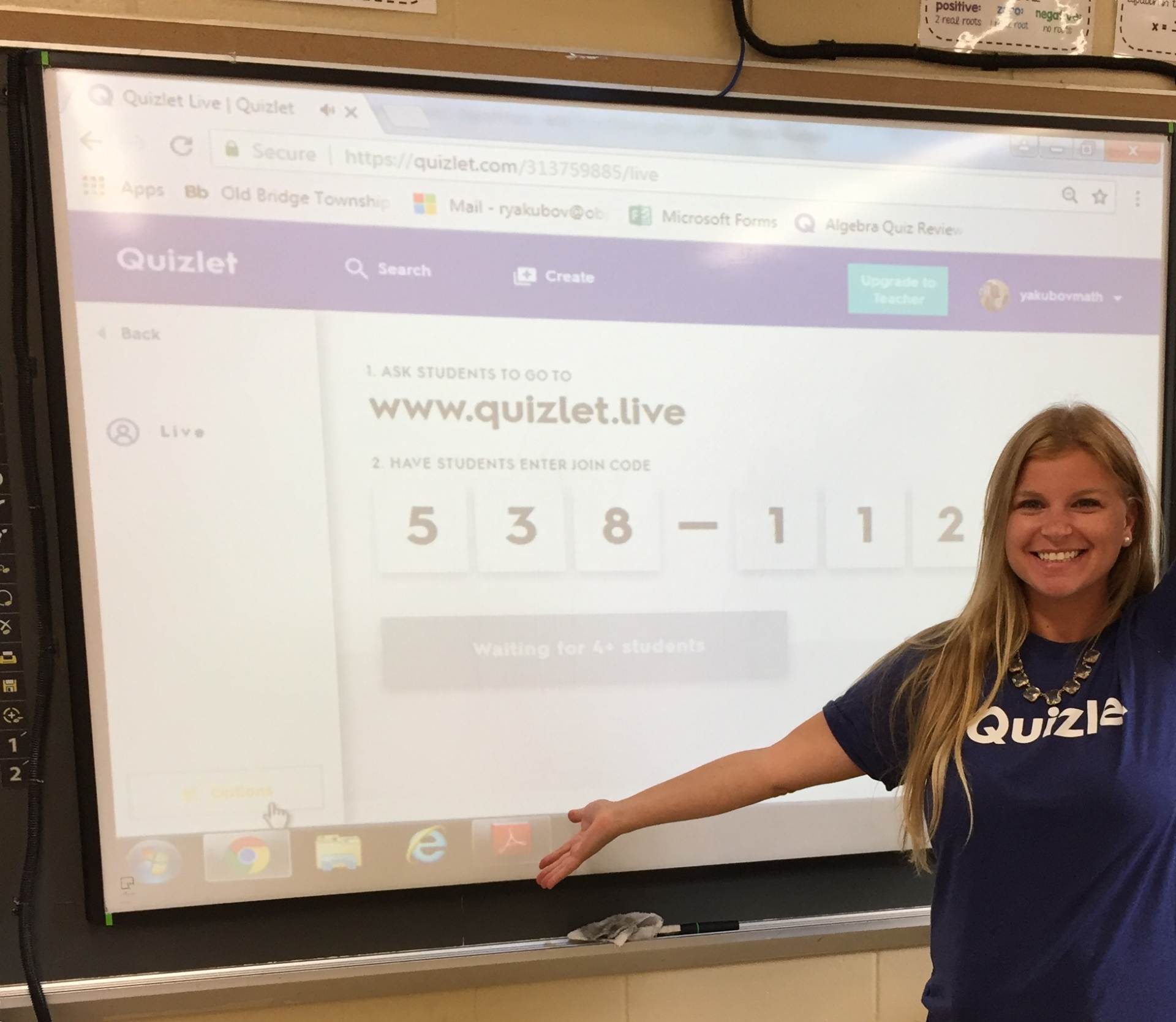
- The Pitch: Pre-built flashcard sets exist for virtually every major textbook in every widely taught language. Quizlet Live turns vocabulary drills into a high-energy team competition that students actively request.
- The Reality: It does one thing—spaced vocabulary recall—and does it efficiently.
- The Verdict: Essential for initial vocabulary exposure, but limited. It offers no grammar instruction, sustained authentic listening practice, or spontaneous output.
2. Roxxem
Best for: Sustained engagement, authentic listening & cultural relevance
- Pricing: Free teacher access; student subscriptions from ~$5/month; district licensing available
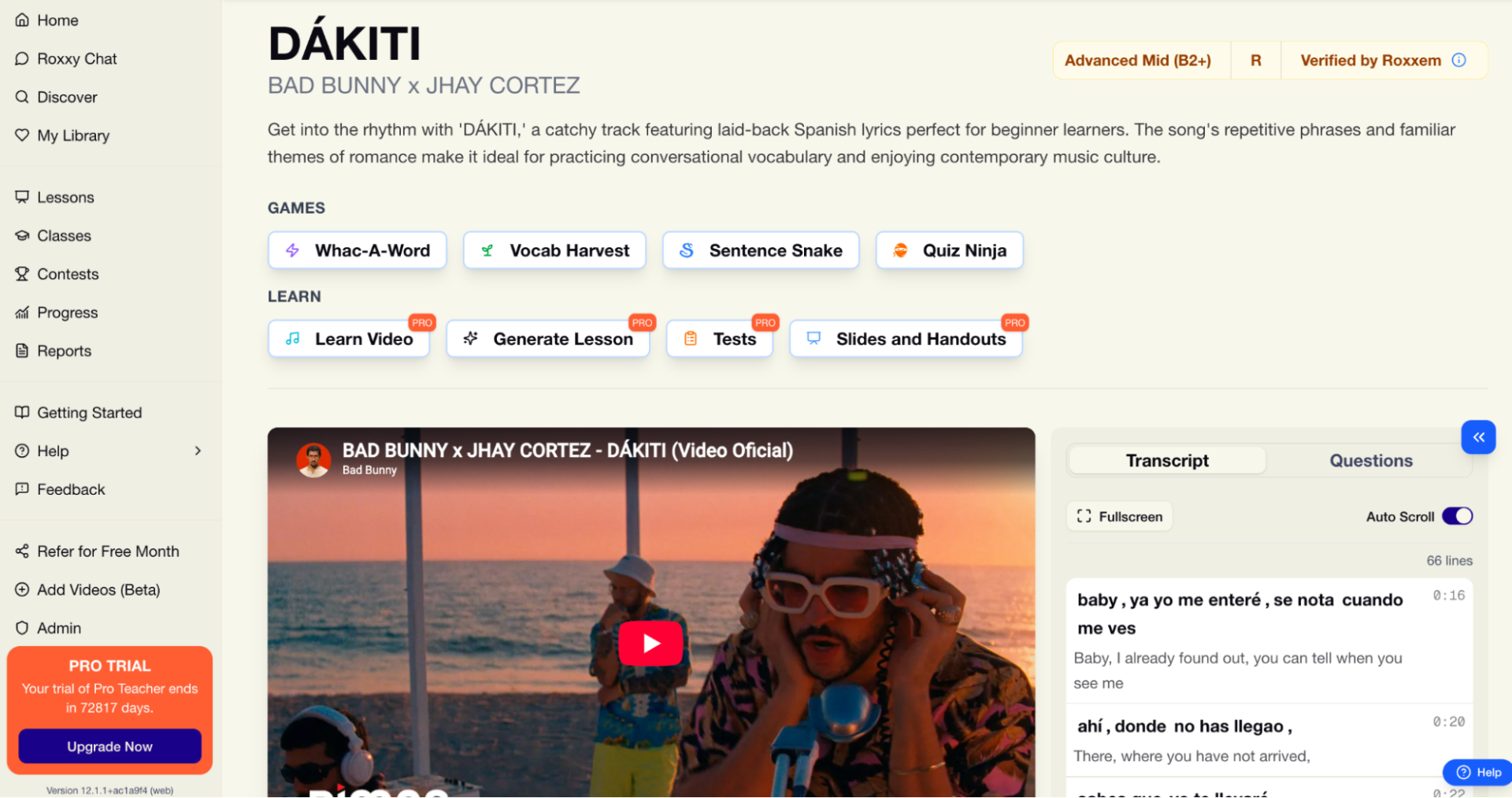
- The Pitch: Instead of textbook dialogues, Roxxem’s music-powered language platform builds interactive lessons, games, and assignments around authentic music videos, trending media, and podcasts. Songs are broken down line-by-line with synchronized lyrics, vocabulary highlights, and targeted comprehension tasks.
- The Reality: The differentiator is social motivation and authentic listening context. Month-long bracket tournaments like Locura de Marzo (Spanish) and Manie Musicale (French) pit classrooms worldwide against one another. That collective gamification sustains student buy-in long after individual app streaks lose their pull.
- The Verdict: The strongest tool on the market for bridging the gap between textbook drills and real-world Comprehensible Input (CI) in middle and high school classrooms.
3. Lingopie
Best for: Authentic TV & film immersion (High School / Higher Ed)
- Pricing: ~$72/year per account
- The Pitch: Streams authentic TV shows and movies equipped with interactive dual subtitles, instant click-for-definition, color-coded grammar highlighting, and speech recognition. The UI mirrors standard video streaming platforms.
- The Reality: Excellent for advanced immersion, but it lacks a dedicated, native classroom management layer—meaning educators must track assignments manually.
- The Verdict: Strong input quality for upper-level elective courses, though best suited for independent homework rather than whole-class orchestration.
4. Padlet
Best for: Low-anxiety asynchronous speaking and video reflections
- Pricing: Free tier (3 boards); Padlet for Schools options
- The Pitch: Following the sunset of Microsoft Flip, Padlet has emerged as the premier walled-garden video discussion tool. Teachers post a target-language video or audio prompt, and students respond with short audio clips or webcam recordings on a shared class board.
- The Reality: Asynchronous recording allows camera-shy students to re-record before submitting, lowering performance anxiety while ensuring genuine oral production.
- The Verdict: Replaces the stress of 30 live speaking tests with a streamlined, manageable queue of digital artifacts.
5. Kahoot!
Best for: High-energy formative assessment & listening checks
- Pricing: Free tier; paid educator plans
- The Pitch: Frequently used for standard vocabulary quizzes, Kahoot! is far more effective as a live listening tool: play a 15-second audio snippet from native speakers, then run rapid comprehension checks.
- The Reality: It is an assessment engine rather than an instructional platform. Overuse drains its novelty.
- The Pro Move: Have students write their own Kahoot! questions. Crafting plausible target-language distractors requires deep grammatical awareness.
6. Nearpod
Best for: Interactive direct instruction & virtual cultural field trips
- Pricing: Free tier; Silver/Gold tiers from ~$120/year
- The Pitch: Integrates 360-degree virtual field trips into lesson slides. Transporting students to an open-air market in Oaxaca or a neighborhood in Dakar with embedded comprehension checkpoints provides a rich cultural anchor.
- The Reality: Front-heavy preparation requirement.
- The Verdict: Ideal for periodic, highly structured cultural units and direct instruction.
How to Build a Balanced Language Stack
The most common mistake language departments make is stacking tools that perform identical functions. Four vocabulary apps do not equal a language program.
Most educators do not need six platforms; they need a high-yield stack covering three pedagogical domains:
| Instructional Layer | Core Purpose | Top Tool Fit |
| 1. Vocab & Structural Recall | Low-stakes daily memory building | Quizlet |
| 2. Authentic Input & Culture | Native-speed listening & music engagement | Roxxem or Lingopie |
| 3. Spoken & Written Output | Asynchronous oral production & reflection | Padlet |
What Tech Can (and Cannot) Do
No app will make a student conversationally fluent on its own. Reaching intermediate proficiency in a language like Spanish requires 600 to 750 hours of deliberate practice. A five-minute daily app streak barely scratches that surface.
What effective classroom tools can do is dramatically increase the volume, variety, and quality of contact students have with the target language between class periods—while keeping them motivated enough to return. In a discipline where many high schoolers stop after two required years, sustaining student engagement isn’t a vanity metric. It is the core goal.