
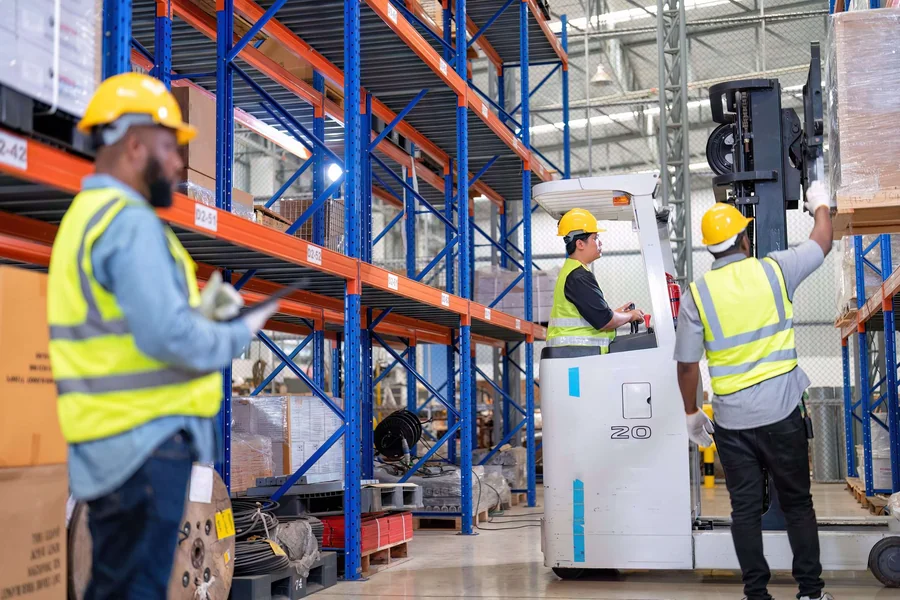

A warehouse can lose an order before anyone touches a box. One wrong scan, a misplaced tote, or an inventory count that’s two days old can create a late shipment and an unhappy customer.
That pressure is why the modern warehouse looks less like a paper-and-clipboard operation. Connected software, robotics, AI, and real-time data now help people move faster without turning the building into a worker-free sci-fi set.
The shift starts with a clear view of what is happening on the floor.
How Technology Is Changing the Modern Warehouse
Warehouse work once relied heavily on printed pick lists, manual counts, radio calls, and experienced workers who knew where everything lived. Those people still matter. But memory alone can’t keep up with thousands of SKUs, same-day shipping promises, and constantly changing order volumes.
A warehouse management system, or WMS, puts inventory, orders, labor, equipment, and shipping activity into one operational view. It can direct a picker to the next task, confirm the location, and update stock as the item moves.
Many sites now add a warehouse execution system, or WES. This software sits between the WMS, ERP, order management system, conveyors, and robot fleets. It decides what work should happen next and where it should go.
7 Upcoming Trends in the Warehousing and Logistics Industry (2025)
Automation supports workers instead of removing every job
Automation changes the work. It doesn’t remove the need for people who understand the operation.
AMRs can handle long walks. Lift equipment can take repetitive loads. Scan confirmation can replace constant manual checking. That gives workers more time for exceptions, customer-sensitive orders, damaged products, and problems machines can’t reason through.
New jobs also appear in robot supervision, maintenance, system support, process analysis, and data review. When a carton is crushed or an order looks wrong, a person still needs to make the call.
The best warehouse automation removes wasted movement, not human judgment.
The Warehouse Technologies Driving the Biggest Changes
The modern warehouse isn’t defined by one expensive machine. It is a connected set of tools that fits the product mix, order profile, building layout, and growth plan.
Dematic, Daifuku, AutoStore, Swisslog, KNAPP, Locus Robotics, Geek+, ABB, and Honeywell Intelligrated all offer different pieces of that puzzle.
Some specialize in automated picking systems and storage and retrieval, while others focus on mobile robots, conveyance, robotic arms, or software control.
Flexible equipment and strong software orchestration matter more than adding machines for the sake of it.
AI vision and robotics improve picking, sorting and quality control
Cameras, combined with computer vision, can read labels, identify products, check packaging, detect damage and verify an item is in the right order.
Robotic arms can pick and sort items, build pallets, or unload cases from pallets. These jobs are especially useful when the task is repetitive and physically demanding.
Still, robots have limits. Loose bags, reflective wrapping, unusual shapes, poor lighting, and mixed cartons can reduce accuracy. The operation needs an exception path for the awkward stuff, because there is always awkward stuff.
World’s most advanced robotic warehouse (AI automation)
AI forecasting and digital twins help managers plan ahead
AI forecasting tools study sales history, seasonal swings, order patterns, and supply data. The goal is better staffing, replenishment, and inventory planning.
AI is already moving beyond experimentation. According to the 2026 MHI Annual Industry Report, 33% of surveyed organizations were using AI for demand forecasting and inventory optimization, while 88% expected to adopt AI within five years.
Digital twins take that a step further. They are virtual models of warehouse layouts and workflows. Teams can test a new pick path, storage zone, or robot route before moving racks or buying equipment.
AI should guide decisions, not make them without review. Poor source data can create poor forecasts with impressive-looking charts.
What Warehouse Technology Means for Costs, Safety, and Growth
Technology can raise throughput, improve order accuracy, reduce travel time, and make better use of expensive floor space. It can also reduce repetitive lifting and strain-related injuries.
But the purchase price is only part of the bill. Software integration, training, maintenance, cybersecurity, spare parts, and downtime planning all matter. A robot that can’t communicate with the WMS is an expensive traffic cone.
The main benefits include faster fulfillment and safer work
WMS software and scanning improve inventory accuracy. AMRs cut travel time. Automated storage and retrieval systems, or AS/RS, can increase storage density. AI vision catches some errors before a package reaches the dock.
Track results with practical metrics:
- Order accuracy and inventory accuracy show whether the system is trustworthy.
- Pick rate and cycle time show whether work moves faster.
- Worker injuries and cost per order show whether gains hold up in the real world.
Bottom line: speed doesn’t mean much if accuracy falls apart.
The biggest challenges are integration, skills, and change management
A new tool has to work with existing scanners, conveyors, WMS software, ERP records, and shipping platforms.
AI integration adds another layer of complexity because forecasting and automation tools depend on consistent, current data from all those systems.
Without a clear integration plan, companies can end up with an automation stack that is hard to monitor and even harder to fix.
Employees need training before go-live, not after a rushed launch. Leaders also need plans for equipment upkeep, supplier support, cybersecurity, and business continuity when systems fail.
Hardware gets attention because you can see it. Process discipline is what keeps it useful.