
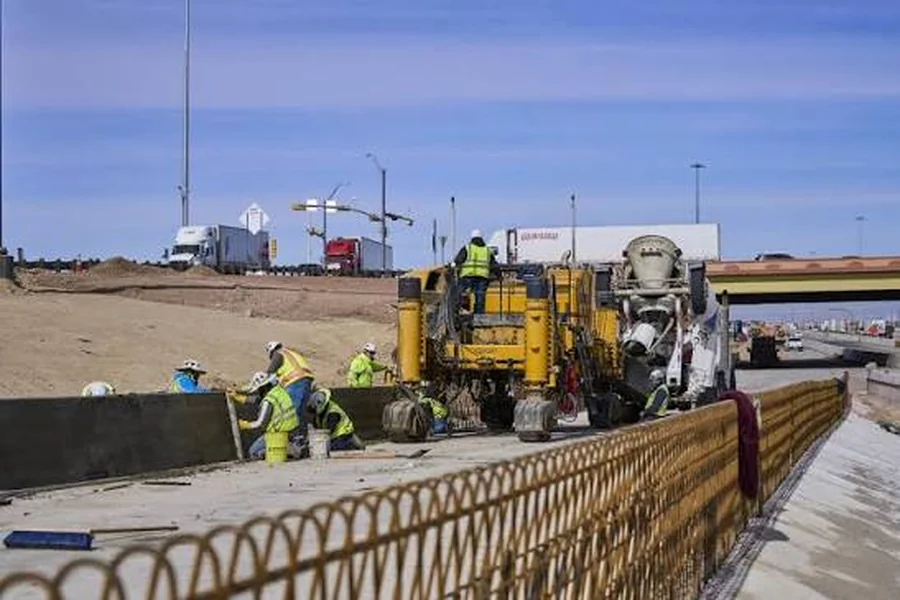

Forty-nine months. That’s roughly how long some Houston commercial electrical contractors are quoting out before they can take on new work. The construction pipeline running through the greater Gulf Coast region right now is unlike anything the market has seen in a generation, and the companies that navigate it well are not simply the ones with the most trucks or the longest contact lists. They’re the ones with intentional business strategies.
This is not a story about a rising tide that lifts all boats. The demand surge is real, but so is the pressure on margins, the scramble for qualified workers, and the regulatory complexity that comes with rapid growth. If you run a contracting operation along the Gulf Coast, the next two years will sort operators into clear winners and clear survivors. Here’s what separates them.
The Scale of What’s Being Built in Houston Right Now
The numbers are not subtle. Across Fort Bend County and the greater Houston area, rapid population growth and expansion are creating demand for skilled electrical construction professionals who play a role in bringing projects to life and keeping communities connected. That demand is showing up in commercial builds, industrial facilities, data centers, and residential developments simultaneously.
Zoom out to the national picture and the trend line is just as steep. According to the U.S. Bureau of Labor Statistics, employment of electricians is projected to grow 9 percent from 2024 to 2034, much faster than the average for all occupations, with about 81,000 openings projected each year on average over the decade. That figure, available in the BLS Occupational Outlook Handbook, reflects both net growth and the replacement demand from an aging workforce.
For Houston specifically, this is not an abstract projection. Data center expansion, LNG infrastructure, grid hardening projects, and a booming residential sector are all pulling on the same limited pool of licensed electricians at the same time. That convergence is why backlog is stretching longer and bids are getting more competitive even as project counts rise.
Why the Workforce Gap Is Now a Business Problem, Not Just an HR Problem
A lot of contractors still treat the labor shortage as a recruiting inconvenience. The smarter ones have figured out it’s a strategic business threat. When you can’t staff a project at the schedule you bid, you eat the cost. When your best journeyman gets poached mid-project, your client relationship absorbs the hit.
According to the Texas Workforce Commission, long-term occupational projections confirm that electricians are the fastest-growing skilled trade occupation in the state’s construction industry. The pressure is not easing. The Texas Workforce Commission projects an average 1.0 percent increase in construction employment each year between 2022 and 2032, equating to an increase of 81,976 jobs, or 10.7 percent growth over the ten-year period, with the largest gain coming within Specialty Trade Contractors. That data comes from the Texas Workforce Commission’s High-Growth Occupations report, published by the state’s labor market information division.
Here’s a concrete scenario worth thinking through. Picture a 12-person electrical shop in Northwest Houston that lands a mid-size data center fit-out contract in Q3 2026. The scope is well within their capability on paper. But by the time the project kicks off, two journeymen have taken offers from larger firms paying a higher prevailing rate, and an apprentice program that was six months away from producing a new hire has stalled on TDLR scheduling. The contractor is now bidding at a margin they built around full crew capacity, running at 65 percent of that capacity. That is not a hiring problem. It’s a margin problem, a client relationship problem, and a reputation problem rolled into one.
Workforce strategy has to be built into business development, not bolted on as an afterthought once the contract is signed.
What the Best Gulf Coast Contractors Are Doing Differently
The contractors winning consistently right now share a few traits that go beyond pricing strategy or equipment investment. They are plugged into peer networks that give them early visibility into regional market shifts. They have access to trained apprentices before they need them, not during a crisis. And they’re not fighting regulatory and legislative battles alone.
A 2026 study published in ScienceDirect found that business association membership is especially impactful for smaller firms operating in competitive industries, noting that membership increases product quality signals and innovation capability for members.
“The impact of business associations is more pronounced for smaller firms, firms in competitive industries.” — ScienceDirect, Business Association Membership and Firms’ Access to Trade Credit, 2026
That finding tracks exactly with what’s happening on the Gulf Coast. The contractors who belong to organized trade groups have a structural advantage in recruiting, training, and regulatory navigation that solo operators simply cannot replicate on their own. That’s one reason many houston electrical contractors have pursued formal association membership to access shared workforce programs, government affairs representation, and continuing education that would cost multiples more if purchased independently.
The Gulf Coast Contractor Resilience Framework
This is a four-pillar structure worth running your operation against before the end of the year. Think of it as a quick internal audit, not a checklist someone else handed you.
| Pillar | What It Covers | Business Risk If Missing
|
|---|---|---|
| Workforce Pipeline | Active apprenticeship enrollment, shared manpower access, journeyman sourcing channels | Mid-project crew shortfalls, margin erosion, client attrition |
| Regulatory Fluency | TDLR compliance, NEC code familiarity, state licensing continuity | Project shutdowns, bid disqualification, liability exposure |
| Peer Intelligence | Industry pricing data, subcontract referrals, local market conditions | Underbidding on labor costs, missing market rate shifts |
| Legislative Positioning | Local and state government affairs engagement, PAC participation, lien law awareness | Policy changes that increase costs without advance warning |
Most small and mid-size Gulf Coast operations have one or two of these pillars in good shape and gaps in the others. The goal is not perfection across all four. The goal is knowing which gap creates your biggest exposure right now, and closing it before the market does it for you.
Five Practical Moves for Gulf Coast Contractors Before 2027
The construction boom is not going to wait for anyone’s five-year plan. These are moves that pay off inside a twelve-month window.
1. Map your crew capacity against your backlog quarterly. Not annually. The labor market shifts faster than that, and bidding on capacity you no longer have is how good companies take on jobs that hurt them.
2. Get your apprentices enrolled now, not when you need them. Apprenticeship programs run on structured timelines. The contractor who enrolls in January has a productive journeyman sooner than the one who calls in August wondering why the waitlist is three months long.
3. Build a peer pricing reference point. Know what comparable shops in your market are paying journeymen and billing for specialty work. Without that benchmark, you’re guessing on both ends of the margin.
4. Understand your lien rights before a collection problem happens. Texas lien law is specific about notice deadlines and filing procedures. Most contractors learn this the hard way once. Learning it in a seminar is significantly cheaper.
5. Pick one regulatory class per quarter and attend it. Code updates and TDLR requirements shift. The contractors who treat continuing education as a routine business expense stay compliant and billable. The ones who let licenses lapse or miss code changes deal with consequences that cost far more than the class.
The Real Competitive Advantage Is Structural
The Houston construction pipeline is real, and the opportunity it represents is real. But opportunity without infrastructure is just pressure wearing a friendly mask. The contractors who come out of this cycle in a stronger position than they entered it will be the ones who treated workforce pipeline, regulatory fluency, peer intelligence, and legislative engagement as operational priorities rather than afterthoughts.
If you haven’t taken stock of which pillar in the Gulf Coast Contractor Resilience Framework is weakest in your operation, that’s the right place to start. The demand will keep coming. The question is whether your business structure is built to capture it without breaking under it.