
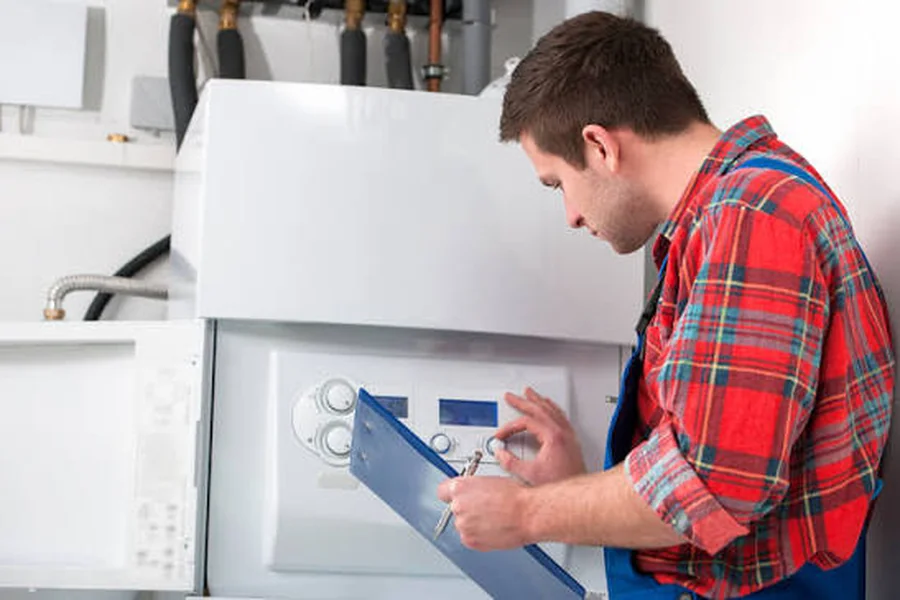

Your heating system will not send you a calendar invite when it’s ready to die. It just quits, usually on a cold night, usually when every repair technician in town has a three-day waitlist. The homeowners who avoid that scenario share one habit: they pay attention to what their system tells them before the final breakdown. This guide walks you through the real signals, the math behind repair-versus-replace decisions, and the maintenance moves that buy you extra years.
The Age Number That Should Make You Nervous
Fifteen years. That’s the number most heating professionals circle on a mental calendar. Per DOE and AHRI modeling, the median service life for a residential gas furnace is 18 years. That sounds reassuring until you do the actual math: if your unit hits 15, you’re already past the midpoint and into the range where major components, heat exchangers, control boards, and blower motors, start failing in sequence.
Here’s the thing about age: it’s not a countdown clock, it’s an odometer. A system that runs 10 months a year in a hot climate accumulates wear faster than one that runs four months somewhere mild. That’s especially relevant for homeowners in the Southwest, where the furnace or heat pump often shares the air handler with the central AC, meaning the blower runs year-round. Miles, not years, are what actually exhaust the machine.
Nationally, the shift toward electric-based heating is also accelerating the replacement conversation for many households. In 2024, 42% of U.S. households reported that electricity was their main space heating fuel, according to annual estimates from the U.S. Census Bureau’s American Community Survey, as reported by the U.S. Energy Information Administration in October 2025. That number will keep rising, and the equipment choices tied to it, heat pumps especially, carry their own replacement timelines that differ from gas furnaces.
Five Warning Signs That Are Easy to Dismiss
Most systems telegraph their decline well before they die completely. The problem is that individual symptoms seem minor. A strange noise one week. A room that’s slower to warm than it used to be. A utility bill that climbed for no obvious reason. Here are the five signals that should move you from “I’ll keep an eye on it” to “I need a professional opinion.”
1.Short cycling. The system kicks on, runs briefly, then shuts off before the space reaches temperature. That pattern destroys efficiency and accelerates component wear.
2. Uneven heat distribution. One side of the house is comfortable, the other is not. This often points to duct problems or a failing system that can no longer push enough airflow.
3. Unusual sounds. Banging at startup is often a delayed ignition issue. Screeching points to a blower bearing problem. Neither one resolves itself.
4. Visible corrosion or soot. Yellow or orange burner flames, rust streaks, or soot around registers are serious signals, especially on gas systems, and should not wait.
5. Repair bills that keep coming. One repair every few years is normal maintenance. Multiple calls in a single season means the system is degrading systemically, and each new fix is buying less and less time.
The honest take: if you’re seeing two or more of these at once on a system older than 12 years, the repair math rarely works in your favor.
Repair vs. Replace: A Framework That Actually Works
The 50% rule is the industry standard starting point. If a single repair costs more than half the price of a comparable new system, replace it. But that rule undersells the efficiency angle, and that’s where homeowners leave real money on the table.
The DOE confirms that furnaces 15 years or older can carry efficiency ratings as low as 56%, compared to 90% or higher in modern high-efficiency systems. According to the U.S. Department of Energy’s Energy Saver resource on furnaces and boilers, upgrading to a high-efficiency unit is one of the most impactful ways to cut residential energy costs. A system running at 56% AFUE is burning nearly half its fuel without delivering any heat to your home. Every month you keep it running is a month you’re paying for waste.
Use this table to frame the decision. The numbers are benchmarks, not guarantees, but they give you a starting point for the conversation with your technician.
| System Age | Typical AFUE Range | General Guidance
|
|---|---|---|
| Under 10 years | 80%–98% | Repair almost always makes sense |
| 10–15 years | 70%–90% | Apply the 50% repair cost rule carefully |
| 15–18 years | 60%–80% | Start actively pricing replacement options |
| 18+ years | 56% or lower | Replace unless repair cost is very minor |
One caveat: if you’re in a region where both heating and cooling run hard, age is compressed. A 14-year-old system that’s been running year-round in a hot climate has earned more “miles” than an 18-year-old system in Minnesota that sat idle every summer.
The Maintenance Habits That Actually Extend Lifespan
Neglect is the number one reason systems die before their time. Not age, not climate, neglect. A heat exchanger that cracks at year 12 almost always traces back to chronic airflow restriction from a dirty filter. The fix was $8 and five minutes of your time, every 60 to 90 days.
Here’s the practical checklist that keeps systems running longer:
Change the air filter every 60 to 90 days, or monthly if you have pets or anyone in the home with dust sensitivity.
Schedule a professional tune-up before each heating season, not after the first breakdown of winter.
Keep the area around your furnace or air handler clear. Two feet of clearance in every direction is the minimum.
Check your thermostat batteries annually and upgrade to a programmable model if you haven’t already. Consistent temperature management reduces strain on the system.
Listen actively. Walk past your unit when it starts up. Any new sound is worth a five-minute call to a technician to describe it.
If you’re based in the Phoenix metro area and your system is showing multiple warning signs, getting a professional assessment before you commit to another repair season is worth it. A qualified provider of heating services in Tempe AZ can tell you definitively whether your system is worth keeping or approaching the end of its useful run.
“A heat exchanger that cracks at 12 years almost always traces back to chronic airflow restriction from a dirty filter. When homeowners stay on top of filter changes and annual maintenance, I routinely see systems running clean and efficient well past the 20-year mark.”
HVAC technician perspective cited in FilterBuy’s 2026 furnace lifespan report
One More Thing Before You Decide
Timing matters more than most homeowners realize. The worst moment to replace a heating system is the same day it fails in January, because that’s when your negotiating power is zero and your urgency is maximum. The best moment is a planned off-season evaluation, late summer or early fall, when technicians have availability and you have time to compare quotes without pressure.
Get the assessment before the season starts. Know your system’s actual age and efficiency rating. And if the numbers point toward replacement, treat it as a planned home upgrade rather than an emergency. That shift in timing alone can save you hundreds of dollars and a very cold night.