

Quick summary: Idioms don’t play by normal vocabulary rules, so memorizing a definition rarely makes it stick. Word search puzzles work better than flashcards because you’re actively hunting for the phrase instead of just reading it, and that small bit of effort is what actually builds memory. Turn idiom practice into a short, game-like habit, even five minutes with a puzzle grid, and the phrases stop slipping away a week later.
So I used to tutor a college student, Priya, sharp, funny, the kind of student who’d argue with you about grammar rules just for sport. One afternoon I told her we should “break the ice” before starting a group project. She looked at me like I’d suggested a crime. Ice. Breaking. She thought I meant it.
That one stuck with me for a while, honestly, because it wasn’t really a vocabulary problem. Priya knew what “break” meant. She knew “ice.” What she didn’t have was a slot in her brain for the phrase as its own thing, separate from the words inside it. And that’s really the whole problem with idioms in a nutshell.
It also explains why idiom lessons so often just… don’t take. Hand someone a glossary of a hundred expressions and they’ll nod along, understand every one in the moment, feel pretty good about it. Ask them to use “spill the beans” correctly a month later? Most of that list is gone. Not because they didn’t understand it. Because understanding was never the hard part.
Why Idioms Refuse to Behave
Here’s the thing about idioms, they break the normal rules of language learning. With most vocabulary, once you know what a word means, you can more or less guess how it’ll behave in a new sentence. Idioms don’t give you that shortcut. Not even a little.
1.Kick the bucket” has nothing to do with buckets.
2. Under the weather”, no forecasts involved.
3. And “spill the beans”? Never once, in the history of the phrase, has an actual bean been spilled.
Your brain wants to build meaning piece by piece. Idioms punish that instinct pretty much every time, which is exactly why textbook definitions rarely stick. Reading “this idiom means X” is a one-way transaction, information goes in, and without something to reinforce it, it slides right back out a few days later.
The people who actually hang on to idioms are the ones who keep running into the same phrase, slightly different context each time, until it finally clicks into place. That’s the whole game. And it’s exactly the kind of repetition a puzzle habit is good at.
The Learning Trick Most Idiom Lessons Skip
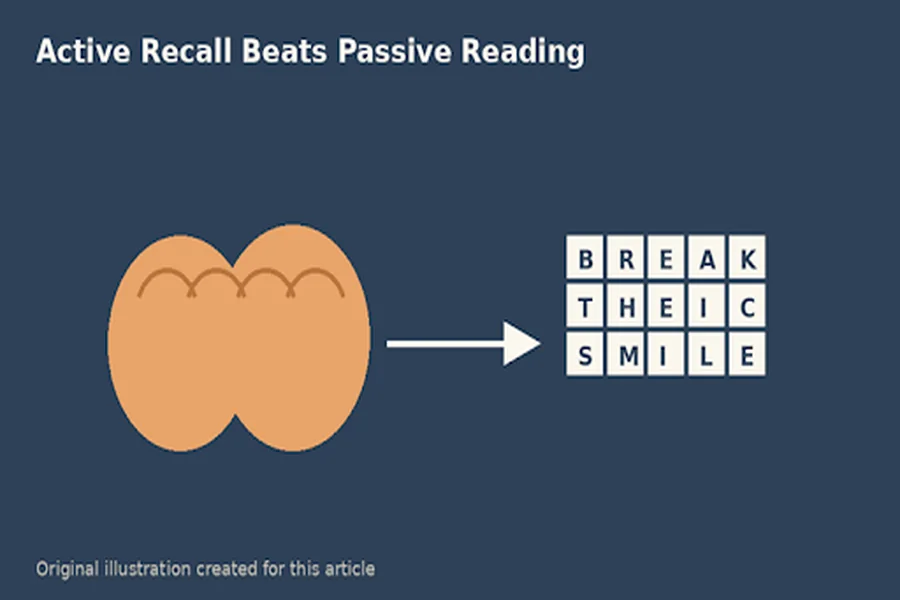
There’s a pretty well-known gap between recognizing something and being able to actually produce it later. You read an idiom, you nod, you feel like you get it, and then a week goes by and you draw a total blank. What builds a memory that lasts is retrieval. Making your brain go find the thing, instead of handing it over.
Flashcards are supposed to do this, but most people use them badly, flip, read the answer, move on. That barely counts as retrieval at all. A word search does something a little sneakier: it forces your eyes and brain to actually hunt, letter by letter, which means you’re scanning, second-guessing near misses, confirming the match before the word even fully registers.
That extra bit of friction? That’s where the memory gets built. It’s the gap between glancing at a word and going looking for it.
Why a Grid of Letters Beats a List of Definitions
A word search is quietly doing a few things a vocabulary list just can’t manage:
1. It forces active scanning instead of passive reading, so your eyes actually process every letter instead of skimming past the phrase.
2. It repeats the shape of the word, you’ll often see the same idiom, or pieces of it, more than once in a themed puzzle.
3. It takes the pressure off production. Beginners can get comfortable with a tricky phrase long before anyone asks them to use it in a sentence.
4. It rewards pattern recognition, which overlaps more with reading fluency and spelling than people usually give it credit for.
5. And it’s genuinely low-stakes. Idioms are confusing enough on their own, stacking test anxiety on top of that never helps anyone.
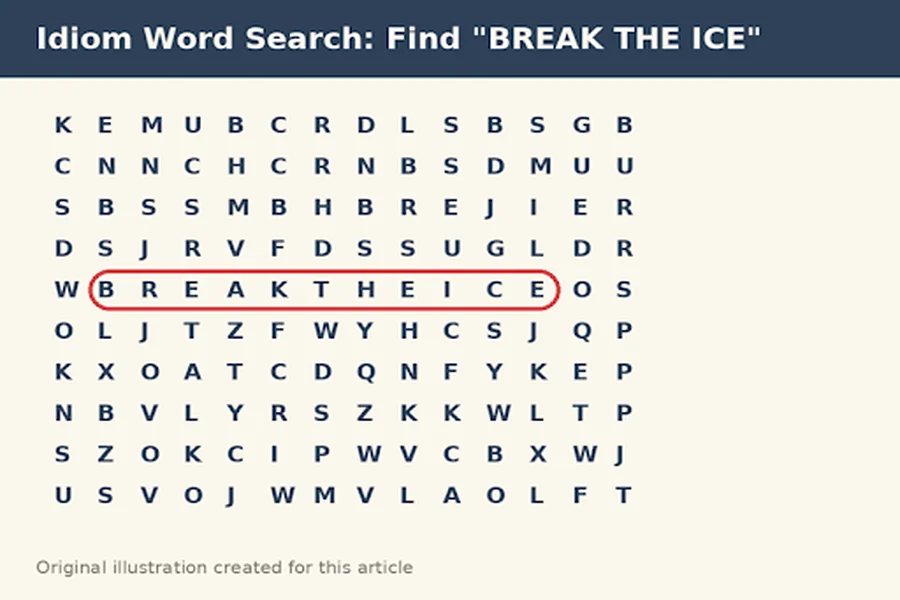
I started testing this with my own students, honestly kind of by accident, building a quick five-minute puzzle around whatever idiom had tripped someone up that week. “Break the ice,” buried in a grid next to some decoy letters, suddenly became something they wanted to solve, not something they’d been told to memorize. If you’re curious what that looks like done well and at scale, sites that host fun word searches, like Word Search Hero, run whole categories built around figures of speech, vocabulary themes, and grade-level difficulty, which makes it pretty easy to match a puzzle to how much of a challenge someone’s actually looking for.
Matching the Puzzle to the Learner
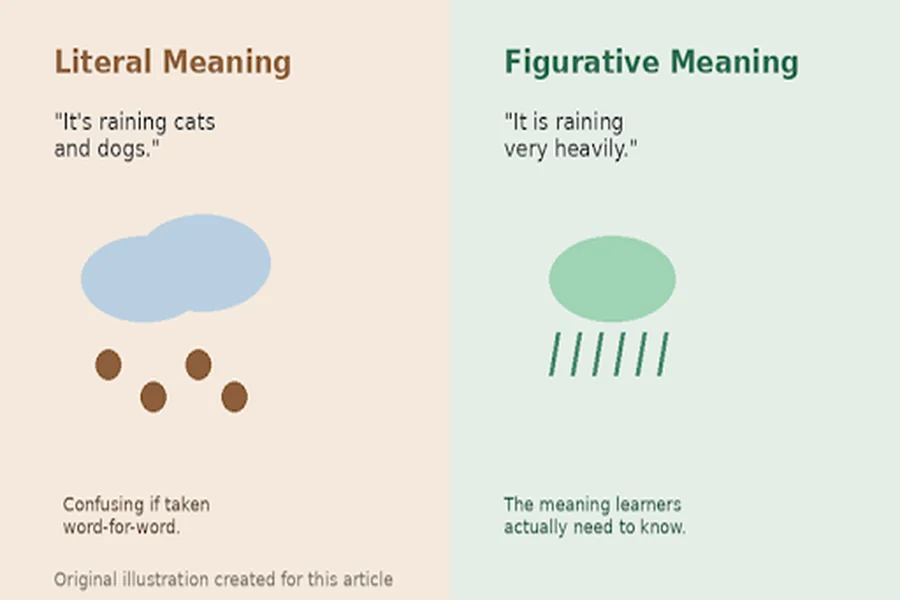
Not every idiom-hunter needs the same grid, by the way. A ten-year-old meeting “raining cats and dogs” for the first time needs something small, generous spacing, short decoy words, nothing overwhelming. An adult ESL learner working through idioms about money or work, on the other hand, does better with something denser and trickier, something that actually makes them scan instead of spotting the phrase in two seconds.
This matters more than it sounds like it should. Mismatched difficulty is one of those quiet reasons puzzle-based learning fizzles out. Too easy, and it’s solved in ten seconds, no real learning happens. Too hard, and frustration sets in before the idiom’s had any chance to sink in. You want that sweet spot: enough friction to force real scanning, but not so much that the whole thing stops feeling like a game and starts feeling like a chore.
Turning This Into an Actual Habit
None of this needs a curriculum overhaul or some big system. A few small tweaks make idiom practice feel a lot less like homework:
1.Pick five to eight idioms a week. Not forty, depth wins over volume every time with phrases this irregular.
2. Group them by theme where you can. Idioms about time, weather, animals, they cluster more naturally in a puzzle, and in memory too.
3. Solve it, then explain it. Once you’ve found the phrase in the grid, say the meaning out loud, or jot one sentence using it. The puzzle gets your eyes looking; the sentence gets you actually producing.
4. Bring the same idioms back in a new puzzle a week later. That spacing is really what moves a phrase from short-term to long-term memory.
5. And let the whole thing stay a little silly. The more game-like it feels, the more likely it actually happens on a busy Tuesday.
Teachers can adapt this for a classroom in about five minutes flat, hand out a themed grid at the start of class, let students circle idioms in pairs, then spend a couple of minutes talking through what each one means and where they might’ve heard it before. It’s a warm-up, not a full lesson. That’s honestly the whole point, nobody dreads a two-minute puzzle.
Key Takeaways
1. Idioms don’t respond to standard vocabulary methods, because the meaning has nothing to do with the individual words. Learners need repetition of the whole phrase, not just a definition.
2. Active retrieval beats passive reading, full stop. Hunting for a phrase in a grid pulls in more of your attention than reading it off a list ever will, which is why it sticks longer.
3. Small, themed, low-pressure practice wins over big one-time study sessions. Five idioms a week, repeated once more later on, beats cramming forty in one sitting.
4. Games take the fear out of it. Idioms already feel arbitrary enough to a new learner, a puzzle format removes the “am I getting this wrong” pressure while the phrase is still settling in.
Idioms were never going to make logical sense on a first read, and honestly, that’s fine, they were never built to be decoded. They’re meant to be recognized, over and over, until one day they just feel obvious. A good puzzle gets you there a lot faster than a glossary ever will.