

Ask a beauty distributor what keeps a salon account loyal and you will hear the usual answers: price, delivery reliability, the rep’s relationship with the owner, education days. All true. All also easy for a competitor to match. Product is product; a salon that buys colour from you this quarter can buy it from someone else next quarter with a single phone call.
What is far harder to replace is the system the salon runs on. When a distributor provides the booking and management software a salon uses every day, under the distributor’s own brand, the relationship stops being transactional. This article explains how that works, why it changes the account economics, and what a distributor needs to get right to make it stick.
The loyalty problem with products alone
Distribution margins are under pressure from direct-to-salon brands, online wholesalers and manufacturers selling through their own portals. The traditional response is to add services: training, merchandising, marketing kits. Those help, but they are episodic. A salon attends your education day twice a year; it opens its appointment calendar fifty times a day.
Software sits in the second category. If the booking page your salons send to their clients carries your brand, if the reminders and receipts come from your platform, and if your rep is the person they call when something needs adjusting, you have moved from supplier to infrastructure. That is a different kind of account.
How the white label model fits a distributor
A distributor does not want to become a software company. The point of a white label arrangement is that it does not have to. A specialist vendor builds and maintains the platform; the distributor applies its brand and offers the system to its salon accounts as part of the relationship.
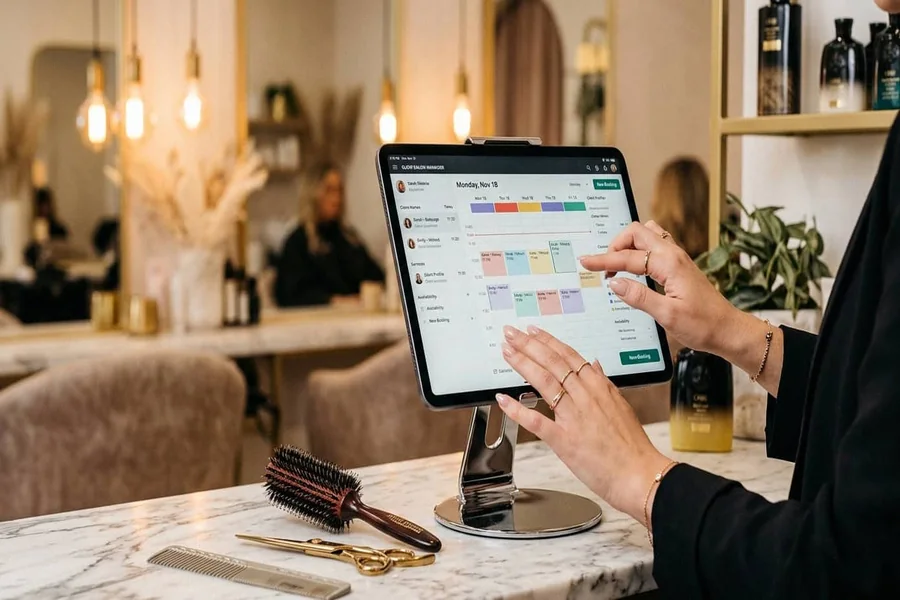
TimeTailor’s partner programme illustrates the shape of the deal. Salons use the platform free of charge, with a 3.9% fee charged on online bookings only. A distributor acting as a white label partner provides white label salon booking software to its accounts and receives 50% of that fee from the very first online booking at the very first salon. There is no fee to join, the partner sets its own pricing for customers, and the product is completely brand-free from the salon’s perspective. The vendor supplies sales material, training, ongoing support and a dedicated white label consultant; the distributor brings salons on, trains their staff and acts as the first point of contact.
What this does to the account economics
Consider the difference between an account that buys product from you and an account that buys product from you and runs its bookings on your branded platform. The second account now generates two revenue streams: product margin and a share of online booking fees. The booking share grows as the salon’s online bookings grow, which your reps can actively help with by encouraging salons to put the booking link in their Instagram bio and on their Google Business Profile.
There is a third effect that is easy to miss. TimeTailor’s partner page shows that partners can add their own services and mark up the fee; at a 4.9% total, the partner keeps 50% of the base 3.9% and 85% of the additional 1%. For a distributor, “additional services” can mean the things you already do: onboarding, menu setup, education, merchandising. They become billable through the platform rather than given away to protect the product account.
Why salons will say yes
Owners are rightly sceptical of anything that looks like a new bill. The pitch works when the platform removes a bill rather than adding one and solves the problems that cost them money. The features that matter most to a small salon are not exotic:
- Clients booking themselves 24/7, choosing their service, time and preferred technician, with upsells such as nail art or a deep-conditioning treatment suggested during booking.
- Deposits and prepayment to cut no-shows, with automated reminders by SMS, email or WhatsApp.
- A point of sale that runs on the phone they already own, taking cards, Apple Pay and Google Pay, with daily payouts.
- Unlimited team members at no extra cost, so a busy nail or hair salon is not penalised for growing.
- Free migration of their existing client list from spreadsheets, plus guided onboarding and 24/7 human support.
TimeTailor’s booking, POS, payments and management tools cover each of those points. The distributor’s job is to connect them to the owner’s real frustrations: the Saturday no-show, the receptionist’s phone bill, the stylist who cannot see her own schedule.
Making it stick: three rules for distributors
Train your reps before you train the salons
Your reps are the first point of contact, which means they need to be comfortable showing the booking flow, setting up a deposit and explaining how the online booking fee works. Use the vendor’s training rather than improvising; this is a product your brand is on.
Launch with your best accounts, not your weakest
The salons that already trust you will tolerate the small friction of switching systems and will become your case studies. Chasing dormant accounts with software first is the wrong order.
Tie it to outcomes you can show
The platform’s health-check dashboard shows revenue, bookings, occupancy and client retention. Review it with the owner at the next visit. A rep who can say “your online bookings are up and your no-shows are down since we switched” is a rep who is no longer selling product on price.
The strategic picture
Beauty distribution is becoming a service business whether distributors like it or not. Providing the software salons live in, under your name, is the most durable service you can offer: it earns on every online booking, it keeps your brand in front of the salon’s clients, and it makes leaving you a project rather than a phone call. For a distributor with hundreds of accounts, that is the difference between defending margin and building a moat.