You’ve probably used three or four metaphors before lunch today. “I’m drowning in email.” “That meeting was a waste of time.” “My phone died.” None of those sentences is literally true, and nobody blinked. Below are examples of metaphors sorted by where you actually run into them: the classroom, the office, the news, and the ordinary talk of friends and family.
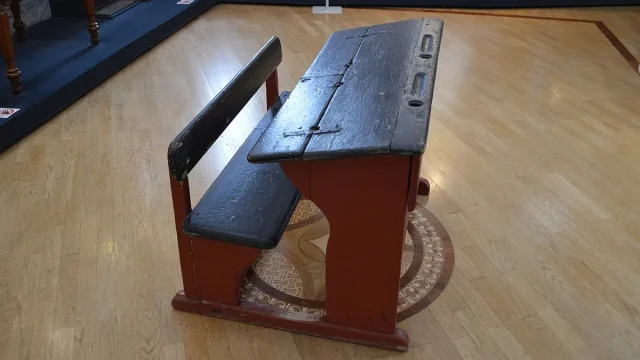
Examples of Metaphors in the Classroom
Teachers love a comparison, because a picture sticks when a definition doesn’t. Students use them too, mostly to complain.
- “The mind is a sponge.” Soaks up everything, good and bad. Often said of young children.
- “The brain is a muscle.” Train it and it grows. You’ll hear this in nearly every study-skills talk.
- “She’s a bookworm.” Not a worm, obviously. Someone who is always reading.
- “Monday’s quiz was a mountain.” Said with a groan, usually by someone who hadn’t studied.
- “A good teacher is a gardener.” You can’t make the plant grow. You give it light, water and room.
That last one divides people. Some find it warm, others find it soft. Either way, it shows how a metaphor can carry an opinion about how learning works. We collected a long run of these in metaphors for teachers, and the homework version is in metaphors for homework.

Examples of Metaphors at Work
Office language is almost entirely metaphor, and most of it is borrowed from machines and pipes.
Machines and plumbing
- “We have a bottleneck in approvals.” Everything is squeezed through one narrow neck, like a bottle being poured.
- “The sales pipeline looks thin.” Deals are treated as something flowing through a tube.
- “We’re a well-oiled machine.” The team runs smoothly, with no squeaks.
Water and families
- “I’m drowning in email.” More messages than you can answer, and still rising.
- “Our team is a family.” A warm metaphor that some managers use as a trap. Families don’t usually get laid off. I’m a little suspicious whenever I hear it.
- “The company is a sinking ship.” Time to update your résumé.
If office talk is your daily bread, the companion piece on idioms for business covers the stock phrases that sit right next to these.
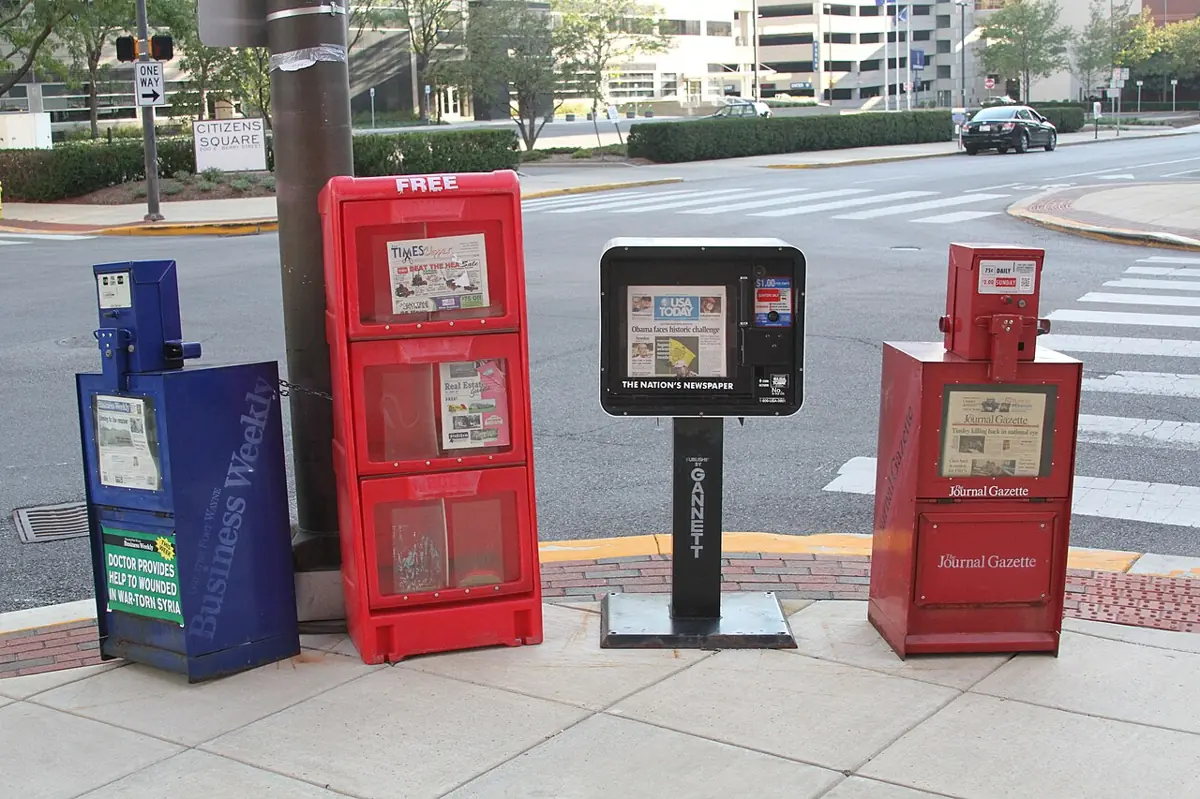
Examples of Metaphors in the News
Headline writers have a few seconds and a few words, so they reach for the strongest picture available. Notice how often the subject is money or politics and the picture is water or fire.
- “A wave of layoffs.” Many job cuts arriving one after another, hard to stop.
- “Markets bleed.” Prices fall hard. Stocks don’t have blood, but you feel the injury.
- “A firestorm of criticism.” Angry reaction that spreads quickly.
- “The housing bubble.” Prices puffed up with air and waiting to pop.
- “An iron curtain has descended across the Continent.” Winston Churchill, in his 1946 speech at Westminster College in Fulton, Missouri. He turned a political border into a physical wall, and the phrase stayed in the language for decades.
It’s worth asking, when you read a headline, what the metaphor is doing. “Wave” suggests nobody can be blamed. “Flood” suggests danger. Same facts, different feeling.
Examples of Metaphors in Everyday Talk
This is where metaphors really live. Not in books, but at the dinner table and in the group chat.
- “Time is money.” Benjamin Franklin wrote “remember that time is money” in his 1748 advice to a young tradesman. We now say “spend time” and “save time” without thinking.
- “My sister is an angel.” Kind and patient. Possibly also untrue on road trips.
- “My phone is dead.” A battery has no pulse, yet you’d say “it died” with a straight face.
- “The traffic was murder.” Awful, exhausting, and no one was hurt.
- “He’s a rock.” Reliable when everyone else wobbles.
Some of these are fresh and some are so old they’ve gone to sleep. We’ll leave that distinction for a separate post, but it’s useful to notice. “My phone is dead” has no spark left. “The traffic was murder” still has a little.
Examples of Metaphors in Texts and Social Media
Younger speakers invent metaphors faster than any dictionary can keep up. Most are short, jokey and a bit exaggerated.
- “My timeline is a dumpster fire.” A feed full of bad news and arguments, burning slowly and smelling worse.
- “This song is fire.” Excellent, hot, impossible to ignore.
- “My brain is fried.” Too tired to think. The brain as something left too long in a pan.
- “I’m stuck in a bubble.” You only see opinions that match your own, and the walls are thin.
I find these oddly honest. Nobody calls them poetry, yet they do exactly what poetry does: take a vague feeling and give it a shape.
What These Examples of Metaphors Have in Common
Look at where the pictures come from. School borrows from plants and sponges, work from machines and plumbing, news from water and fire, home from people and objects you can touch. Each setting has its favourite supply cupboard. Once you know that, you can predict the metaphor before you hear it. Try it the next time someone in a meeting says “going forward.” I bet a road, a river or a ladder is about to appear.
If you want to practise telling the difference between what a phrase says and what it means, our guide on how to learn and remember English idioms easily uses the same habit of turning the phrase into a picture.
Frequently Asked Questions
What is a good everyday example of a metaphor?
“Time is money” is a classic one. Time isn’t a coin, but we talk about spending it, wasting it and saving it all the time.
Are metaphors used in business writing?
Constantly. Pipeline, bottleneck, bandwidth and roadmap are all metaphors. Most people no longer notice them as such.
Can a metaphor be wrong?
It can be misleading or tired, though not “wrong” like a maths answer. A metaphor fails when the picture doesn’t fit the thing, or when two pictures collide in the same sentence.
Where can I read a plain definition?
The Cambridge Dictionary entry for metaphor gives a short, clear definition with learner examples.