My grandfather kept a canary, and he swore the bird sang best the day the cage door was left open and it chose to stay. I never worked out whether that was sweet or sad. Either way, it’s the image that comes to mind first when I think about metaphors for trapped: a living thing, a boundary, a way out that might or might not count. English is full of such pictures, and most of them are physical. A cage. A net. A maze. Ground that swallows your boots.
This post stays with those literal, visible images. For the human side (jobs, marriages, money), try our list of metaphors for being trapped.
Metaphors for Trapped: Confinement You Can See
These work because everyone has felt the physical version, if only for a minute in a stuck lift.
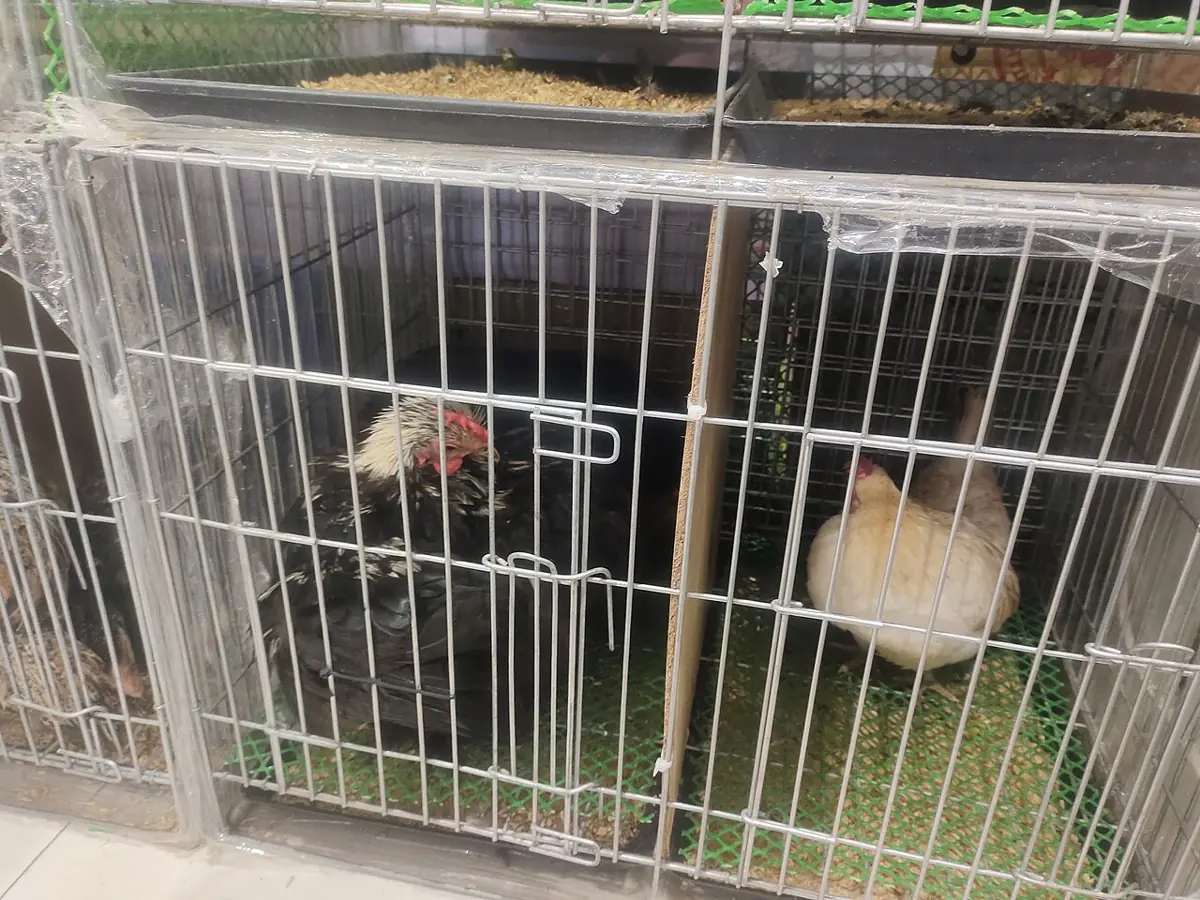
Cages, Boxes and Locked Rooms
- A bird in a bell jar. Meaning: Seen, admired and unable to breathe freely. In a sentence: From the street, her life looked lovely: a bird in a bell jar, turned slowly for visitors.
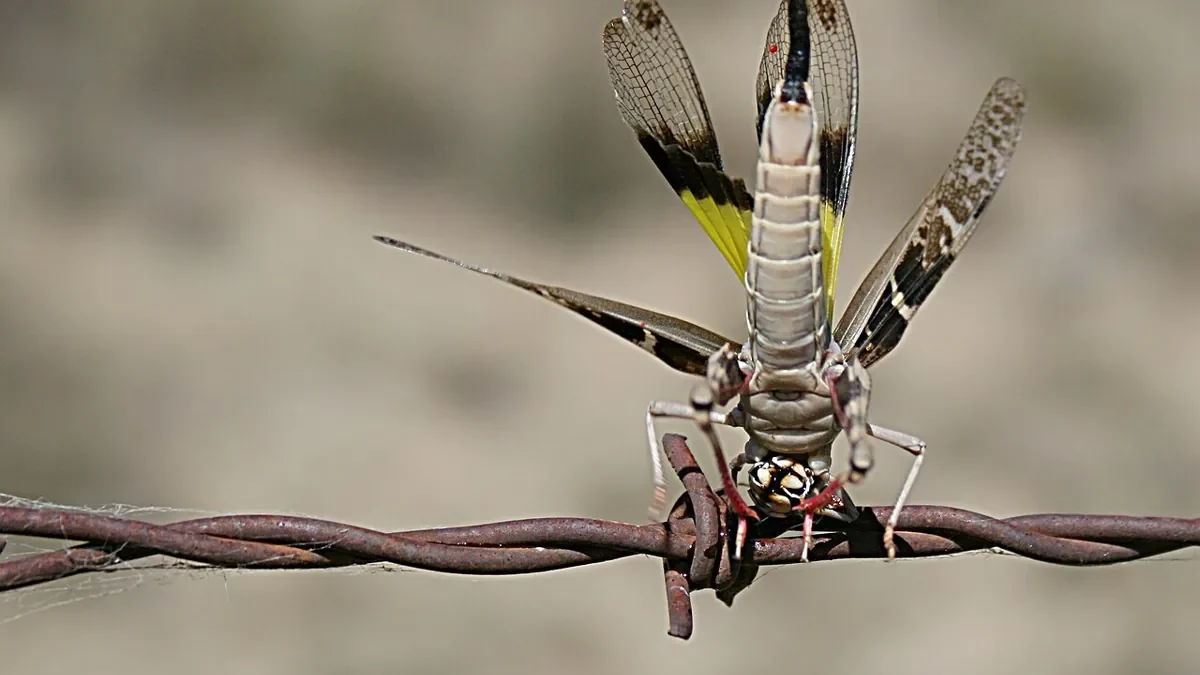
- A fly on a windowpane. Meaning: Pushing hard at something it can’t see. In a sentence: He kept sending the same email, a fly on a windowpane, sure the next push would break through.
- A coin in a locked drawer. Meaning: Valuable but out of use. In a sentence: Her talent sat there like a coin in a locked drawer, and the key belonged to her boss.
- A letter sealed in a bottle. Meaning: Alive inside, going nowhere on its own. In a sentence: The town’s youth were letters sealed in bottles, waiting for a tide that never came.
- A lift stopped between floors. Meaning: Not here, not there, and nobody answering. In a sentence: The negotiation was a lift stopped between floors, humming.
Nets, Traps and Webs
- A fish in a gill net. Meaning: Every wriggle tightens the mesh. In a sentence: The more she explained, the tighter it got; she was a fish in a gill net.
- A fly in a spider’s silk. Meaning: The thread is thin, but it won’t let go. In a sentence: The contract was silk, and he was already wrapped up to the neck.
- A fox with a leg in a trap. Meaning: Forced to stay and wait for whatever arrives. In a sentence: With the rent due and no savings, he was a fox with a leg in a trap.
- A rabbit in headlights. Meaning: Frozen, with the danger coming closer. In a sentence: Asked a direct question, he became a rabbit in headlights.
Mazes, Quicksand and Tunnels
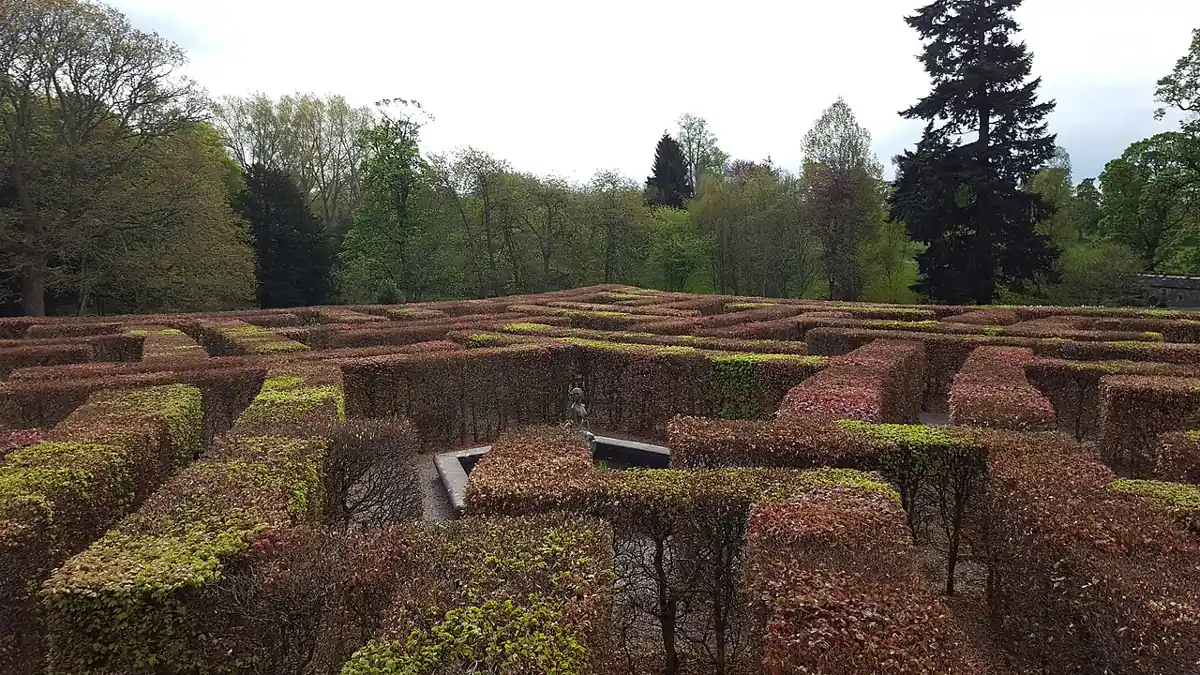
- A hedge maze with no centre. Meaning: Every turn is a choice, none leads out. In a sentence: The application process was a hedge maze with no centre; we kept passing the same dead end.
- Quicksand. Meaning: The harder you fight, the deeper you go. In a sentence: Panic was the quicksand: every struggle sank her further.
- A mine after the cave-in. Meaning: Heavy darkness, and the only exit is behind rock. In a sentence: After the news, the office felt like a mine after the cave-in.
- A hall of mirrors. Meaning: You see yourself everywhere and can’t find the door. In a sentence: In the debate, he was in a hall of mirrors, hitting his own reflections.
Walls, Doors and Tight Spaces
- A door painted on a wall. Meaning: The way out is a fake, and you’ve already knocked. In a sentence: The promotion was a door painted on a wall. Mina found out after three years.
- A suit two sizes too small. Meaning: You can still move, but every motion pinches. In a sentence: The old hometown fit like a suit two sizes too small.
- A well with no rope. Meaning: You can see the sky, and that’s the cruel part. In a sentence: Awake at 4 a.m., he looked up from a well with no rope.
- A glass tank. Meaning: On show, with a wall between you and everything. In a sentence: The new manager’s office was a glass tank, and everyone could watch him pace.
Why Metaphors for Trapped Feel So Real
Most of us learn what “stuck” means as toddlers, with a head in a railing or an arm in a jar. That early panic stays in the body. So when a writer says someone is a fly on a windowpane, the reader’s stomach reacts before the brain does. It’s also why so many people describe emotional confinement in physical terms. The mind borrows what the body already knows.
It helps to remember that trapped isn’t one feeling. Some traps squeeze (a tight suit). Some trap by distance (the well). Some trap by deception (the painted door). Name which one you mean.
A Short Writing Guide to Trapped Images
Three quick rules, from someone who has overused every one of these.
Match the trap to the cause. A net suggests a trap someone set. Quicksand suggests the situation itself. A maze suggests confusion. Pick the one that tells the truth about how your character got there.
Give it a sound or a texture. The hum of a stopped lift. The rasp of wire. Without a sense detail, a cage is just a word.
Leave one tiny gap. Fiction about confinement is sharper when something small remains possible: a latch, a thread, a dimmer patch of dark. If nothing is possible, readers stop hoping. If you want an image about being lost rather than held, see idioms for feeling lost.
The Purdue Online Writing Lab has a clear overview of figurative language if you’d like the technical terms.
When a Cage Is More Than a Cage
Trapped images become more interesting when the boundary is invisible or self-made. A fence the animal could jump. A door that opens inward. For emotional versions, read our piece on metaphors for isolation.
Frequently Asked Questions
What are some metaphors for trapped?
A bird in a bell jar, a fly on a windowpane, quicksand and a lift stopped between floors are all examples. Each shows confinement through something we can picture.
Is “trapped like a rat” a metaphor or a simile?
It’s a simile, since it uses “like.” “He was a rat in a corner” would be the metaphor form.
Which trapped metaphor suits a thriller?
Nets, traps and quicksand carry danger. Mazes suit mysteries, because the trouble is not knowing the way.
How do I avoid cliches?
Skip the cage and the chains. Choose a specific, odd object, such as a sealed letter or a stopped lift, and give it one sensory detail.