“The fog comes on little cat feet.” That is the opening of a poem by Carl Sandburg, and it is a metaphor in a single line. Fog is not an animal. Yet once you have read it, you cannot watch fog roll over a street without picturing a cat. That small trick is why poems with metaphors tend to stay in your head for decades.
Below are six poems worth knowing, each built on one central comparison. I picked ones I could check against reliable texts, and most are public domain, so I can show you the real lines. Our own post on metaphors for poems goes the other way and describes what a poem itself is like.
Short Poems With Metaphors That Do One Thing Well
“Fog” by Carl Sandburg
Here is the whole poem, since it is short and in the public domain:
The fog comes
on little cat feet.
It sits looking
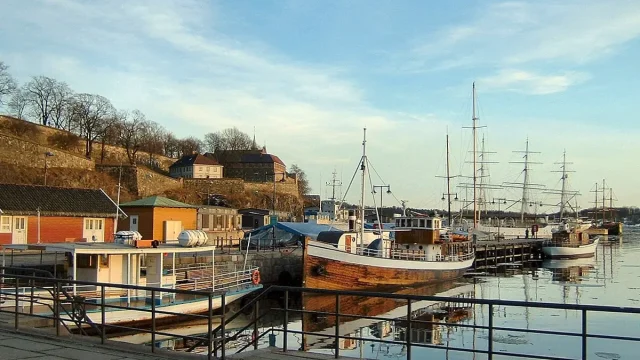
over harbor and city
on silent haunches
and then moves on.
Sandburg never says “like a cat”. He says the fog has cat feet and haunches, and that is all. The comparison works on three levels. Fog arrives quietly. It settles. It leaves without asking. You can read the full text at the Academy of American Poets.
“Hope” is the thing with feathers by Emily Dickinson
Dickinson’s poem opens with the line that gives it its name: hope is a bird that perches in the soul. It sings without words and never stops. Later she says she has heard it in the coldest land and on the strangest sea, yet it has never asked her for a crumb.
What I like is how she uses the bird against the usual picture of hope. Most people treat hope as fragile. Dickinson makes it small, yes, but stubborn and free of cost. A bird does not charge you for singing. The poem was published after her death, which gives that stubbornness an odd extra weight.
Poems With Metaphors That Stretch Across a Whole Poem
“Mother to Son” by Langston Hughes
The speaker is a mother talking to her son, and her life is a staircase: “Life for me ain’t been no crystal stair.” She describes tacks, splinters, torn boards and bare floor. She also describes landings, corners and stretches of darkness. Then she says she is still climbing and he should not turn back.
The stair is a clever choice. A staircase has steps you must climb one at a time, and you can’t see the top from the bottom. The poem first appeared in The Crisis in December 1922. The full text is on poets.org. If this resonates, our metaphors for challenges use similar pictures of struggle.
“The Road Not Taken” by Robert Frost
The surface is a walk in a wood where two paths split. The deeper meaning is any choice that closes a door behind you. Published in 1916, it is probably the most misread metaphor poem in English. Many readers take it as a cheer for being different. Read it again. The speaker admits the two roads were worn “really about the same,” and that he will later tell the story with a sigh. The poem is gentler, and sadder, than its reputation.
“Dreams” by Langston Hughes
Another Hughes poem, only eight lines. If dreams die, he writes, life is a broken-winged bird that cannot fly. If dreams go, life is a barren field frozen with snow. So we get two metaphors, one after the other, and the pairing is the whole structure. The bird is about movement lost. The field is about growth lost. Compare these with our similes for dreams.
Sonnet 73 by William Shakespeare
The speaker tells someone to look at him and see late autumn, a few yellow leaves on cold branches. Then twilight fading in the west. Then a fire burning down on the ashes of its own youth. Three pictures of aging, each a little darker than the last. Shakespeare built a staircase out of images, and the last step is the point: the listener will love him more because he will soon be gone. For a plainer take on growing older, try metaphors for aging.
How to Read Poems With Metaphors
People often say they “don’t get poetry”. Usually they are looking for a hidden code. There is no code. Try three plain questions.
- What is the poem literally describing? A fog, a staircase, a road.
- What else could that thing stand for?
- Which details in the poem support that second meaning?
With Sandburg, the details are paws and haunches. With Hughes, they are splinters and landings. The details tell you what the poet wants.
One honest warning: you can over-read. If a poet writes about a red wheelbarrow, sometimes it is just a wheelbarrow. Look for evidence in the text, not in your own mood.
Write Your Own
A poem does not need to be good to teach you something.
Pick one object in the room. Say a cup, a clock, a coat. Write four lines where it behaves like a person or an animal, and do not use “like” or “as”. Sandburg did exactly this and only needed six lines. Afterward, read your four lines aloud and cut any word that explains too much. What is left is usually the poem.
Frequently Asked Questions
What is a good short poem with a metaphor?
“Fog” by Carl Sandburg is a strong pick. It is six lines long and treats fog as a cat from start to finish, without ever saying so directly.
What is an extended metaphor in a poem?
It is a comparison that continues for several lines or the entire poem. “Mother to Son” does this with the staircase, and “Hope” is the thing with feathers does it with the bird.
Is Emily Dickinson’s “Hope” poem a metaphor or a simile?
It is a metaphor. Dickinson does not say hope is like a bird. She says hope is a thing with feathers.
Where can I read these poems for free?
The Academy of American Poets site, poets.org, hosts the full text of many public domain poems, including the Sandburg and Hughes pieces above.