
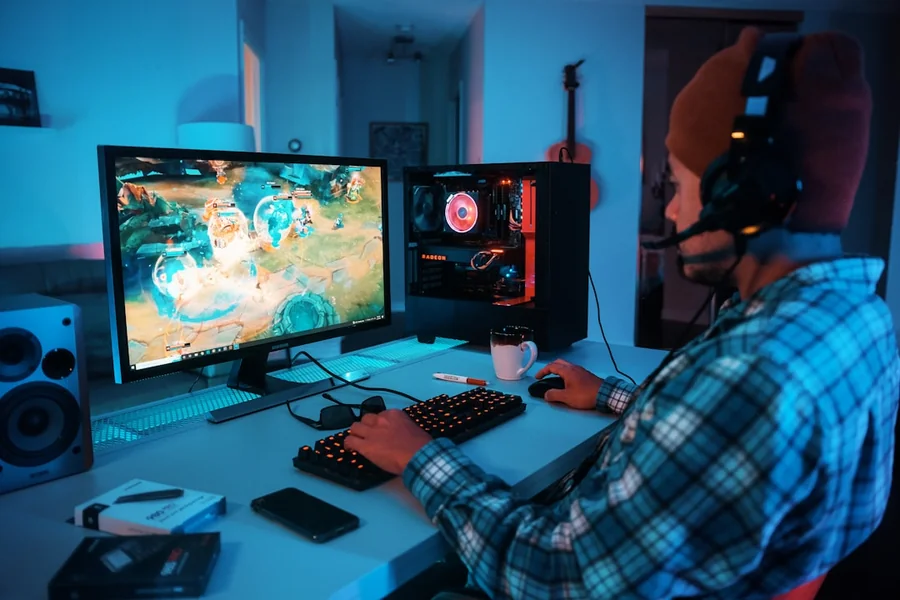

Online entertainment is going through massive transformation, all thanks to technology. The gaming and digital betting space isn’t a place to just play anymore, but instead is transforming into a smart, adaptive ecosystem that continuously reacts to each and every user. By 2026, the future of generative AI, immersive hardware, cloud infrastructure, and advanced security systems is becoming a reality, not just a concept.
But this innovation brings with it a new challenge. The proliferation of gaming and betting sites makes it harder for users to find the best, safe, and fun gaming sites. With the increasing competition in the market, it is crucial to rely on trusted platform reviews to make informed choices. Cheekypunter review and analysis provides information on a player’s preferred platforms, their strengths and features, as well as how reliable they are before committing their time and money.
1. Generative AI: crafting infinite, personalized game worlds
One of the most impactful trends of online gaming 2026 is generative AI. Traditional games are very dependent on pre-written stories, missions, character behaviours. Generative AI games are changing that, by generating dynamic experiences that can adapt to the individual player.
Players are not all required to experience the same storylines or quests, but may experience different quests that play out differently depending on their choices. AI driven characters are getting smarter, and can recall past dialogues, respond in a natural manner and create more lifelike personalities.
This technology helps to make the experience more replayable because no two experiences should be the same. AI in gaming is enabling the development of virtual worlds that are more alive and where player decisions have more impact on their virtual fate.
2. Hyper-immersive experiences: the merger of Cloud, VR, and AR
With the advent of cloud gaming, VR and AR, it has become easier to experience games in 3D. Examples include GeForce Now and Xbox Cloud Gaming, which demonstrate how streaming can eliminate traditional hardware constraints.
It is no longer necessary to buy a costly gaming machine for playing high-quality games. In cloud gaming, users can stream the game from compatible devices to a powerful remote server, which provides the game with the necessary power.
Meanwhile, VR gaming 2026 is progressing in several ways, including lighter headsets, better graphics, and more precise motion tracking. Giving virtual environments more depth and realism with accessories like haptic feedback devices and special controllers, which provide the user with haptic feedback.
These advances are shaping a future that will bring immersive entertainment to more people.
3. Seamless security: biometric KYC and decentralized assets
The security issue is an integral part of the growth of online betting and games. The slower verification systems are being replaced with faster biometric verification systems, which help identify a customer using facial recognition and fingerprint scanning.
The systems help to confirm user identity more efficiently, and minimise fraud and unauthorised access. The advantages of the players are the speed of registration, enhanced protection of the players’ account and smoother payment processes.
Digital ownership is also seeing an impact from blockchain technology. Although adoption is not yet uniform, blockchain-based frameworks can offer secure markets with situations where users have more control over digital products, collectibles and digital assets.
The development of online economies will make it increasingly essential to have robust security and ownership mechanisms.
4. AI as a guardian: the new era of responsible gambling
AI is not limited to enhancing entertainment; it is also aiding in the creation of safer online betting experiences. AI can inform the responsible gambling approach by analysing player behaviour patterns and flagging potentially problematic play before it escalates.
Platforms can identify odd transactions, sudden bursts of betting activity, or unusual deposit patterns. This isn’t just theoretical: major operators like DraftKings, FanDuel and Playtech now deploy real-time machine learning models to flag high-risk players, with industry data showing this approach can cut compliance violations by roughly 40% compared to manual, after-the-fact reviews. DraftKings has said its proprietary SafePlay system now handles 95% of affordability flagging across its UK operations. Rather than waiting for a problem to surface, these systems offer personalized limits, cooling-off suggestions, and direct access to support services as early interventions.
This is a change towards a more responsible industry. Not just entertainment value, but how well they are protecting users will be a factor in determining the best platforms.
5. Hyper-personalization: from D2C models to individualized rewards
The way entertainment companies interact with players is being revolutionized by direct-to-consumer sales. Publishers are increasingly establishing their own direct connections to their audience rather than relying on traditional distribution methods.
The sophisticated data analysis enables businesses to provide personalised challenges, loyalty incentives and customised recommendations. The player can be suggested content, promotions or offers based on their interests and past actions.
This enhances the player engagement technology by customizing them to be more relevant. It offers valuable insights into customer preferences and contributes to the development of better long-term customer relationships for businesses.
6. The ‘play anywhere’ reality: true cross-platform and multichannel gaming
Today’s players demand flexibility. Console, PC and mobile gaming are becoming increasingly irrelevant in multichannel gaming ecosystems.
Users can keep playing through the various versions of the game on different devices thanks to unified accounts and cloud saves. A player can play a game on a console, then a computer and then a cell phone.
This change brings the platform to a more flexible level and focuses more on convenience. Online gaming isn’t solely about hardware competition, it’s about connected experiences.
7. Adapting to a new rulebook: navigating global gaming regulations
As gaming regulations evolve, they’re driving the way companies create and manage online platforms. Loot Boxes, Data Privacy, Consumer Protection and Betting Licences remain a significant concern in the industry.
Automated age verification and geo-fencing systems and enhanced compliance monitoring are assisting businesses to achieve these requirements. These solutions can ensure that companies offer a safer gaming experience and comply with legal requirements in various regions.
However, technology will continue to play a crucial role in meeting the balance of innovation and responsibility as regulations change.
Beyond 2026: What’s on the horizon for online play?
The web will probably not end with today’s technologies. This isn’t purely speculative anymore. Neuralink has already moved from medical trials to early commercial deployment, and in April 2026 launched what it calls the first ‘BCI-native’ esports league, games designed to be played at speeds physically impossible for a human hand, using thought alone. The company’s brain implants can now sustain a data rate equivalent to typing 50 to 60 words per minute by thought, hinting at where gaming controls could be headed as the technology scales.
A more cohesive and enduring metaverse is still a potential future, one in which entertainment, social interaction and digital economies converge into virtual spaces.
In the future, AI can power entertainment systems to continuously learn and adapt to every user, potentially making gaming more immersive and lifelike. The possibilities of creating AI-powered entertainment systems that adapt and learn over time could eventually lead to more immersive and realistic gaming experiences. Some of these developments are speculative, but the direction is clear; online play is becoming more intelligent, immersive and personalised.
Technology is not just enhancing the games, it’s taking an even larger presence in 2026 and beyond. It’s changing the definition of digital entertainment.