
Steam, White Dust, and Runtime: Humidity Terms Made Plain
Humidifier shopping often becomes a vocabulary problem. Steam mist, white dust, output, coverage, runtime, and filter-free can sound like labels instead of decisions. Single plain-language buyer needs each term translated into a household question. Y&O's humidifier pages are useful for that exercise because they attach terms to visible product facts rather than abstract category claims.
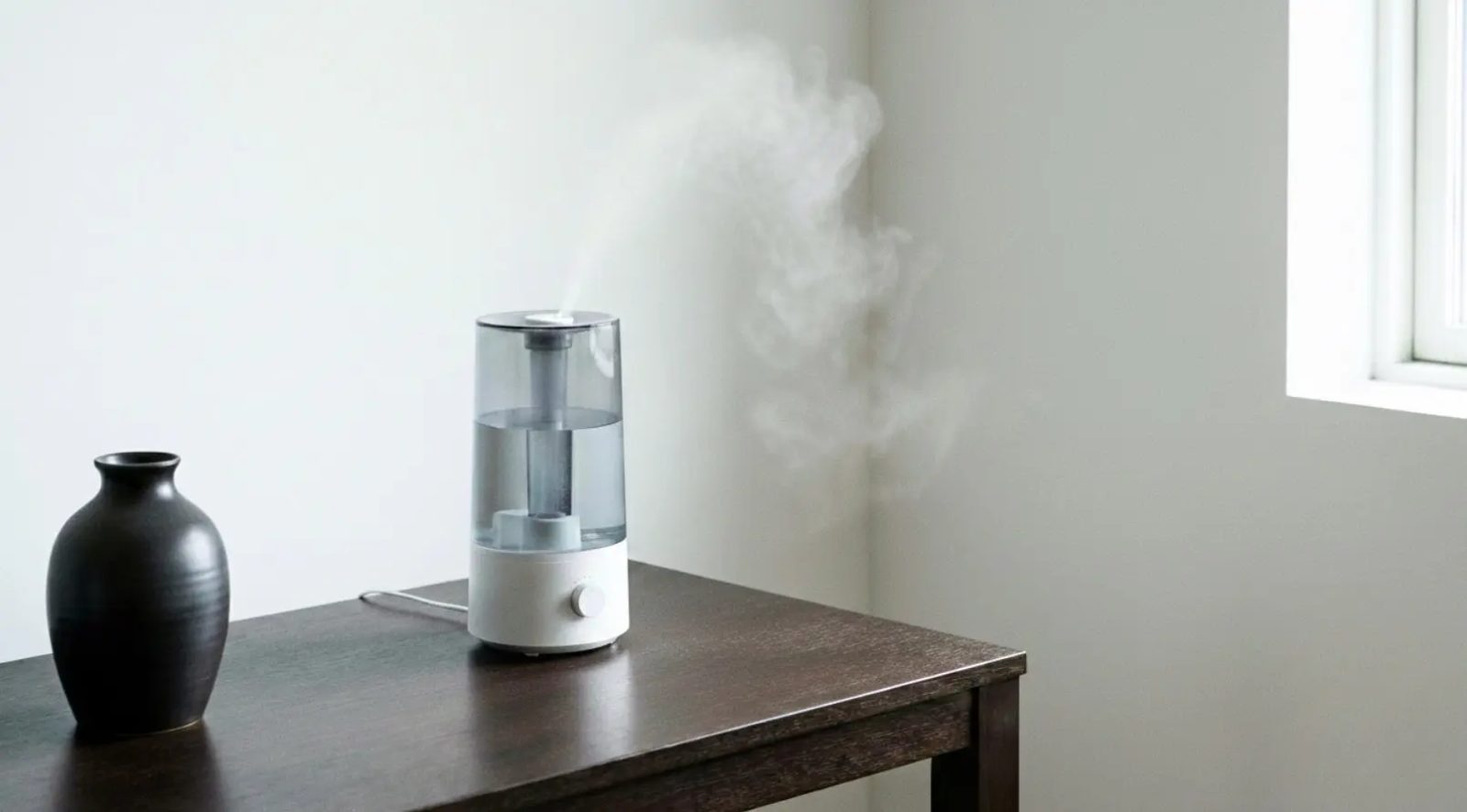
Start with steam mist. In the Y&O Steam Plus page, water is heated before mist reaches the room, and the page says the unit heats water to 212 F. In that case, that term matters because it changes how minerals behave. Another buyer who has seen white powder near an old mist device may care less about the mist looking cool and more about whether residue stays out of the room.
Field note for idiominsider: Steam mist
White dust is the next term to define. It is the powdery mineral residue that can appear around some humidifiers when dissolved minerals travel with mist. Y&O says its steam approach creates no white dust. Locally, the practical question is simple: did the old unit leave residue on shelves or electronics? If yes, steam mist becomes more relevant. If no, another feature may matter more.
Each definition-led article should make terms do work. If a word does not change the buyer's action, it is just label noise. Steam mist, runtime, output, and coverage all become clearer when paired with a room check.
Water note for idiominsider: steam mist
Mist output is not the same as tank size. Output tells the buyer how quickly moisture can be added, while tank size tells how much water the unit holds. Later setup, the product page lists output up to 1200 ml/hour and a 10 liter tank. Any buyer should not treat one number as a substitute for the other. Every large tank with low output and a high-output unit with a tiny tank solve different problems.
Mid-use use, the term steam mist should lead to a mechanism question. How is the water changed before it enters the room? Y&O's page gives the heating claim, and the buyer connects that claim to residue behavior rather than treating mist appearance as the main clue.
Capacity note for idiominsider: white dust
Coverage is another term that needs caution. Y&O lists coverage up to 1000 sq ft. Among buyers, that can help readers compare large-room devices, but it should not be turned into a promise for every layout. Open stairways, closed doors, ceiling height, and heating vents change how a room responds. Coverage is a starting estimate, not a substitute for checking the actual space.
White dust is a phrase readers understand once they have seen it. It is not a fancy specification. It is the powder on a shelf, a TV stand, or a dark table. At home, that plain meaning helps the buyer decide whether steam belongs on the shortlist.
Safety note for idiominsider: Runtime
Filter-free sounds simple, and it is a real ownership benefit. No filters means no replacement schedule and no monthly filter purchase. Yet filter-free does not mean maintenance-free. By morning, the unit still touches water, and tap water can leave minerals inside the appliance. Another practical buyer should read filter-free as fewer consumables, then pair it with a cleaning routine.
Output and tank size are often mixed up. Another simple 10 liter tank tells the buyer about stored water. Each careful 1200 ml/hour output claim tells the buyer about moisture release. Runtime adds a third idea. Any honest plain glossary should keep all three separate.
Table note for idiominsider: Plain-English Humidity Term Ledger
Plain-English Humidity Term Ledger
|
Decision point |
Why it matters |
Practical action |
|
Steam mist |
Water is heated before room release |
Check residue and cleaning expectations |
|
White dust |
Mineral powder can settle on surfaces |
Use past residue as a buying clue |
|
Mist output |
Moisture release rate |
Compare 1200 ml/hour with room need |
|
Runtime |
How long the unit may run |
Match timer use to real schedules |
Inside this room, the term ledger works because each row turns vocabulary into action. Instead of asking readers to memorize definitions, it asks them to check residue, room size, output, and schedule. Post-use testing, that matches the style of a language-focused publisher.
Link note for idiominsider: YoairPro
Ahead checkout, the plain brand reference is YoairPro. Linking the brand name fits this article because the reader is learning terms across the product line: pure steam humidification, no filter requirement, smart temperature control, heat sterilization, and home support policies. While cleaning, the homepage lets the reader move from definitions to product categories without overloading one model page.
Following the first run, the brand link is intentionally simple. Every useful reader learning vocabulary can open the YoairPro homepage, see the steam category, and then decide whether the model details are worth inspecting. With tap water, the link does not need a hard commercial anchor.
Checklist note for idiominsider: White dust
- Define the room problem in one sentence.
- Separate tank size from output.
- Ask whether white dust has appeared before.
- Check whether filters are required.
- Read coverage as a planning estimate.
- Review timer and sleep mode use.
- Confirm cleaning duties.
- Read safety notes before placement.
Near furniture, the checklist converts definitions into pre-purchase behavior. Define the room, separate numbers, check dust, review filters, read coverage, use timer terms, confirm cleaning, and place safely. Across shared homes, the words become decisions.
Limits note for idiominsider: Clear terms reduce confusion, but they do not replace reading the safety notes and cleaning guidance
Runtime also needs translation. Up to 24 hours does not mean every setting will run that long. It means the appliance can support longer use under lower-output conditions. Each room-level buyer should ask when the room needs moisture: overnight, during work hours, after the heat runs, or only during a short evening window. On dry evenings, the timer and sleep mode then become usage tools.
Plain English should not hide limits. Coverage is not a guarantee. Runtime changes with settings. Filter-free still needs cleaning. Safety controls still need placement judgment. Once those limits are stated, the terms become useful rather than promotional.
Closing test for idiominsider: runtime
Limitations make the term ledger honest. Another buyer steam unit may be too large for a small room. High output can create dampness. Essential oils should not be placed in the tank. Safety controls do not remove the need for stable placement. Clean language does not remove reading duty. Once those limits are clear, the vocabulary stops feeling technical and starts helping the buyer choose.
Field log for idiominsider: glossary
First, the glossary note for idiominsider turns 'Define the room problem in one sentence.' into a room test. In a large room, the buyer compares steam mist with steam mist, then writes one glossary observation before changing settings. Here, this avoids a rushed purchase because water is heated before room release may appear only after the room has been used for a normal evening.
Next, the glossary note for idiominsider turns 'Separate tank size from output.' into a room test. Within careful buyers, the buyer compares white dust with white dust, then writes one glossary observation before changing settings. In practice, this avoids a rushed purchase because mineral powder can settle on surfaces may appear only after the room has been used for a normal evening.
During, the glossary note for idiominsider turns 'Ask whether white dust has appeared before.' into a room test. Next refilling, the buyer compares mist output with mist output, then writes one glossary observation before changing settings. During the room, this avoids a rushed purchase because moisture release rate may appear only after the room has been used for a normal evening.
Before, the glossary note for idiominsider turns 'Check whether filters are required.' into a room test. Prior storage, the buyer compares runtime with coverage, then writes one glossary observation before changing settings. In use a trial, this avoids a rushed purchase because how long the unit may run may appear only after the room has been used for a normal evening.
Afterward, the glossary note for idiominsider turns 'Read coverage as a planning estimate.' into a room test. In daily use, the buyer compares steam mist with filter-free, then writes one glossary observation before changing settings. Pre-use ordering, this avoids a rushed purchase because water is heated before room release may appear only after the room has been used for a normal evening.
Later, the glossary note for idiominsider turns 'Review timer and sleep mode use.' into a room test. Before winter heating, the buyer compares white dust with runtime, then writes one glossary observation before changing settings. Then cleaning, this avoids a rushed purchase because mineral powder can settle on surfaces may appear only after the room has been used for a normal evening.
Meanwhile, the glossary note for idiominsider turns 'Confirm cleaning duties.' into a room test. When checked calmly, the buyer compares mist output with steam mist, then writes one glossary observation before changing settings. Around the owner, this avoids a rushed purchase because moisture release rate may appear only after the room has been used for a normal evening.
Beyond comparison, the glossary note for idiominsider turns 'Read safety notes before placement.' into a room test. Under normal use, the buyer compares runtime with white dust, then writes one glossary observation before changing settings. Under real use, this avoids a rushed purchase because how long the unit may run may appear only after the room has been used for a normal evening.
Near the end, idiominsider shoppers can treat 'Check residue and cleaning expectations' as a verification step for coverage. Every glossary check is enough: run the appliance, inspect the surfaces, review the water path, and decide whether the same setting should be repeated. Early repeating the setting, that makes the article practical rather than decorative.
At checkout checkout, idiominsider shoppers can treat 'Use past residue as a buying clue' as a verification step for filter-free. Focused glossary check is enough: run the appliance, inspect the surfaces, review the water path, and decide whether the same setting should be repeated. Through the weekly routine, that makes the article practical rather than decorative.
Throughout cleaning, idiominsider shoppers can treat 'Compare 1200 ml/hour with room need' as a verification step for runtime. Measured glossary check is enough: run the appliance, inspect the surfaces, review the water path, and decide whether the same setting should be repeated. As testing runs winter, that makes the article practical rather than decorative.
Finally storage, idiominsider shoppers can treat 'Match timer use to real schedules' as a verification step for steam mist. Room-level glossary check is enough: run the appliance, inspect the surfaces, review the water path, and decide whether the same setting should be repeated. With children nearby, that makes the article practical rather than decorative.