
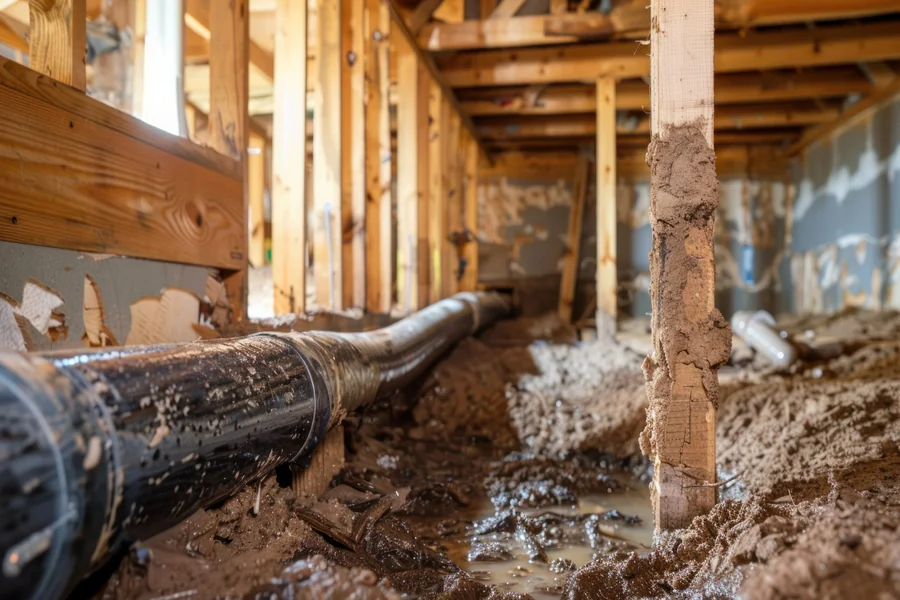

Do you smell musty air or see damp spots under your home? Moisture there can cause mold, wood rot, and weak floors. This post will show signs to watch for, health risks, and simple fixes you can do or hire.
Keep reading.
Common Causes of Moisture Problems Under Your Home
Moisture problems under your home often start with poor drainage. Plumbing leaks and high humidity can also add to the issue.
Poor drainage or grading
Poor grading sends water toward your foundation. Water pools near the crawl space and soaks the soil. That increases dampness and spurs mold and mildew growth.
Saturated soil pushes on foundation walls and causes foundation damage and cracks. Wood joists can rot and invite pest infestations like termites and carpenter ants. Fix grading, install proper drainage, and add ventilation plus a dehumidifier to lower humidity and prevent water damage.
Plumbing leaks
Leaking pipes under the floor cause moisture intrusion fast. Slow drips soak insulation and wood. That creates dampness, mold, and mildew in the crawl space.
Hidden leaks lead to wood rot and weaken floor joists. They also raise the risk of foundation damage and poor air quality. Fix pipes quickly and use a dehumidifier to stop water damage.
High humidity in crawl spaces or basements
High humidity in crawl spaces and basements causes dampness and mold growth. Warm air meets cool surfaces and drops moisture on insulation and wood. Poor ventilation traps moist air and hurts air quality upstairs.
Left unchecked, mildew and mold feed on wood and can start wood rot. Install a dehumidifier and add vapor barriers to control moisture intrusion. This also raises the risk of mold and respiratory issues, which the next section will cover.
Health Risks Associated with Moisture
Moisture can lead to mold and mildew growth. These fungi can harm your health, causing breathing problems and allergies.
Mold and mildew growth
Mold and mildew thrive in areas with high humidity. They grow quickly when conditions are damp. Both can cause serious health problems. They release spores into the air, which can lead to breathing issues and allergies. Common symptoms include sneezing, coughing, and headaches. People with asthma may find their symptoms worsen.
Removing mold and mildew is not easy. It often requires special cleaning solutions or professional help. Damp places like crawl spaces provide a perfect environment for these fungi to grow. Proper ventilation helps reduce humidity levels and prevents future growth of mold and mildew under your home. Using dehumidifiers can also control excess moisture effectively.
Respiratory issues and allergies
Mold and mildew growth can lead to serious health issues. These fungi release spores into the air. Breathing in these spores can irritate lungs and cause allergies. Common symptoms include sneezing, coughing, and a runny nose.
People with asthma or other respiratory conditions may have worse problems. They may struggle to breathe or feel tightness in their chest.
Damp spaces like crawl spaces often increase humidity levels. High humidity reduces indoor air quality and makes breathing difficult for many people. Allergens thrive in such environments, worsening existing allergies too.
Taking action against moisture is essential for keeping your home safe and healthy. Don’t underestimate the problem and pay attention to it, especially when you handle home improvement projects. A clean space prevents mold growth and helps everyone breathe easier.
Structural Damage Caused by Moisture
Moisture can cause serious harm to your home. It leads to wood rot and weakens floor joists, making your house unsafe over time.
Wood rot and weakened floor joists
Wood rot occurs when wood stays wet for too long. It breaks down the fibers and weakens the structure. Floor joists are crucial for holding up your home. If they rot, they can cause serious safety issues.
Weak floor joists may lead to sagging or even collapse. Repairing them can be costly and time-consuming. Keeping moisture away is vital to prevent this damage. Fix drainage problems and keep areas well-ventilated to help maintain dry conditions under your home.
Next, let’s look at foundation cracks and instability caused by moisture problems.
Foundation cracks and instability
Foundation cracks can be a sign of serious problems. Moisture weakens the soil under your home. This can lead to shifts in the ground, causing cracks in the foundation walls. Cracks allow water to seep in and create dampness inside. Water damage affects not just the structure but also the air quality.
Instability may arise from wood rot or weakened floor joists as well. These issues threaten your home’s safety and value. Setting up good drainage systems helps manage this problem effectively. Addressing these concerns quickly prevents further damage and keeps pests away from moisture-rich areas like crawl spaces or basements.
Pest Infestations in Moisture-Rich Environments
For effective long-term solutions, consider professional crawl space repair in Tulsa to address the underlying issues.
Pests thrive in damp places. Termites, ants, and rodents may invade your home if moisture is present.
Termites, carpenter ants, and rodents
Termites, carpenter ants, and rodents thrive in damp areas. Termites eat wood and can cause severe damage to your home. Carpenter ants also attack wood but prefer wet or rotting material.
Both pests create nests near moisture sources.
Rodents are attracted to water and food. They can spread diseases through their droppings and urine. Their presence adds new health risks for you and your family. Moist environments make it easier for these pests to invade your home, leading to bigger problems down the line.
How to Address and Prevent Moisture Problems
To reduce moisture problems, start by fixing drainage issues around your home. Installing a dehumidifier and sealing crawl spaces can also help keep dampness away.
Improve drainage and sealing
Moisture problems need quick attention. Fixing drainage and sealing can help keep your home dry.
- Check your gutters. Clean them regularly to ensure water flows away from your home. Clogged gutters can cause leaks.
- Ensure downspouts direct water away from the foundation. This helps prevent water pooling near your home, which can lead to dampness.
- Regrade the yard if needed. The ground should slope away from your home’s foundation. Proper grading keeps rainwater from seeping in.
- Seal cracks in walls and floors with waterproof sealants. These materials block moisture from entering your home.
- Install a sump pump in basements or crawl spaces prone to flooding. It removes excess water quickly and helps control humidity levels.
- Use vapor barriers in crawl spaces to limit moisture intrusion. These barriers stop damp air from rising into your living areas.
- Make sure vents are open and functioning well for proper ventilation in crawl spaces or basements. Good airflow reduces humidity and prevents mold growth.
- Regularly inspect plumbing for leaks or damage; fix any issues right away before they become bigger problems.
- Pay attention to basement windows; make sure they are sealed properly to keep moisture out.
Addressing drainage and sealing now can save you money on future repairs caused by mold, wood rot, or foundation damage.
Use dehumidifiers and vapor barriers
Dehumidifiers and vapor barriers help control dampness in your home. They are useful tools to keep moisture at bay.
- Dehumidifiers pull humidity from the air. This process helps reduce mold and mildew growth.
- A good dehumidifier can lower indoor humidity to a safe level. Aim for about 30-50% relative humidity inside your home.
- Place dehumidifiers in areas prone to high moisture, like basements or crawl spaces. These spots often trap damp air.
- Vapor barriers prevent moisture from moving through floors and walls. They act as a shield against ground moisture.
- Install vapor barriers on the ground in crawl spaces or basements. This blocks water vapor from entering your home.
- Choose sturdy materials for vapor barriers, such as polyethylene plastic. This type is effective against leaks and high humidity.
- Regularly check both dehumidifiers and vapor barriers for damage or wear. Maintenance keeps them working efficiently.
Using these methods protects your home from water damage and improves air quality too.
Conclusion
Moisture problems under your home can lead to serious issues. Mold and mildew thrive in damp spaces, harming air quality and health. Water damage weakens structures, causing cracks and wood rot.
Ignoring these signs will invite pests that love moisture-rich areas. Take action now to protect your home and family from costly repairs later.