
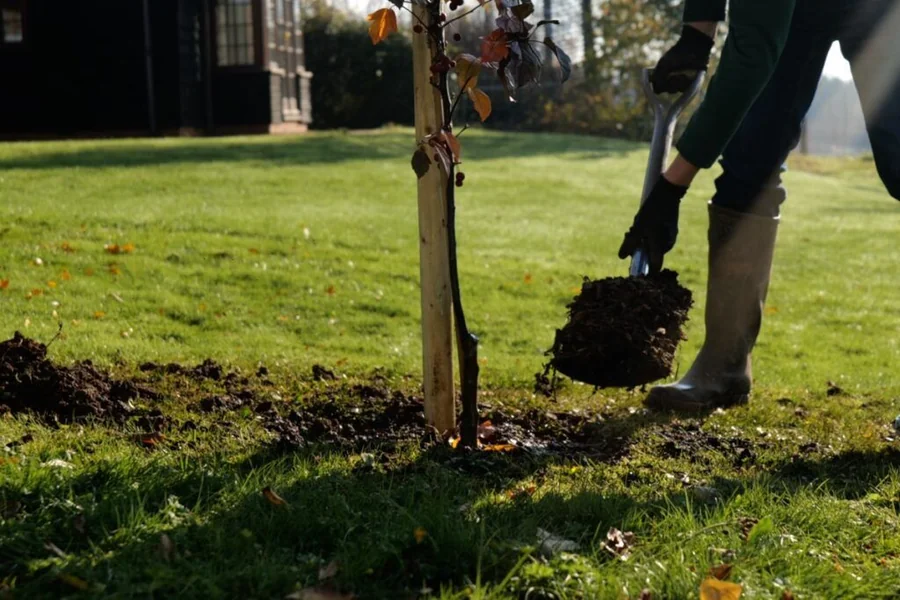

Are your trees dying, or does your lawn look patchy? Healthy soil and regular care give plants a much better chance. This guide shows easy tips on pruning, mulching, watering, and lawn care.
Read on to learn simple steps.
Regular Lawn Care
Regular lawn care keeps your yard looking its best. Mowing and fertilizing help grass grow strong and healthy.
Mowing techniques for optimal growth
Mow your lawn to support tree health and plant growth. Cut grass at the right height to keep soil moisture and limit weed control needs.
- Set mower height to three inches for most turf, which helps shade soil and conserve soil moisture while aiding plant health.
- Cut no more than one-third of the blade length at a time to reduce stress on grass and protect root systems for better nutrient management.
- Sharpen blades every 20 hours of use, so cuts stay clean, which lowers disease risk for lawn care and nearby tree maintenance.
- Change the mowing pattern each session to prevent soil compaction and to encourage even plant growth across the landscape.
- Leave clippings on the lawn when the grass is dry because they add nutrients back to the soil and reduce the need for frequent fertilizing.
- Mow at cooler parts of the day, early morning or late afternoon, to minimize heat stress on plants and support water retention.
- Avoid mowing wet grass, as wet clippings can clump, promote fungal problems, and harm overall plant health.
- Edge and trim carefully near trees and beds to protect trunks and roots, and to keep the landscape design tidy without damaging plant growth.
Fertilization schedules for nutrient-rich soil
Keep soil fertile with a clear fertilization schedule.
| Plant Type | When to Fertilize | Frequency | Recommended N-P-K | Notes |
|---|---|---|---|---|
| Cool-season lawn | Early spring, late spring, early fall | 3 times per year | 20-5-10 for spring; 5-10-20 for fall | Apply slow-release granules. Water after spreading. |
| Warm-season lawn | Late spring after green-up, mid-summer | 2 times per year | 16-4-8 | Skip fall feeding to avoid top growth before frost. |
| Deciduous trees and shrubs | Early spring, late fall for some species | 1 to 2 times per year | 10-10-10 or soil test guided mix | Place fertilizer on drip line. Avoid trunk contact. |
| Evergreen shrubs | Early spring | Once per year | 12-6-8 | Do not fertilize late in season. New growth may not harden off. |
| Perennials | Early spring, after bloom for some varieties | 1 to 2 times per year | 10-10-10 or 5-10-5 for bloom boost | Use compost top-dress for slow nutrient release. |
| Container plants | Spring through early fall | Every 4 to 6 weeks | Balanced liquid feed, 20-20-20 at half strength | Use water-soluble formulas for quick uptake. |
| Vegetable gardens | Pre-plant, mid-season for heavy feeders | 2 to 3 applications | 5-10-10 for root crops; 10-10-10 for leafy crops | Follow soil test for precise rates. Side-dress as plants grow. |
| New plantings | Wait until first active growth | Light feeding once | Low nitrogen starter, 5-10-5 | Excess fertilizer can burn new roots. Use sparingly. |
Pruning for Healthier Trees and Plants
Pruning helps trees and plants grow strong. It removes dead branches and lets more light in, which boosts health and growth.
Removing dead or diseased branches
Dead branches raise the risk of disease in your yard. Cut them out fast to protect tree health.
- Inspect trees each season for dead or diseased branches, and note spots with cracked bark or fungal growth to protect plant health.
- Use sharp pruning shears for small limbs and a pruning saw for larger limbs so cuts heal faster and reduce pest entry.
- A proper prune targets the branch collar and avoids flush cuts, which helps wound closure and supports tree maintenance.
- Disinfect tools between cuts with 70% isopropyl alcohol or a diluted bleach solution to stop disease spread and protect landscape care.
- Remove infected wood from the property and place it in green waste or follow local rules for burning to limit pest and disease transfer.
- Time most pruning for late winter or early spring to spur new growth and avoid stressing plants during peak heat or cold.
- Hire a certified arborist for large trees or when cuts exceed two inches in diameter to ensure safety and proper soil and tree management.
Timing your pruning for maximum growth
Removing dead or diseased branches helps your plants grow strong. Timing your pruning right is key for healthy growth. Prune in late winter or early spring. This allows trees and plants to heal quickly as they begin their growing season.
Spring is a great time because the risk of frost damage is low.
Avoid pruning in the fall since this may encourage new growth too late in the year. New shoots can freeze before winter hits, harming your plant’s health. Keep an eye on specific species too; some respond better to pruning at different times.
Always check for signs of life before cutting back any plants or trees for optimal plant health and growth rates.
Mulching for Moisture Retention and Weed Control
Mulching helps keep your plants moist. It also keeps weeds away.
Best types of mulch for trees and plants
Use the right mulch for healthier trees and plants.
| Mulch Type | Short Description | Main Benefits | Best For | Application Depth | Longevity (approx.) | Notes |
|---|---|---|---|---|---|---|
| Wood Chips | Shredded hardwood or softwood pieces. | Conserves moisture, reduces weeds, and insulates roots. | Trees and larger shrubs. | 2 to 4 inches. | 1 to 3 years. | Keep away from trunk base by 2 to 3 inches. |
| Bark Mulch | Chunks or shredded bark from trees. | Improves soil structure and looks neat. | Ornamental beds and foundation shrubs. | 2 to 3 inches. | 1 to 3 years. | Apply fresh layers each season as needed. |
| Compost | Decomposed organic matter. | Feeds soil microbes and adds nutrients. | Vegetable gardens and flower beds. | 1 to 2 inches as top dressing. | Breaks down quickly, needs regular topping. | Mix into soil for best results in planting areas. |
| Leaf Mulch | Shredded leaves used as loose cover. | Lightweight, high in carbon, good for soil life. | Perennial beds and under trees. | 2 to 4 inches. | 1 season to a few years depending on shred size. | Shred leaves to prevent matting and improve breakdown. |
| Pine Needles | Long, thin needles from pines. | Allow water flow, resist compaction, acidic when fresh. | Acid-loving plants like azaleas and blueberries. | 2 to 3 inches. | 1 to 2 years. | Use thin layers to avoid heavy acidity buildup. |
| Straw or Hay | Light plant stems and seed-free straw. | Protects soil, cools roots, breaks down fast. | Vegetable rows and temporary cover. | 2 to 4 inches. | Several months to 1 year. | Choose weed-free straw to avoid volunteers. |
| Rubber Mulch | Recycled rubber pieces. | Long lasting and low maintenance. | Play areas and paths, not for planting beds. | 1 to 3 inches depending on use. | 5 to 10 years or more. | Does not add nutrients to soil. |
| Stone or Gravel | Small rocks used as inorganic cover. | Prevents erosion and stays put. | Dry landscapes and drainage areas. | 1 to 2 inches for decorative, deeper for drainage. | Indefinite. | Reflects heat; avoid near heat-sensitive plants. |
Proper application techniques
Applying mulch correctly helps maintain soil moisture and keeps weeds away. Follow these techniques for the best results.
- Start with a clean surface. Remove any grass, weeds, or debris from the area where you will add mulch. This helps prevent pests and diseases.
- Apply a layer of mulch that is 2 to 4 inches thick. Too much mulch can suffocate roots, while too little won’t be effective.
- Leave space around plant stems and tree trunks. This prevents moisture build-up against the plants and reduces rot risk.
- Use organic mulch for added nutrients over time. Materials like wood chips, straw, or shredded leaves break down and improve soil health.
- Monitor your mulch after heavy rain or wind. Replenish it as needed to maintain the appropriate depth.
- Avoid using dyed or treated mulches near edible plants. Such products can introduce harmful chemicals into your garden.
- Choose materials that match your landscape design for a more attractive look. Select colors and textures that complement your trees and plants.
- Apply mulch at the right time of year for optimal benefits; spring or fall is best for most areas. This allows it to settle in before extreme weather changes occur.
Effective Irrigation Practices
Water your plants deeply but less often. This helps roots grow stronger and reach moisture in the soil.
Watering schedules for different plant types
Follow simple schedules for strong plants.
| Plant Type | Frequency | Amount per Session | Best Time | Notes |
|---|---|---|---|---|
| Established Trees | Once weekly | Deep soak, 10 to 20 gallons | Early morning | Soak near drip line; less often in cool months |
| New Trees and Shrubs | Two to three times weekly | Slow deep soak, 5 to 10 gallons | Morning or late afternoon | Keep soil moist for first year |
| Perennials | One to two times weekly | 1 to 2 inches of water | Morning | Adjust for heavy clay or sandy soil |
| Annual Flowers | Two to three times weekly | About 1 inch each session | Early morning | Group by water needs to save time |
| Vegetable Beds | Three to four times weekly | 1 to 2 inches per week total | Morning | Use drip or soaker lines to cut disease risk |
| Lawns | One to two times weekly | 1 inch each session | Early morning | Mow at higher height to retain moisture |
| Container Plants | Daily in hot weather | Until water drains from the bottom | Morning or late afternoon | Use well-draining mix and check daily |
| Drought-Tolerant Natives | Every 2 to 4 weeks | Deep soak, 5 gallons | Morning | Let soil dry between sessions |
Next, learn how to use irrigation systems efficiently.
Using irrigation systems efficiently
Irrigation systems help maintain soil moisture. Using them well can save water and keep plants healthy.
- Choose the right system for your yard. Drip irrigation is best for gardens and flower beds. Sprinkler systems work well for lawns.
- Set a timer for your irrigation system. Timers help ensure plants get the right amount of water at the right time. This prevents overwatering.
- Check your system regularly for leaks. Leaks waste water and can harm plant health. Fix any issues as soon as you find them.
- Adjust watering times based on weather conditions. Water less during rainy days and more during dry spells. This helps with efficient water use.
- Use mulch around plants to retain moisture. Mulch slows down evaporation from the soil, keeping roots cool and hydrated.
- Group plants with similar needs together. This allows you to water them effectively without wasting resources.
- Avoid watering in the heat of the day. Water early in the morning or late afternoon to reduce evaporation losses.
- Monitor soil moisture levels before watering. Feel the soil an inch deep to see if it’s dry before applying more water.
Following these tips will improve your irrigation practices and promote better plant health while conserving water resources efficiently.
Seasonal Maintenance Tips
Seasonal maintenance keeps your yard and garden healthy and strong. Make sure to adjust your care routine as the weather changes.
Preparing your yard for changing weather
It’s key to prepare your yard for different types of weather. Proper preparation helps trees and plants thrive.
- Check the soil. Good soil helps roots stay healthy. Test it for nutrients and pH levels regularly.
- Clean up debris. Remove fallen leaves, dead branches, or weeds from your yard. This prevents pests and diseases.
- Mulch around plants. Use organic mulch to keep moisture in the soil during dry spells. It also stops weeds from growing.
- Inspect your irrigation system. Make sure hoses and sprinklers work well before you need them again. Fix leaks right away to save water.
- Adjust watering schedules based on season changes. Water more during hot months and less when it’s cooler or rainy.
- Prune trees and shrubs ahead of storms. This reduces the chance of broken branches that can damage your yard.
- Prepare for winter by wrapping young trees with burlap or tree wrap. This keeps them safe from cold winds and frost.
- Fertilize before growth slows down in fall. This ensures that plants have enough nutrients stored for winter dormancy.
- Address pest control early in spring and late summer, using natural methods where possible to keep pests away without harming beneficial insects.
- Plan your landscape design thoughtfully, considering how the weather impacts sunlight, wind, and drainage throughout the year. This is especially relevant for landscaping in Miramar, where seasonal heat, coastal winds, and varying soil conditions require careful planning to maintain plant health and long-term landscape stability.
Taking these steps will help ensure a healthier yard through changing weather conditions all year long.
Addressing pest and disease prevention
Preparing your yard for changing weather helps lessen pest and disease issues. Healthy plants can better resist pests and diseases. Begin with regular inspections of your trees and plants.
Look for signs of trouble like discoloration or holes in leaves. Early detection makes a big difference.
Apply appropriate treatments when you see problems arising. Use safe pesticides or natural solutions to manage pests without harming beneficial insects. Keep the area around your plants clean, too; remove dead leaves and debris to prevent diseases from spreading.
Mulching helps as well, giving moisture while preventing weeds that attract pests. Focus on these steps for healthier trees and plants all season long.
Conclusion
To keep your trees and plants healthy, follow these yard care tips. Regular mowing and proper pruning make a big difference. Mulching helps hold moisture and keeps weeds away. Water your plants according to their needs, and check for pests often.
With these simple steps, your yard will thrive all year long!