
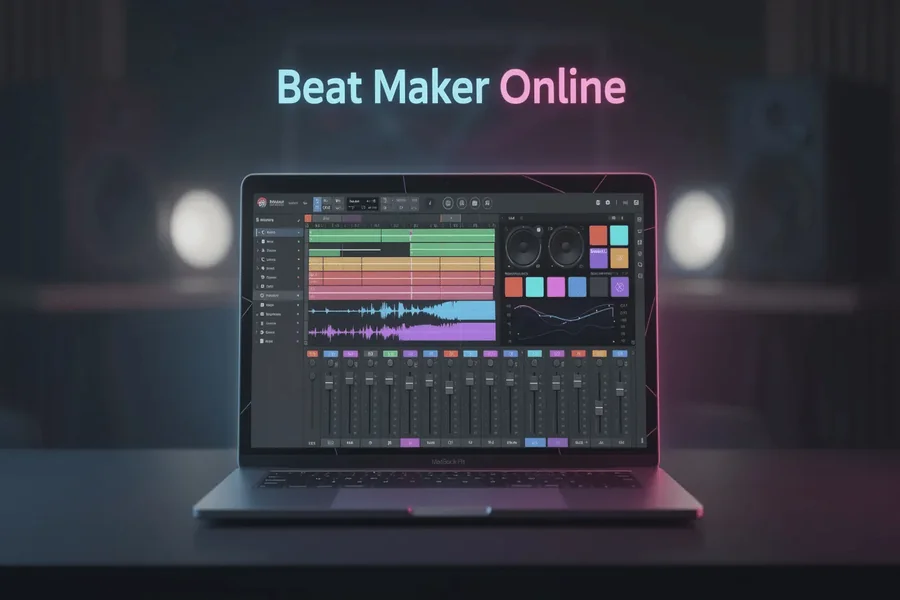

Beat making has always had its own particular barrier to entry, separate from music production in general. Building a genuinely good trap or boom-bap beat isn’t just about knowing an instrument — it’s about understanding drum programming, layering, sample selection, and the specific pocket that makes a beat feel right for rapping over. Traditionally, that meant either investing serious time learning a DAW from scratch or paying for beats from someone who already had. For a huge number of aspiring rappers and producers, that second cost was the real bottleneck.
Why Access to Beats Has Always Mattered More Than Access to Instruments
Unlike a singer-songwriter who might get by with an acoustic guitar and their voice, a rapper without a beat has nothing to write to. Flow, cadence, and rhyme structure are all built in relation to a rhythm underneath them — which means the single biggest obstacle between “I have bars” and “I have a track” has always been getting a beat that actually fits what you’re writing. Historically, that meant either buying instrumentals from producers, which gets expensive fast when you’re trying to build out a real catalog, or learning beat production yourself, which is its own significant time investment separate from writing and performing.
A free beat maker tool changes that equation directly. Instead of needing a beat library subscription or production skills, you can generate original instrumentals suited to a specific style — trap, boom-bap, drill, lo-fi — by describing what you’re going for, and get something you can actually write and record over within minutes, at no upfront cost.
What This Actually Unlocks for Aspiring Artists
Volume. One of the quiet advantages of free instrumental generation is that it removes the financial ceiling on how many beats you can try. Buying instrumentals one at a time from producers means every beat you don’t end up using is money spent for nothing. Generating instrumentals costs nothing to experiment with, which means an artist can try a verse over five different beat styles before committing studio time to recording one properly.
Consistency without a producer relationship. Building a consistent sound across a project traditionally required either working repeatedly with the same producer or hoping you could find similar instrumentals from different sources. Generating beats directly lets an artist maintain stylistic consistency across an entire project without needing an ongoing collaborative relationship with a specific producer, particularly useful for artists early in their career who haven’t yet built those connections.
Testing flow before finalizing lyrics. Some rappers write with a beat already playing, adjusting their cadence to match the rhythm as they go. Having fast, free access to a range of beat styles means a writer can test how their existing bars sit against different tempos and rhythmic feels before settling on a final direction, rather than being locked into whatever single beat they happened to have on hand.
From Instrumentals to Finished Tracks
Beat generation is usually just the first step. Once an artist has vocals recorded over a generated instrumental, many move toward exploring how the same song might work in a different style entirely — taking a version that started as trap and generating a reimagined take using an ai cover song generator, preserving the vocal melody and flow while rebuilding the instrumental in a completely different genre. This is particularly useful for artists trying to figure out which sonic direction actually fits their voice, rather than committing to one lane before they’ve had the chance to compare.
Beyond Beats: Building Full Original Tracks
Beat generation naturally sits alongside broader composition tools, and artists comfortable with one often move fluidly into the other. Rather than starting exclusively from a rhythm-first approach, some artists use a text to music workflow to build a complete track — melody, hook, and instrumentation together — from a single description, particularly useful for hook-writing or for artists exploring a more melodic, sung style alongside straight rapping. The two approaches aren’t competing tools so much as different entry points into the same underlying creative process, and most serious independent artists end up using both depending on what a specific song calls for.
What Hasn’t Changed About Making Good Music
None of this replaces the actual craft that separates a good verse from a forgettable one — flow, wordplay, delivery, and the specific perspective an artist brings to their writing are entirely unaffected by how the instrumental underneath got made. What’s changed is purely about access: the financial and technical barrier that used to sit between having something to say and having a beat to say it over has largely disappeared for anyone willing to spend a few minutes generating and testing options.
The Real Impact
For aspiring rappers and producers without industry connections or a studio budget, this closes one of the more persistent gaps between talent and output. A writer with strong bars and no beat used to have a finished song sitting in a notebook indefinitely. Now, that same writer has a direct, free path from written verse to a fully produced track — and whatever separates a good artist from a great one going forward increasingly comes down to the writing and performance itself, not who could afford studio time.