
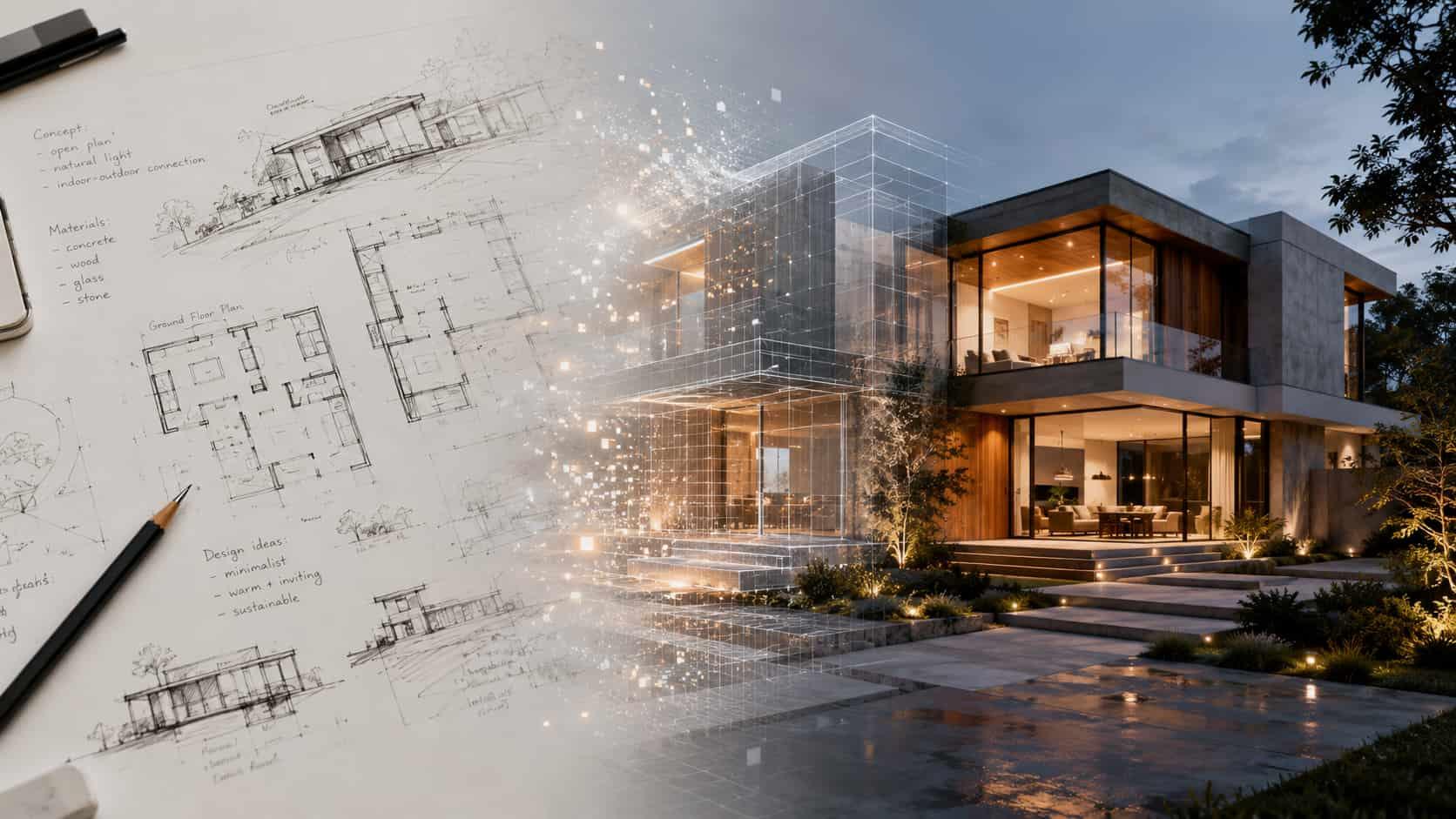

There is a reason people say, “A picture paints a thousand words.” Some ideas are simply too visual to explain clearly with words alone.
You can describe a beautiful room, a modern building, or a peaceful garden in great detail. Still, one strong image can often make the idea much easier to understand.
This is especially true in architecture, interior design, landscape design, and real estate. In these fields, visuals help people understand ideas faster and more clearly.
A client may not fully understand a technical drawing, rough sketch, or long design explanation. But when they see a realistic visual, the concept becomes easier to imagine, discuss, and approve.
Today, artificial intelligence is making this process faster and more accessible. Designers can now turn early ideas, sketches, photos, and 3D models into realistic visuals with AI.
This does not replace creativity or professional design skills. Instead, it gives designers a better way to communicate their ideas visually.
Meaning of “A Picture Paints a Thousand Words”
The idiom “a picture paints a thousand words” means that one image can explain a complex idea better than a long description.
Instead of using many sentences to describe a scene, emotion, or concept, a picture can show it directly. This is why visuals are so powerful in communication.
For example, imagine describing a calm living room with warm lighting, soft textures, natural wood, and neutral colors. The reader may still imagine something different.
But if you show one realistic image of that room, the mood becomes clear immediately. The style, materials, lighting, and atmosphere are easier to understand.
That is why this idiom remains so useful today. It reminds us that images are not just decoration. They are a language of their own.
Why Visual Communication Matters in Design?
Design is often difficult to explain because it includes many details at once. A room is not only about furniture, and a building is not only about walls.
Every design includes shape, color, light, proportion, texture, atmosphere, and function. When all of these are explained only with words, something can easily get lost.
A designer may have a clear vision in mind. However, the client may imagine something completely different.
This is where visual communication becomes important. Images help connect the designer’s idea with the client’s understanding.
Visuals help people see what the final space may look like. They also show how colors, materials, lighting, and layout work together.
In many design projects, the image becomes the bridge between the idea and the final decision.
From Words to Worlds With AI Design Visualization
In the past, creating high quality architectural or interior visuals often required a long workflow. Designers needed 3D models, rendering software, textures, lighting setups, and technical rendering knowledge.
This process was powerful, but it could also be time consuming. Early design ideas often took days to turn into polished visuals.
AI visualization has changed this process. It allows designers to move from an idea to a visual concept much faster.
A simple sketch can become a realistic architectural render. A plain room photo can be redesigned in several interior styles.
A basic exterior image can become a modern facade concept. A landscape idea can be visualized with trees, paths, lighting, seating areas, and outdoor atmosphere.
This speed is useful because design is rarely perfect on the first attempt. Clients usually need to compare options before making a final decision.
AI makes this exploration stage easier. It helps designers test more styles, moods, and directions in less time.
Where Tools Like ArchiVinci Fit In
AI visualization tools are useful for anyone who needs to explain design ideas visually. This includes architects, interior designers, landscape designers, real estate professionals, and creative teams.
For example, an AI architectural visualization tool like ArchiVinci can help turn sketches, interior photos, exterior images, landscape ideas, and early design concepts into realistic visuals.
This makes it easier to communicate what a space could become. It also helps people understand a design before investing time and money into full production, renovation, or final rendering.
The main benefit is not only speed. The real value is clarity.
When people can see a design idea, they can understand it better. They can react to it, compare alternatives, request changes, and make decisions with more confidence.
How AI Visualization Helps Architects?
Architecture often begins with abstract ideas. A designer may start with a sketch, a concept model, a basic 3D form, or a simple massing study.
These early steps are important, but they are not always easy for clients to understand. AI visualization can make these ideas more realistic and emotional.
Instead of showing only a basic form, architects can show a possible atmosphere around the design. They can test materials, facade styles, lighting conditions, and surroundings.
This can be useful for early concept development. It can also help with facade design exploration and architectural style comparisons.
Architects can use AI visuals to show how a building may look in a real environment. This makes presentations clearer and more engaging.
AI does not replace architectural thinking, technical drawings, or construction knowledge. It supports the visual storytelling stage of the project.
How AI Visualization Helps Interior Designers?
Interior design is highly visual. Clients often want to know how a room will feel, not just how it will function.
They may ask whether a space will look warmer, more luxurious, more minimal, more modern, or more inviting. AI visualization helps answer these questions faster.
An interior designer can take an existing room and explore different styles without rebuilding the entire scene manually.
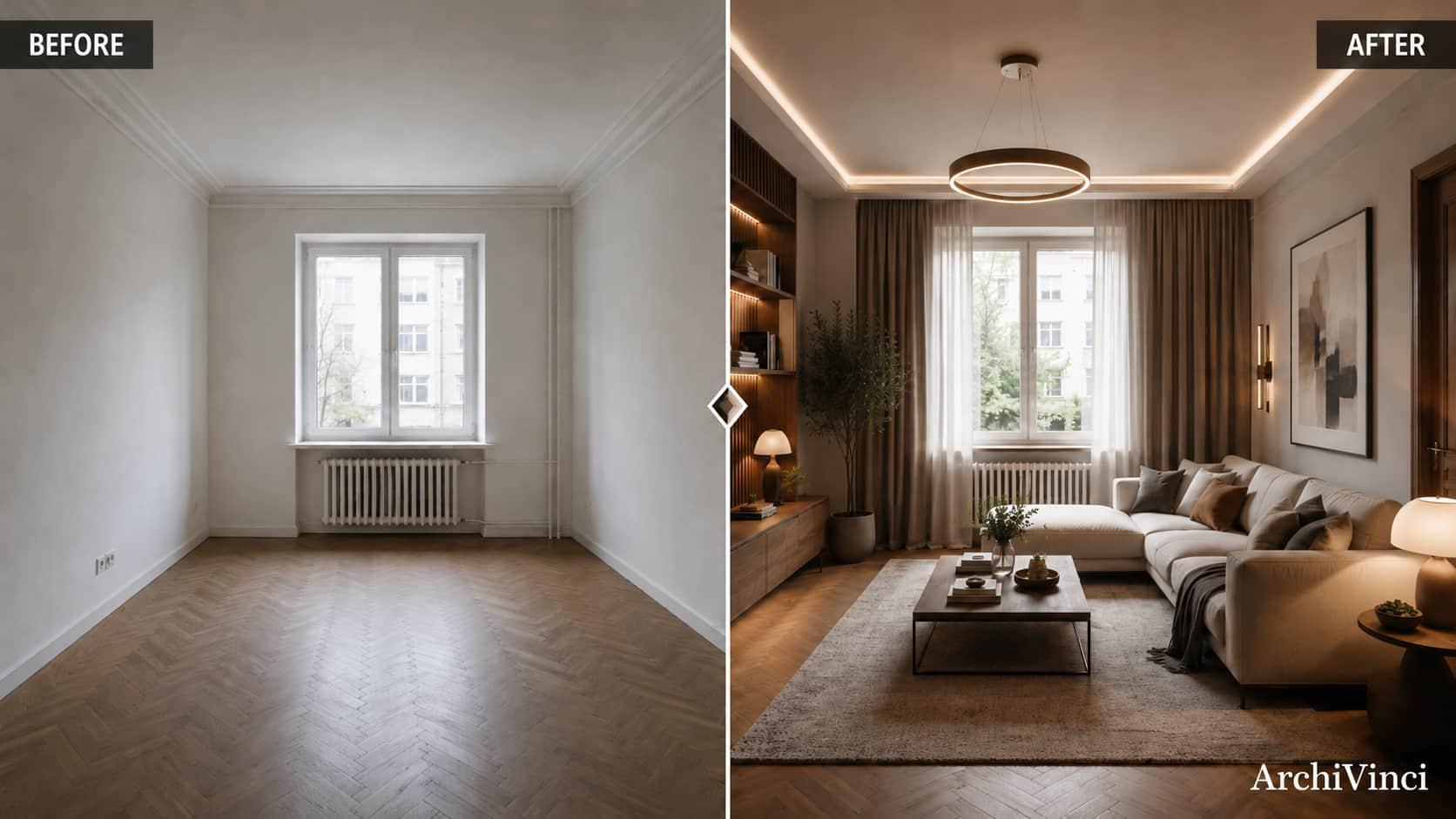
The same room can be visualized as modern luxury, Scandinavian minimalism, classic elegance, Japandi, industrial, or Mediterranean style.
This helps designers test color palettes, furniture styles, lighting changes, textures, and material combinations.
For clients, the process becomes easier to follow. Instead of imagining the result from words, they can see a clear visual direction.
How AI Visualization Helps Exterior and Landscape Design?
The outside of a property is often just as important as the inside. A facade, garden, entrance, terrace, pool, or outdoor seating area can completely change the feeling of a space.
Exterior and landscape ideas can be difficult to explain with words alone. A client may not fully understand how materials, greenery, and lighting will work together.
AI visualization helps make these ideas visible. It can show different facade finishes, outdoor layouts, garden styles, and lighting atmospheres.
A simple exterior image can become a polished design concept. A plain garden can be visualized as a calm outdoor retreat.
A dated facade can be explored with modern materials and improved landscaping. These visuals can guide better conversations and better decisions.
This is useful for architects, landscape designers, developers, and homeowners who want to see the potential of a space before making changes.
How AI Supports Renovation and Real Estate Projects?
Renovation projects often require imagination. An old property may have strong potential, but not everyone can see it immediately.
Empty rooms, outdated finishes, poor lighting, or unfinished spaces can make a property feel less attractive than it really is.
AI visualization can help reveal that hidden potential. It can show how a property might look after improvements.
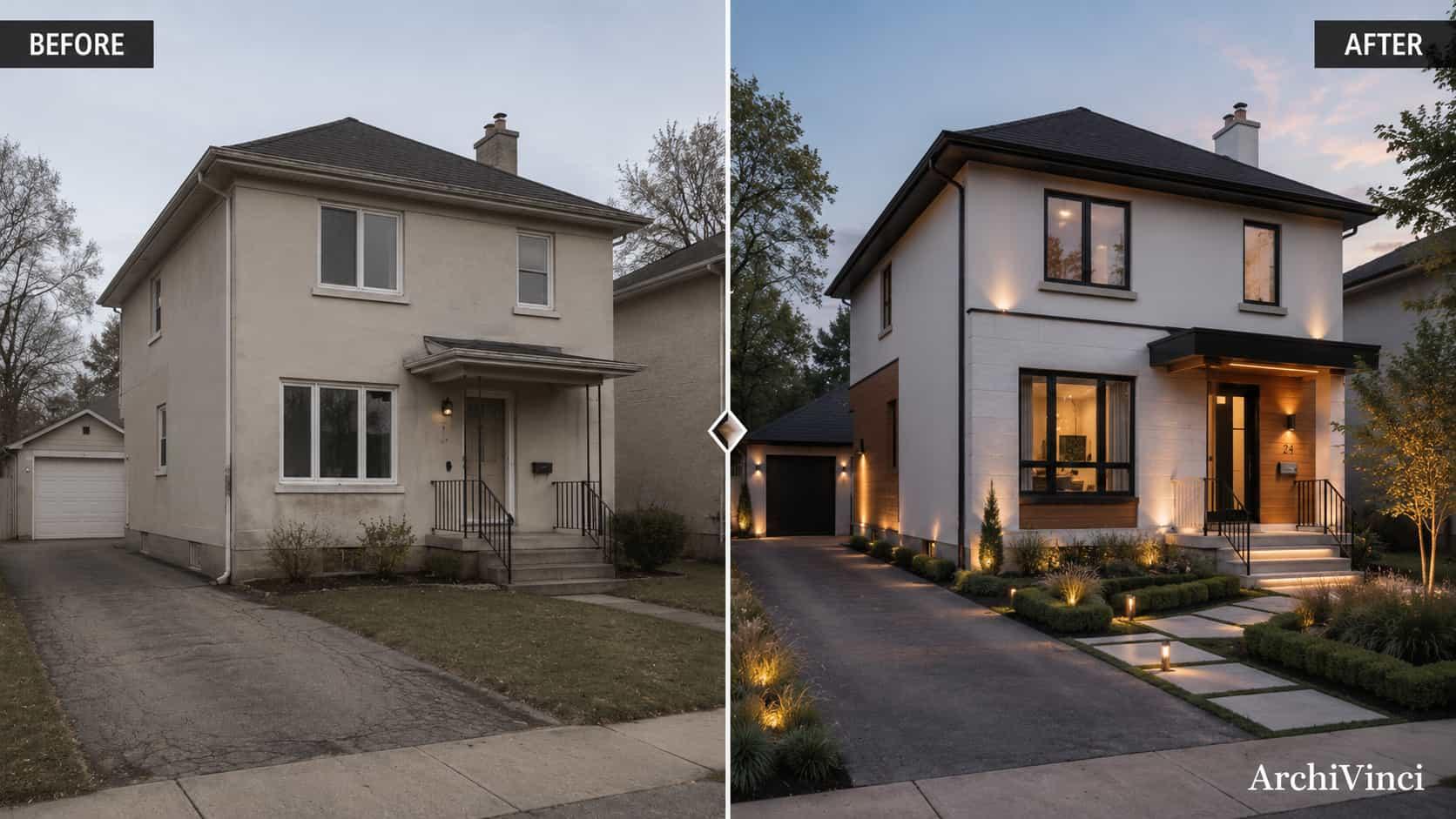
A basic room can become a stylish interior concept. An old exterior can become a more modern and appealing facade idea.
This can be useful for real estate agents, property developers, investors, homeowners, and renovation teams.
In real estate, AI visuals can support renovation previews, virtual staging ideas, interior upgrades, exterior improvements, and investor presentations.
The goal should always be honest communication. AI visuals should be presented as concept images or design previews, not as misleading final property photos.
The Power of Showing Multiple Design Options
One of the strongest advantages of AI visualization is the ability to compare different design directions quickly.
In traditional workflows, creating many visual alternatives can take a lot of time. With AI, designers can explore more options earlier in the process.
This is helpful when a client is unsure about style. The same room or building can be shown in different moods.
One version may feel warm and natural. Another may look dark and luxurious. Another may be bright, minimal, and modern.
Seeing these options together helps clients understand what they prefer. It also helps designers make stronger creative decisions.
Sometimes the best design direction appears after testing several versions. AI makes that exploration easier and more flexible.
Visuals Do Not Replace Language
Although the idiom says that a picture paints a thousand words, this does not mean words are no longer important.
The best design communication often combines both. Words explain the reason behind a design, while images show the result.
A designer may explain that a room is designed to feel calm, elegant, and spacious. The image then shows how this feeling is created.
Light colors, soft textures, simple furniture, and natural lighting can all support the written design idea.
In this way, language and visuals work together. The image captures attention, and the words give meaning.
Together, they create a stronger and more complete presentation.
Why AI Visualization Feels Like a Natural Step Forward?
AI visualization is popular because it solves a real communication problem. People have always needed better ways to explain ideas.
Sketches, paintings, models, photography, and digital renders all became important because they helped people see things before they existed.
AI is the next step in that visual tradition. It gives more people the ability to create visual concepts quickly.
It helps professionals communicate faster. It also helps clients understand design possibilities more clearly.
Of course, not every AI image is perfect. Good results still require taste, direction, and careful review.
Designers still need to guide the process. They need to choose the right style, review the results, and make sure the concept fits the real project goals.
When used well, AI visualization can make design conversations smoother, more creative, and more productive.
Final Thoughts
“A picture paints a thousand words” remains a powerful idiom because it is true in everyday life, art, communication, and design.
Some ideas become clearer when we see them. Some emotions are easier to understand through an image.
In architecture and interior design, this idea is especially important. A design may begin with words, sketches, or imagination, but it often needs a strong image to become fully understood.
AI visualization tools are helping designers turn ideas into clear visual stories. They make it easier to explore styles, present concepts, show transformations, and explain the potential of a space.
In the end, good design is not only about creating beautiful spaces. It is also about communicating them well.
And sometimes, one powerful image really can say more than a thousand words.