
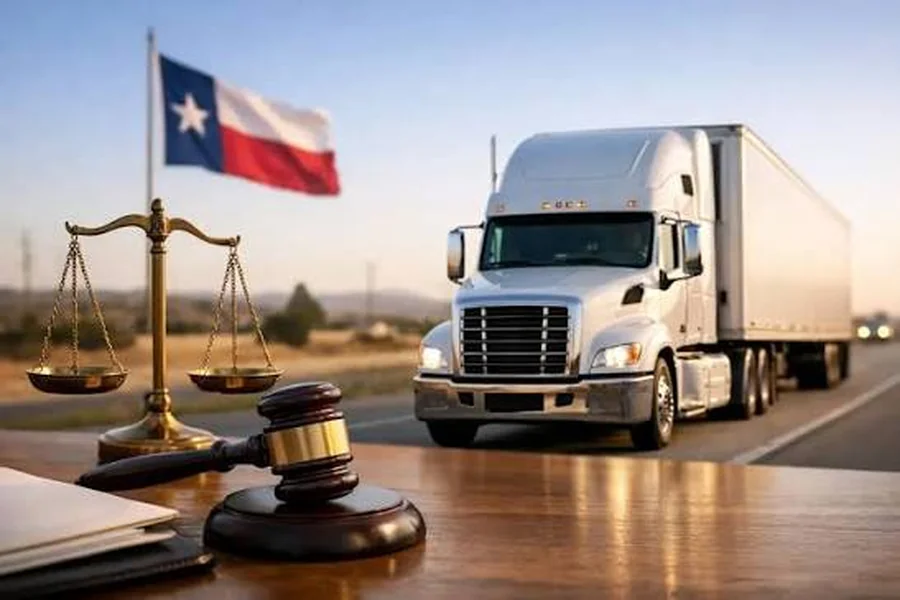

Language is full of phrases that turn complicated human experiences into memorable shorthand. We use idioms every day to break down abstract concepts, frame ethical dilemmas, and describe business failures. When someone takes a shortcut at work to save time, we say they are “cutting corners.” When a financial disaster strikes and an individual or company is legally obligated to pay for the fallout, we say they are “on the hook.”
While these figurative expressions enrich everyday conversation, in the commercial transportation industry, they carry literal, high-stakes consequences. When a shipping fleet or logistics company cuts corners on essential safety protocols, someone inevitably ends up on the hook for catastrophic physical and financial damages.
When collisions occur within high-density transit nodes, demonstrating that a motor carrier cut corners requires analyzing driver electronic logging device (ELD) data, reviewing maintenance records, and evaluating federal compliance history. In these complex scenarios, accident victims routinely consult an experienced truck accident attorney sacramento to review black box telemetry, investigate carrier practices, and hold responsible parties fully on the hook for sustained injuries and property damage.
Examining how these familiar idioms align with legal standards reveals the real-world liabilities that arise when routine supply chain operations turn into costly disasters.
What Does “Cutting Corners” Mean on the Highway?
In standard English, “cutting corners” refers to performing a task quickly rather than properly, often by skipping critical steps or sacrificing quality to reduce time or cost.
The idiom stems from driving mechanics—specifically, taking a sharp indoor angle across a curb or intersection corner instead of following the complete curve of the road. Over time, it expanded into a broader metaphor for taking unsafe shortcuts across corporate management, manufacturing, and logistics.
In heavy freight operations, cutting corners is not merely a bad habit; it represents a fundamental breakdown in enterprise risk management. Federal regulations govern how many consecutive hours a driver may operate without sleep, how frequently air brakes must undergo technical inspections, and how securely heavy loads must be fastened in trailers.
When transport companies face aggressive delivery schedules and tight profit margins, the decision to cut corners usually takes several distinct forms:
1.Falsifying Hours-of-Service (HOS) Logs: Drivers or dispatchers overriding electronic logbook rules to keep trucks moving past legal safety limits, leading to severe fatigue behind the wheel.
2. Deferred Mechanical Maintenance: Delaying routine brake system overhauls, operating on excessively worn tires, or ignoring engine diagnostic fault warnings to keep vehicles actively hauling cargo.
3. Improper Freight Distribution: Exceeding trailer gross weight ratings or failing to secure shifting cargo, which significantly elevates the likelihood of jackknife or rollover accidents on high-speed freeways.
When these shortcuts result in a multi-vehicle collision involving an 80,000-pound tractor-trailer, the phrase transitions rapidly from a colorful metaphor into a primary focal point of civil litigation.
Who Ends Up “On the Hook” After a Freight Collision?
Another frequent idiom in corporate risk and legal discussions is “on the hook.” Originating from fishing terminology referring to a caught fish that is securely attached to the line and cannot break free, the phrase describes being held legally responsible or financially obligated for an expense.
Following a severe highway incident involving a commercial rig, determining who is legally on the hook is rarely straightforward. Unlike standard passenger car accidents where liability often rests on a single driver, commercial shipping involves a complex network of corporate entities:
1.The Commercial Driver: If reckless operation, distracted driving, or impairment caused the collision.
2. The Motor Carrier (Trucking Firm): Under the legal principle of respondeat superior, employers are liable for acts committed by employees within the scope of employment, particularly if company policies rewarded unsafe driving speeds.
3. Third-Party Freight Loaders: If improper weight balancing or poor cargo tie-downs caused a trailer to lose control during turning maneuvers.
4. Maintenance Vendors: If outsourced mechanics failed to identify or repair critical equipment defects during mandatory fleet safety audits.
Because logistics firms often maintain multi-tiered corporate structures to limit financial risk, injured parties face complex hurdles when seeking compensation for medical care, lost income, and long-term disability.
Navigating Legal Accountability in Regional Distribution Nodes
The legal dynamics of commercial fleet liability become pronounced along major transit arteries, where heavy interstate shipping meets dense commuter traffic.
Consider Northern California’s Central Valley, particularly surrounding the state capital. As a vital interchange connecting Interstate 5, Interstate 80, and Highway 99, regional shipping corridors experience continuous commercial freight traffic delivering goods across West Coast markets.
Understanding these regional hubs helps illustrate how local infrastructure and heavy traffic volumes intersect to create high-risk environments for all motorists on the road.
Idioms as a Framework for Legal Responsibility
Idioms like “cutting corners” and “on the hook” remain deeply embedded in our vocabulary because they clearly describe human behavior, accountability, and consequences.
In corporate transportation, taking shortcuts might appear to offer short-term operational savings. However, when safety standards are bypassed, the resulting liabilities prove that cutting corners ultimately leaves companies and their insurers on the hook for costs far greater than the time saved.