
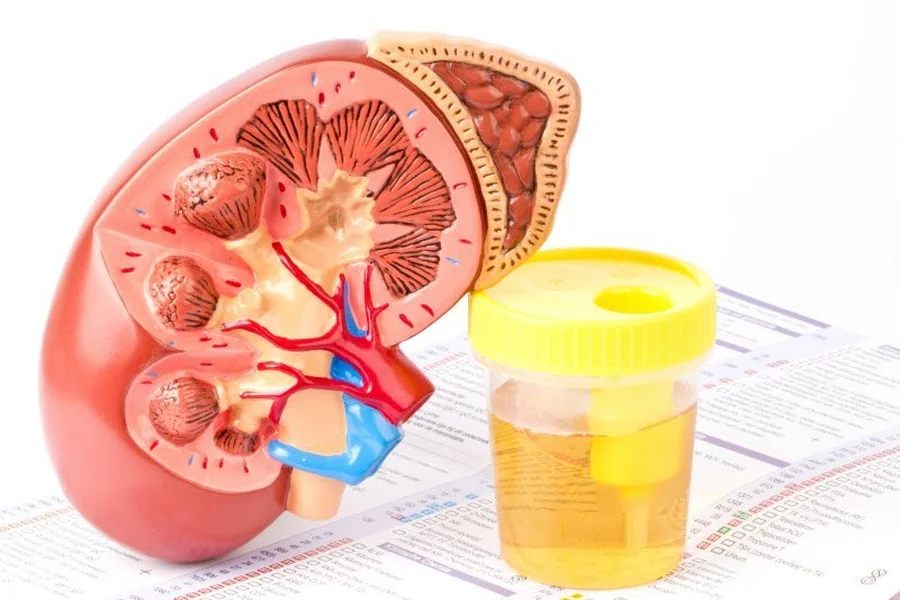

Busy online entrepreneurs and SEO professionals often deprioritize routine health checks, yet a simple urine test can reveal early signs of systemic and kidney disease long before symptoms appear. Detecting protein in urine, commonly called proteinuria, is a low-cost, high-value screening that can guide early intervention. This article explains what proteinuria means, how testing works, common causes, how to interpret results, and practical monitoring steps so professionals can make informed health decisions without disrupting their workflows.
What Protein in Urine Means: Definitions and Basics
Protein in urine refers to the presence of proteins, most commonly albumin, that have passed through the kidney’s filtering units (glomeruli) into the urine. Normally, healthy kidneys retain most proteins, and only minimal amounts appear in urine. When protein levels rise, clinicians call it proteinuria. Levels range from trace amounts detectable only by sensitive assays to large quantities producing foamy urine.
Why albumin is emphasized: Albumin is the most abundant blood protein and an early marker of glomerular damage. Small increases in urinary albumin can indicate early kidney stress before creatinine or estimated glomerular filtration rate (eGFR) changes.
Key classifications used in clinical practice include:
- Microalbuminuria: small increases in albumin excretion (early sign).
- Macroalbuminuria/overt proteinuria: higher levels signaling more advanced damage.
For the target audience, entrepreneurs and marketers, understanding these basics helps prioritize testing during busy schedules and interpret results when they receive lab reports.
Why Detecting Protein Early Matters
Early detection of protein in urine matters because it provides an actionable window to prevent progression of kidney disease and reduce cardiovascular risk. Chronic kidney disease (CKD) is often silent: estimates suggest roughly 10–15% of adults worldwide have some degree of CKD, and many remain undiagnosed until later stages.
For professionals managing client campaigns or running agencies, early detection prevents longer-term disruptions from serious illness. Detecting proteinuria early enables:
- Lifestyle interventions (diet, blood pressure control, smoking cessation) can reduce progression.
- Medication changes (ACE inhibitors or ARBs) that slow kidney damage in specific conditions, such as diabetic nephropathy.
- Risk stratification for cardiovascular disease: people with proteinuria have a higher risk even with a normal eGFR.
In short, early protein detection transforms a vague health risk into concrete steps that preserve long-term productivity and financial stability.
How Protein in Urine Is Tested
Several testing methods are available, from quick point-of-care dipsticks to precise laboratory assays. Choice of test depends on context: screening, diagnosis, or monitoring response to treatment.
Dipstick Tests: How They Work And What They Show
Dipstick tests use a colorimetric reagent pad that changes color in response to protein concentration. They’re cheap, fast, and commonly used in clinics or at-home test kits. But dipsticks are most sensitive to albumin and can miss low-level albuminuria. Results are semiquantitative (negative, trace, 1+, 2+, etc.) and influenced by urine concentration; a very dilute sample may produce a false negative, while concentrated urine can give a false positive.
Dipsticks are useful for initial screening but should be confirmed with quantitative testing when positive.
Urine Albumin-to-Creatinine Ratio (ACR): The Best Screening Tool
A spot urine Albumin-to-Creatinine Ratio (ACR) is the preferred screening test. It corrects for urine concentration by comparing albumin to creatinine in the same specimen, delivering a quantitative value (mg albumin/g creatinine). ACR is sensitive to microalbuminuria and is practical for busy people: a single random urine sample is sufficient.
Thresholds often used:
- Normal: <30 mg/g
- Microalbuminuria: 30–300 mg/g
- Macroalbuminuria: >300 mg/g
ACR provides reliable results for screening, diagnosis, and monitoring.
24‑Hour Urine Collection And Specialized Laboratory Methods
A 24‑hour urine collection measures total protein excretion over a day and can be more accurate for certain disorders (e.g., orthostatic proteinuria, heavy protein loss). It’s cumbersome and prone to collection errors, so it’s reserved for cases where spot tests are inconclusive or precise quantification is required.
Specialized tests, electrophoresis, immunofixation, and light-chain assays, help identify specific protein types (Bence Jones proteins, monoclonal gammopathies) when clinicians suspect multiple myeloma or other systemic diseases.
At‑Home Testing Options And Their Limitations
At-home urine dipsticks and mail-in ACR kits are increasingly available. They’re convenient but have limitations: user error, timing of sample collection, and variable assay quality. Positive at-home results should prompt confirmatory testing with a laboratory ACR and clinician consultation.
Common Causes Of Proteinuria And How To Differentiate Them
Proteinuria arises from many causes, some temporary and benign, others chronic and serious. Differentiating the cause steers management.
Transient Versus Persistent Proteinuria: Clues And Implications
Transient proteinuria can occur with fever, dehydration, heavy exercise, or acute illness. It often resolves within 24–48 hours. Persistent proteinuria, confirmed on repeat testing, suggests underlying kidney pathology and warrants further evaluation.
Clues favoring transient causes include a recent marathon, acute infection, or high fever. Persistent elevation on two or more samples separated by weeks indicates the need for diagnostic workup.
Medical Conditions Associated With Proteinuria (Kidney, Diabetes, Hypertension, Others)
Common pathologic causes include:
- Diabetic nephropathy: albuminuria is an early hallmark in people with diabetes and strongly predicts progression.
- Hypertensive nephrosclerosis: long-standing high blood pressure damages small renal vessels, leading to protein leakage.
- Glomerulonephritis: an inflammatory diseases that affect the glomeruli and produce variable proteinuria, often with hematuria.
- Systemic diseases: lupus, amyloidosis, and multiple myeloma can produce significant proteinuria.
Risk factors such as poorly controlled diabetes, uncontrolled hypertension, older age, and certain medications increase the probability of pathologic proteinuria.
Nonpathologic and Lifestyle‑Related Causes (Exercise, Fever, Medications)
Nonpathologic causes often resolve and include:
- Intense exercise (post-exertional proteinuria).
- Febrile illnesses.
- Orthostatic proteinuria: elevated protein excretion when upright, normal when supine, common in adolescents.
- Medications: NSAIDs, certain antibiotics, and biologic agents can cause or worsen proteinuria in susceptible individuals.
Careful history-taking, recent activity, medication use, and symptoms help differentiate these causes from chronic disease.
Interpreting Results And Next Steps After Detection
Interpreting protein results requires context: the test type, the patient’s risk factors, and whether the finding is persistent.
When To Repeat Tests And Which Follow‑Up Tests To Expect
A single positive dipstick warrants confirmation. Recommended steps:
- Repeat a urine ACR on a different day to confirm persistence.
- If ACR is elevated, assess blood pressure, fasting glucose/A1c, serum creatinine/eGFR, and consider urine microscopy.
- If heavy proteinuria or abnormal renal function is present, order additional tests (24‑hour collection, immunologic panels, renal ultrasound) as indicated.
When To Seek Specialist Care And Urgent Warning Signs
Referral to a nephrologist is appropriate when:
- ACR is persistently above 300 mg/g.
- Rapidly rising proteinuria or declining eGFR.
- Hematuria with proteinuria, uncontrolled hypertension, or signs of systemic disease.
Urgent evaluation is necessary for symptoms such as swelling (edema), shortness of breath, or sudden oliguria (markedly reduced urine output).
How Results Inform Early Intervention And Long‑Term Monitoring
Elevated ACR prompts concrete interventions: optimizing blood pressure (often using ACE inhibitors/ARBs), improving glycemic control, weight management, and lipid control. Regular monitoring of ACR and eGFR tracks response. Early action can delay progression and reduce cardiovascular events, a high-value outcome for individuals and businesses alike.
Prevention, Monitoring, And Practical Tips For Maintaining Kidney Health
Maintaining kidney health is both preventive medicine and a productivity strategy for busy professionals.
Lifestyle Measures To Reduce Risk And Lower Proteinuria
Effective steps include:
- Control blood pressure: target individualized by the clinician, but tighter control reduces kidney damage.
- Manage diabetes: sustained A1c reduction lowers the risk of albuminuria.
- Reduce salt intake and maintain a balanced diet rich in vegetables and lean protein.
- Avoid unnecessary NSAID use and review medications with a clinician.
- Maintain a healthy weight and exercise moderately; avoid extreme exertion if prior exercise-induced proteinuria was documented.
Practical Monitoring Plan: How Often To Test And What To Track
A pragmatic monitoring routine for at-risk professionals:
- Annual ACR for people with diabetes, hypertension, or other risk factors.
- Repeat ACR within weeks when an initial test is abnormal to confirm persistence.
- More frequent monitoring (every 3–6 months) if ACR is elevated or eGFR is declining.
Track ACR, eGFR, blood pressure, A1c (if diabetic), and medications in a simple spreadsheet or health app to spot trends early.
Communicating Results With Your Healthcare Provider: What To Prepare
When discussing results, bring or summarize:
- Recent ACR and eGFR values with dates.
- Medication list (including over-the-counter drugs and supplements).
- Recent illnesses, exercise patterns, and changes in weight or blood pressure.
Clear communication enables efficient visits, important for entrepreneurs who need concise, actionable medical guidance without long appointments.
Conclusion
Detecting protein in urine is a practical, evidence-based step toward preserving long-term health and productivity. For the busy audience of online business owners and marketers, a single ACR screening can yield outsized benefits: early intervention, reduced cardiovascular risk, and prevention of progressive kidney disease. Proteinuria requires context; transient causes are common, but persistent elevation deserves timely follow-up. By integrating simple testing routines into annual health checks, tracking key metrics, and acting on abnormal findings, professionals can protect their most valuable asset: their ability to work and lead with energy and clarity.