
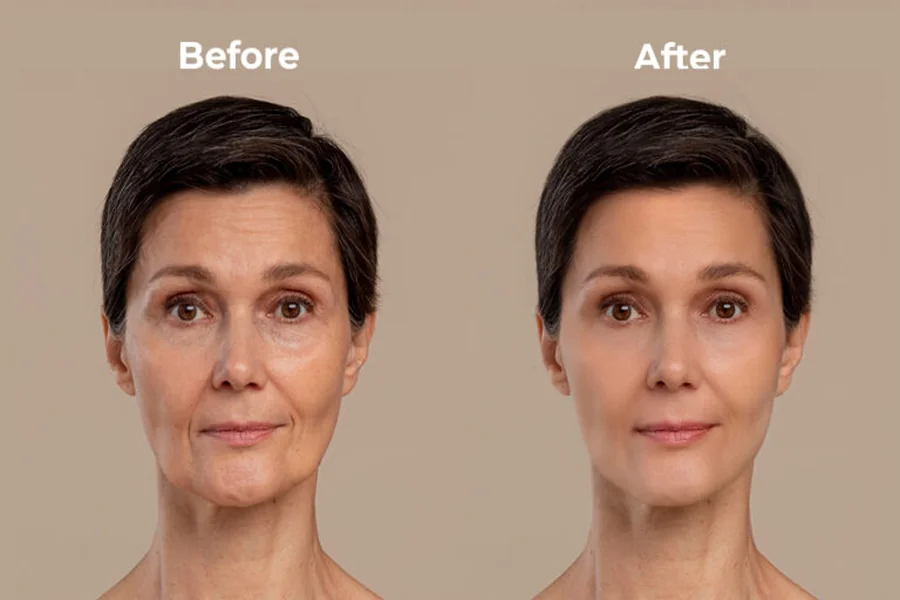

A facelift is one of the most consequential decisions in elective surgery. Unlike a procedure that changes a single feature, a well-executed facelift reshapes how you are perceived in every interaction. Done well, it produces a result that looks entirely natural — people notice that you look well, rested, refreshed, but cannot identify exactly why. Done poorly, the opposite is true, and the results are difficult or impossible to reverse.
This is precisely why the choice of surgeon and clinical setting matters more for a facelift than for almost any other cosmetic procedure. And it is why an increasing number of patients — from London, Milan, Paris, and beyond — are making the journey to Albania to have the procedure performed by European-trained specialists in a hospital-grade environment, at a cost that is a fraction of what the same quality of care would cost at home.
What a Facelift Involves
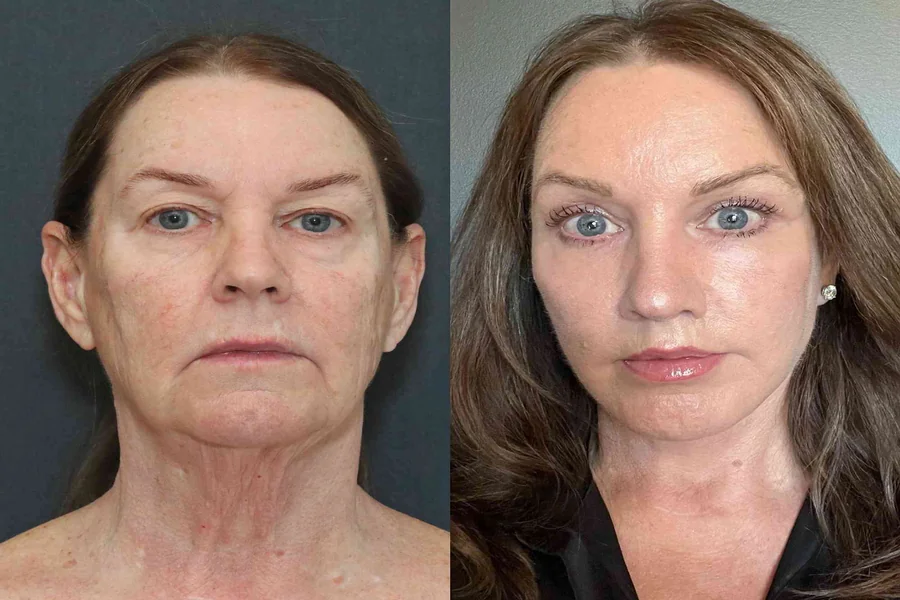
The formal name is rhytidectomy. The procedure surgically lifts and repositions the skin, fat, and underlying muscle layer of the face and neck to reverse the visible effects of aging: sagging skin along the jawline and cheeks, deepening nasolabial folds, jowl formation, loss of definition at the jaw and neck, and general heaviness in the lower face.
Modern facelift technique goes beyond simply pulling skin tighter — an approach that produces the tell-tale windswept look associated with older surgery. Contemporary procedures work on the deeper structural layer known as the SMAS (superficial musculoaponeurotic system), repositioning the underlying tissue to restore the architecture of a younger face, then re-draping the skin with minimal tension. The result is a natural, rested appearance that holds its improvement for years.
Depending on the patient’s anatomy and goals, a facelift may address the mid-face and lower face only, or extend to include the neck. It is commonly combined with a neck lift, blepharoplasty (eyelid surgery), or brow lift for more comprehensive facial rejuvenation.
Facelift Variants: Choosing the Right Approach
Not every patient requires or benefits from the same degree of intervention. The approach is matched to what the anatomy actually needs.
- Full facelift — addresses the full lower two-thirds of the face, including cheeks, jowls, and neck. Best for patients with moderate to significant laxity who want comprehensive and long-lasting correction.
- Deep plane facelift — works at a deeper tissue level than the standard SMAS technique, repositioning the entire facial soft tissue complex. Produces exceptionally natural results with excellent longevity. Technically demanding and requires a surgeon with specific expertise in this approach.
- Mini facelift — a more limited procedure for patients with early to moderate laxity, using smaller incisions and a shorter recovery. Suitable for younger patients at an earlier stage of facial aging.
- Neck lift — targets the neck independently when that is the primary area of concern, addressing banding of the platysma muscle, excess skin, and fat deposits under the chin.
The right variant is determined during consultation through a detailed assessment of skin quality, tissue laxity, fat distribution, and bone structure — combined with an honest conversation about what the patient wants to achieve and what realistic expectations should be.
Why Albania? The Case for Travelling for Facial Surgery
Facial surgery is precisely the area where patients are most cautious about travelling abroad — and rightly so. The face is not a place for experiments with unknown providers. But the premise that high-quality facial surgery can only be obtained in London, Paris, or Zurich is simply no longer accurate.
Albania’s leading plastic surgeons trained at European institutions — Vienna, Berlin, Paris, Milan — and hold European board certification. They work within a purpose-built hospital that carries TEMOS accreditation, the international standard for medical tourism safety and quality. The hospital has nine modern operating theatres, advanced equipment including piezoelectric technology, and full emergency medical backup. This is not a converted villa offering surgery. It is a serious medical institution that happens to be located in Tirana.
The cost comparison is stark. A facelift in the UK typically runs £10,000 to £20,000. In Germany or Switzerland, €15,000 to €30,000 is common for a comprehensive procedure. In Albania, the same surgery performed by a European-certified specialist in a TEMOS-accredited hospital costs substantially less — with the saving representing a genuine financial advantage that does not require any sacrifice on clinical quality.
What Recovery Looks Like
Facelift recovery requires patience. The first week involves swelling, bruising, and tightness — all normal and expected. Most patients are comfortable enough to move around within a few days, though they require rest and gentle activity. Sutures are typically removed within seven to ten days.
By the end of the second week, most of the visible bruising has resolved and patients are comfortable being seen in public. Return to desk work is generally possible within two weeks. Social activities and light exercise can resume at three to four weeks, with full activity by six weeks.
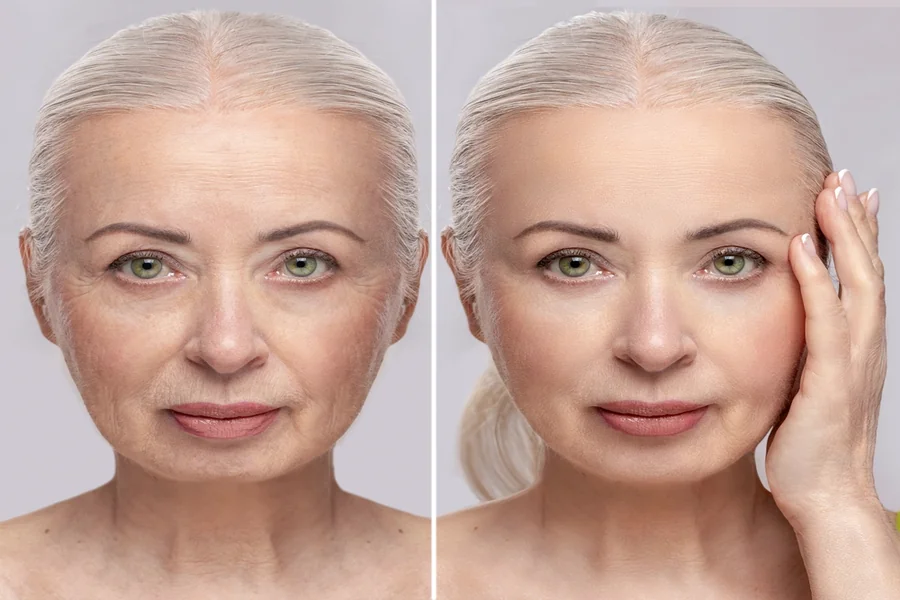
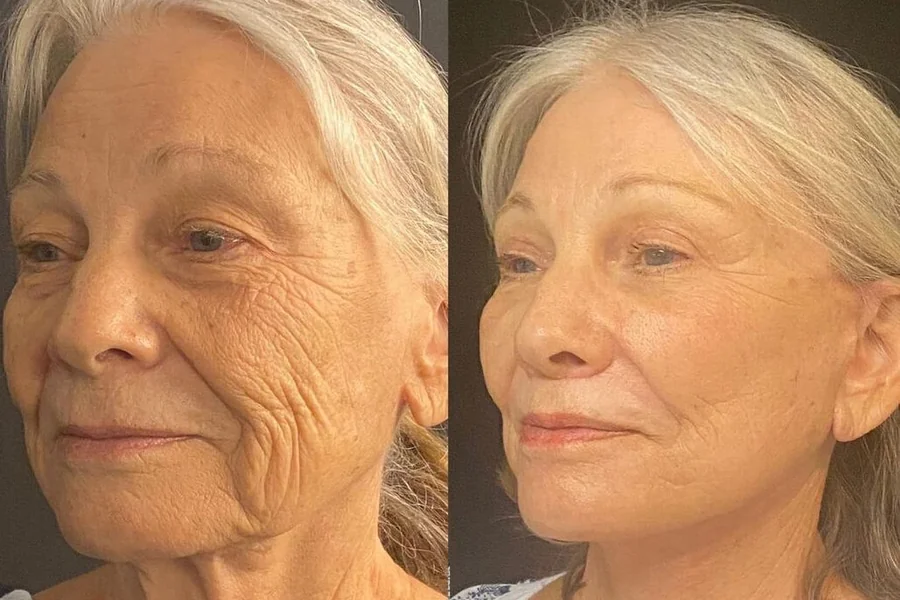
The full result of a facelift emerges gradually over three to six months as residual swelling resolves and the tissues settle into their new position. At that point, patients typically look five to ten years younger — not dramatically different, but consistently and measurably refreshed. The longevity of a well-performed facelift is substantial, with results lasting seven to ten years or more depending on the technique and individual aging patterns.
For international patients, a stay of seven to ten days in Albania is typically recommended, covering the procedure, initial recovery, suture removal, and a final check before departure. Follow-up consultations continue remotely after the patient returns home.
The Surgeon Selection Question
No factor matters more in facelift surgery than the skill and experience of the surgeon. A facelift is an artistic procedure as much as a technical one. The surgeon must understand how the face ages in three dimensions, how to restore structure without creating an artificial appearance, how to handle skin re-draping with the right degree of tension, and how to achieve results that look consistent and natural rather than operated upon.
These qualities are not guaranteed by geography. They are earned through training, case volume, and a commitment to honest outcomes over dramatic promises. When evaluating any surgeon for facial surgery, the right questions are: where did they train, what are their board certifications, how many facelifts do they perform annually, and can they show a substantial portfolio of results across a range of patient types and ages.
Albania’s leading facial surgeons meet these criteria. For patients who have done their research and are ready to take the next step, facelift surgery in Albania at Hygeia Hospital offers the combination of genuine surgical expertise, full hospital infrastructure, TEMOS-certified safety standards, and transparent pricing that serious patients are looking for. A free consultation — available by video before any travel is committed — is the logical place to begin.