


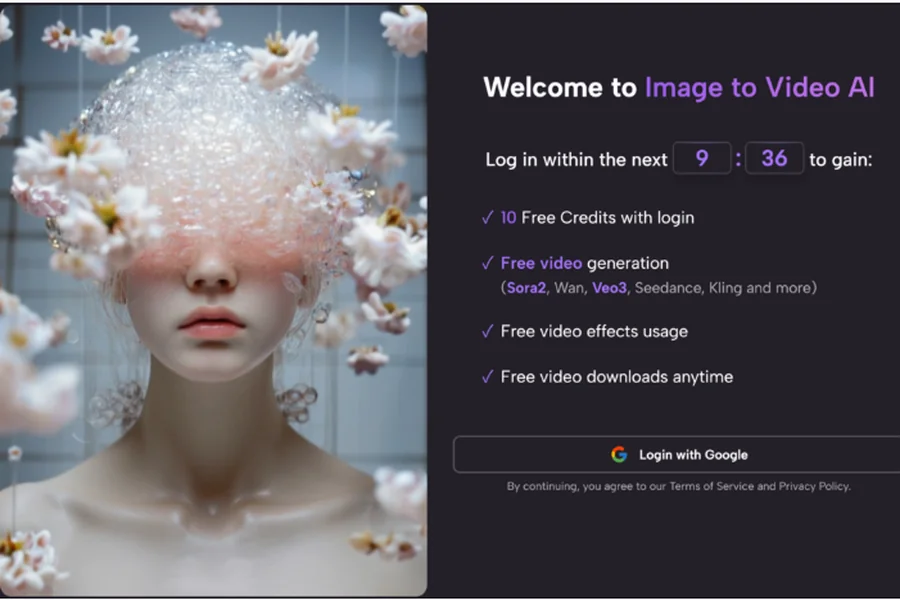
In the rapidly evolving landscape of generative media, the ability to turn a static photo into a high-fidelity video has become a professional standard for digital storytelling. Today, the industry is dominated by powerhouse models such as Sora 2, which continues to set benchmarks for complex scene physics, and Google’s Veo 3.1, known for its incredible cinematic texture and temporal stability. Furthermore, ByteDance’s Seedance 2.0 has redefined the field by supporting up to 12 simultaneous reference files, making video editing as intuitive as adjusting a photograph. By accessing these elite technologies through Image to Video AI, users can move beyond the silent limitations of still photography to create short-form content that captures the genuine nuance, lighting, and energy of a live moment.
The transition from a frozen frame to a dynamic sequence often feels like a barrier for those without traditional animation training. However, the current generation of tools removes the need for manual frame-by-frame manipulation. Instead of focusing on technical labor, creators can now act as directors, guiding sophisticated neural networks to interpret depth and motion. This shift is essential for brands and individuals who need to maintain a high volume of engaging content on social platforms where video is the primary currency for visibility and audience retention.

The Convergence of Neural Excellence and Intuitive Motion Generation Tools
The platform operates by integrating several of the world’s most advanced video models into a single, accessible interface. This multi-model approach ensures that users are not locked into one specific aesthetic, but can instead leverage the strengths of different architectures. Based on my observations, models like Veo 3.1 excel at creating smooth, photorealistic skin textures and natural human movements, while others might be better suited for the vast, sweeping motions required for landscape cinematography.
In my testing, the primary advantage of using these high-end models is their inherent understanding of physical space. When an image is uploaded, the AI does not just move the pixels; it creates a mathematical map of the environment. It understands that a foreground object should obscure the background as the camera pans, and it calculates how light should reflect off surfaces as they move. This level of environmental awareness is what separates a professional AI generation from a simple, low-quality animation filter.
Analyzing the Physics and Texture Quality of Modern Generative Models
The quality of a generated video is often determined by how well the AI maintains the details of the original photo. With the inclusion of Sora 2 and Seedance 2.0 technology, the platform is able to preserve fine textures such as fabric weaves, hair strands, and skin pores during motion. In my experience, these models are significantly more stable than earlier versions, which often suffered from “warping” or losing the subject’s identity after a few seconds of movement.
Another critical factor is the handling of environmental elements. Advanced models are trained to recognize the behavior of natural phenomena like fire, water, and wind. If you prompt the system to animate a beach scene, the AI uses its training to simulate the rhythmic flow of waves and the swaying of palm fronds in a way that feels consistent with the lighting of the original shot. This consistency is vital for maintaining the “suspense of disbelief” that allows a viewer to connect emotionally with the content.

Evaluating Subject Consistency and Lighting Accuracy in Five Second Clips
While five seconds may seem brief, it is the standard length for high-impact social media assets and B-roll footage. During this window, the Image to Video must ensure that the subject does not “morph” into a different shape. Based on my personal observations, the Veo 3.1 engine is particularly impressive at keeping human faces recognizable even through complex movements like turning or smiling. This stability makes the platform a reliable choice for creators who need to animate portraits or character-driven stories.
Lighting accuracy is the final piece of the puzzle. In traditional video, a moving camera changes the way light hits every object in the frame. The integrated AI models perform these calculations in real-time during the rendering process. In my testing, I found that shadows move across the ground in perfect synchronization with the objects casting them. This attention to detail provides a level of realism that can easily be mistaken for footage captured with a high-end mirrorless camera or a professional cinema rig.
A Systematic Four Step Process for Creating Professional Motion Assets
The official workflow on the site is designed to be streamlined, ensuring that users spend less time navigating menus and more time directing their vision. The process is entirely cloud-based, meaning the heavy lifting of the neural rendering happens on high-performance servers rather than your local device.
- Upload Original Image: Start by selecting a clear JPEG or PNG file. The platform supports common formats and provides the best results when the initial photo is high-resolution and well-lit.
- Input Movement Prompt: Use natural language to describe the desired motion. You can direct the subject’s actions or specify environmental changes like “clouds moving slowly across the sky.”
- Execute Neural Processing: The system initiates the render, typically taking about five minutes. During this phase, you will see a processing status while the AI synthesizes the frame data.
- Preview and Share: Once the status is marked as completed, your MP4 video is ready. You can download the file directly or share it to your preferred social media channels.
Comparison of Attributes Between Static Photography and AI Video Sequences
To help creators decide when to use motion over static images, the following table highlights the functional differences and advantages of each media type in a digital marketing context.
| Performance Metric | Traditional Static Photography | AI Generated Motion Sequence |
| Motion Duration | Fixed 0 Seconds | Smooth 5 Second Loop |
| Platform Priority | Standard Algorithm Reach | High Visibility for Reels and Stories |
| Viewer Engagement | Low Passive Interaction | High Active Retention Rates |
| Narrative Depth | Implied Single Moment | Explicit Story Progression |
| Lighting Physics | Static and Unchanging | Dynamic Light and Shadow Shifts |
| Output Format | JPEG, PNG, or JPG | Universal MP4 Video File |
Directing Cinematic Perspective Through Precise Virtual Camera Motion Controls
One of the most professional features available is the ability to control the virtual camera trajectory. This allows you to go beyond simple subject motion and add cinematic flair such as pans, zooms, tilts, and rotations. By instructing the AI to “zoom in slowly” or “pan right,” you give the video a sense of intentionality. In my experience, a subtle camera move is often the difference between a video that looks like a “live photo” and one that looks like a professional film clip.
These controls are particularly useful for showcasing products in e-commerce. A slow rotation around a product can reveal details that a single photo could never capture. For travel content, a wide panning shot can give the viewer a sense of the scale and grandeur of a location. Mastering these virtual camera moves allows the user to truly inhabit the role of a director, making the AI an extension of their creative intent rather than just a simple automation tool.
Specialized Effects for Simulating Emotional Human Interactions and Actions
The platform also offers dedicated tools for complex human movements that go beyond standard prompting. Effects like AI Hug, AI Kiss, and AI Dance use specialized datasets to ensure that these interactions look natural. Human touch is notoriously difficult for AI to simulate because it involves two bodies interacting and overlapping. However, the models used here have been refined to handle these contacts with a high degree of physical plausibility.
I have found that these specialized effects are incredibly popular for personal projects. Whether you are bringing an old family photo to life with a “hug” effect or creating a fun “dance” video from a holiday snapshot, these tools provide a shortcut to high-quality results. The AI handles the complex rigging and deformation of the human body automatically, allowing you to focus on the emotional impact of the final video.
Acknowledging Current Generative Boundaries for More Predictable Creative Results
While the current technology is revolutionary, it is important to understand its limitations to achieve the best results. For example, the current maximum duration for a single generation is five seconds. While this is perfect for social media, it requires a “short-form” mindset. Additionally, the quality of the output is heavily dependent on the quality of the input. In my testing, blurry or low-light photos are more likely to result in minor visual artifacts during the animation process.
Another factor to consider is the complexity of the scene. If a photo has too many overlapping subjects or highly intricate patterns, the AI may occasionally struggle to maintain perfect consistency. To mitigate this, I recommend using clear, direct prompts and experimenting with different models if the first result is not exactly as expected. Often, a slight adjustment to the wording of your description can significantly improve the AI’s understanding of the scene. Despite these minor boundaries, the speed and accessibility of the tool make it a game-changer for modern content creation.