
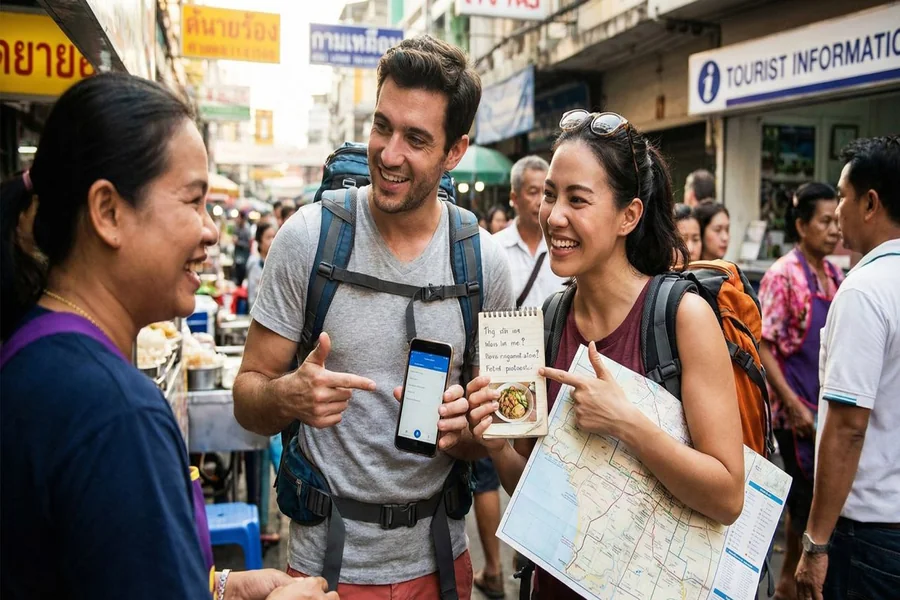

Traveling to another country is one of the best ways to experience new cultures, food, traditions, and ways of life. At the same time, arriving somewhere where you do not speak the local language can make even simple situations more complicated.
Ordering food, asking for directions, checking into a hotel, understanding transportation signs, or explaining something to a taxi driver can quickly become challenging when there is no common language.
Fortunately, smartphones have changed the way travelers deal with language barriers. With reliable mobile internet, travelers can translate conversations, understand menus, find destinations, communicate with local businesses, and access important information almost instantly.
For many people, mobile data has become just as important as a passport or a hotel reservation when traveling abroad.
Translation Apps Have Changed International Travel
Translation applications are among the most useful tools available to modern travelers.
Instead of carrying a phrasebook or trying to memorize dozens of expressions before a trip, travelers can use their phones to translate words, sentences, and even conversations in real time.
Apps such as Google Translate can help travelers understand basic questions, communicate with hotel employees, read signs, or explain dietary requirements at restaurants.
Camera translation is particularly useful. A traveler can point a smartphone camera at a menu, ticket machine, sign, or product label and receive an immediate translation.
This can make a significant difference in destinations where English is not widely spoken.
However, many of these tools work best when the phone has a reliable internet connection.
Maps Can Communicate When Words Cannot
Sometimes travelers do not need to speak at all.
Showing a location on a map can often solve a communication problem faster than trying to pronounce an unfamiliar street name.
Navigation applications allow travelers to search for hotels, restaurants, attractions, train stations, airports, and shops. They can also show the exact destination to a taxi driver or another person offering directions.
This is especially useful in countries where the local writing system is different from the one the traveler normally uses.
Instead of trying to explain an address verbally, the traveler can simply show the location on a smartphone.
Access to mobile data also makes it possible to check public transportation routes, walking directions, opening hours, reviews, and alternative destinations while moving around a city.
China Is a Good Example of Why Connectivity Matters
China is one destination where reliable mobile connectivity can be particularly useful for international visitors.
The language difference can be significant for travelers who do not speak Mandarin, while many signs, local services, restaurant menus, and transportation systems may require additional help to understand.
Having mobile internet available from the beginning of the trip allows travelers to use translation tools, navigation apps, booking confirmations, digital maps, and communication services when they need them.
Travelers preparing for a visit can consider an eSIM for China before departure so that they have a mobile data option ready for their trip.
Having connectivity arranged in advance can also remove the need to search for a physical SIM card immediately after arriving at an airport or train station.
Mobile Data Helps With Restaurants and Local Food
Food is often one of the highlights of international travel, but menus can also create some of the biggest language challenges.
A traveler may need to understand ingredients, portion sizes, preparation methods, or whether a dish contains something they cannot eat.
Mobile internet makes it possible to translate menu items within seconds.
Travelers can also search for photos of unfamiliar dishes, read restaurant reviews, or look up the meaning of local food terms before ordering.
This does more than make ordering easier. It can give travelers greater confidence to try local dishes instead of choosing only restaurants that provide menus in their own language.
Messaging Makes Communication Easier
Not every travel conversation happens face to face.
Hotels, tour operators, drivers, apartment hosts, and restaurants increasingly communicate with customers through messaging applications.
Written communication can actually make language differences easier to manage because messages can be copied directly into translation applications.
A traveler can receive instructions from a hotel, translate them, write a response, translate the response back into the local language, and send it within minutes.
This approach can be much easier than attempting a telephone conversation when neither person speaks the other’s language comfortably.
Connectivity Is Useful From the Moment You Arrive
Language barriers often become most noticeable immediately after arrival.
Travelers may need to find airport transportation, locate their accommodation, contact a host, understand a train ticket, or find the correct bus.
This is also the moment when access to the internet can be most valuable.
Waiting until arrival to arrange connectivity can add another task to an already busy travel day.
For this reason, some travelers choose a China travel eSIM before leaving home, allowing them to prepare their mobile connectivity alongside flights, accommodation, insurance, and other travel essentials.
The same principle applies to many international destinations. Arranging mobile data before traveling can make the first few hours in a new country significantly easier.
Language Learning Still Matters
Technology does not eliminate the value of learning a few words in the local language.
Simple expressions such as hello, thank you, please, excuse me, and goodbye can make interactions more respectful and enjoyable.
Local people often appreciate visitors who make an effort to communicate, even when pronunciation is not perfect.
Mobile technology should therefore be seen as a helpful companion rather than a complete replacement for human communication.
A translation app can help when a conversation becomes difficult, but learning a handful of common phrases can make travel feel more personal.
Smartphones Have Become Travel Companions
Modern travelers use their phones for far more than communication.
A single device can contain boarding passes, hotel reservations, maps, translations, payment applications, travel guides, restaurant recommendations, transportation schedules, and emergency information.
Almost all of these tools become more useful when the phone has access to mobile data.
Reliable connectivity allows travelers to adapt when plans change. They can find another train, book a different hotel, contact customer support, check a new route, or translate an unexpected message.
This flexibility is particularly valuable in unfamiliar places.
Better Connectivity Can Lead to More Confident Travel
Language barriers are unlikely to disappear completely, and they are part of what makes international travel interesting.
What has changed is the number of tools travelers now have available to manage those differences.
Mobile internet allows people to translate languages, navigate unfamiliar cities, communicate with businesses, understand local information, and solve small travel problems before they become major ones.
The result is not simply greater convenience.
It can also give travelers the confidence to explore places they might otherwise find intimidating.
A destination where the language once felt like a major obstacle can become much more accessible when maps, translation tools, messaging, and travel information are available directly from a smartphone.
Technology may not speak every language perfectly, but it has made understanding the world a little easier.