
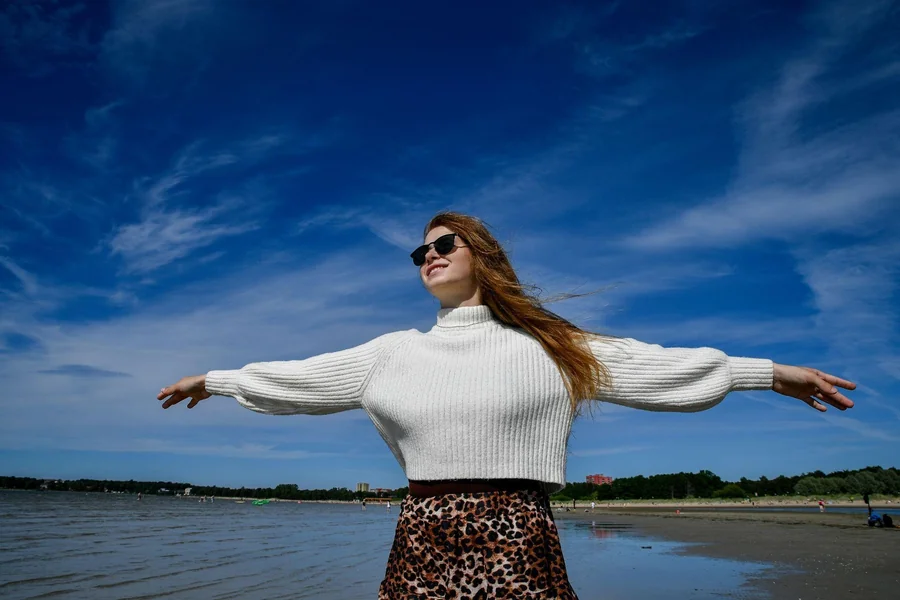

A white sweater is one of those wardrobe pieces that can look either effortlessly polished or surprisingly plain depending on how it is styled. The difference usually has less to do with the sweater itself and more to do with proportion, texture and the pieces worn around it.
That is what makes it so useful. White works with almost every colour, while knitwear adds enough softness to keep an outfit from feeling too formal. With a few small adjustments, the same sweater can work for a casual weekend, office setting or dinner without needing a completely different wardrobe.
The goal is not to overstyle it. A simple white sweater looks best when the rest of the outfit gives it structure and contrast.
Start With the Right Shape for the Outfit
Fit determines how polished a sweater looks before anything else is added.
A slightly relaxed knit works well with slimmer trousers or a structured skirt, while a more fitted sweater can balance wider-leg jeans or tailored trousers. With white sweaters for women, the most versatile choice is often the one whose shape complements the bottoms already in the wardrobe rather than simply following the season’s preferred silhouette.
Proportion is what creates intention. If everything is oversized, the outfit can lose definition. If every piece is very fitted, it may feel more formal than intended.
A small contrast between shapes usually makes the look feel more considered.
Add Structure With Trousers or Denim
The easiest way to make knitwear look more polished is to pair it with something that has a clearer shape.
Tailored trousers immediately give a white sweater more structure, especially in darker neutral colours such as navy, charcoal or brown. Straight-leg denim works well too, particularly when the wash is clean and the overall fit is simple.
The contrast between soft knitwear and a more defined lower half creates balance.
This also makes the outfit easier to adapt. Sneakers can keep it casual, while loafers, ankle boots or a more refined flat can shift the same combination toward a smarter setting.
The sweater stays simple while the surrounding pieces determine the mood.
Use Texture Instead of Adding Too Much Colour
A monochrome or neutral outfit does not need to feel flat.
Texture can do much of the work.
Cable knit, ribbing, wool, leather and suede all create visual contrast without requiring bright colours. A white sweater with dark leather accessories, for example, can feel much more complete even when the palette remains minimal.
This approach is especially useful during colder months when several layers are involved.
Different surfaces make those layers easier to distinguish and keep the outfit from looking like one solid block.
Texture also gives a simple sweater more presence, which means fewer accessories are needed.
Let Accessories Do One Clear Job

Accessories can elevate a white sweater quickly, but adding too many at once can remove the simplicity that makes the look appealing.
Choose one main direction.
A belt can define the waist, a structured bag can make the outfit feel more polished, while jewellery can add a more refined finish. A scarf may provide colour or pattern when the rest of the look is neutral.
The strongest outfits usually have one or two details that feel intentional rather than several competing elements.
White provides a clean background, so accessories naturally become more visible. That makes editing especially important.
A single strong detail often has more impact than several smaller ones fighting for attention.
Layer With a Jacket or Coat
Outerwear can completely change the character of a white sweater.
A tailored coat creates a classic, refined look, while a leather jacket adds more contrast. A blazer can make the sweater suitable for work, and a relaxed wool coat keeps the outfit polished without becoming overly formal.
Colour matters less than shape.
Because white is neutral, almost any outerwear shade can work if the proportions are right. Camel, navy, black and grey are easy choices, while deeper greens or burgundy can introduce more personality.
The sweater acts as a visual break between the face and a darker outer layer, which is one reason the combination often looks so balanced.
Pay Attention to the Neckline
Neckline changes the entire impression of a sweater.
A crew neck feels clean and straightforward, while a V-neck creates more vertical space and works well over a shirt. Turtlenecks feel more polished and structured, particularly when paired with tailored trousers or a long coat.
The neckline also influences jewellery.
Shorter necklaces work well with open necklines, while earrings may be enough with a high-neck sweater.
This is a small styling detail, but it makes the outfit feel more deliberate.
When the neckline, accessories and outer layer work together, even a very simple sweater can look carefully put together.
Keep the Overall Look Clean
A white sweater works best when the outfit around it does not become unnecessarily complicated.
Clean lines, restrained colours and a few well-chosen details allow the knit to remain the centre of the look without making it feel boring.
That simplicity is also what makes the piece so versatile.
The same sweater can look casual with jeans and sneakers, polished with trousers and loafers, or more elevated under a structured coat with jewellery.
Making it look more put together therefore does not require buying more clothing.
It usually comes down to proportion, texture and choosing supporting pieces that give the outfit a clear direction.
A simple white sweater already provides a strong foundation. The rest is mostly about making each additional piece earn its place.