
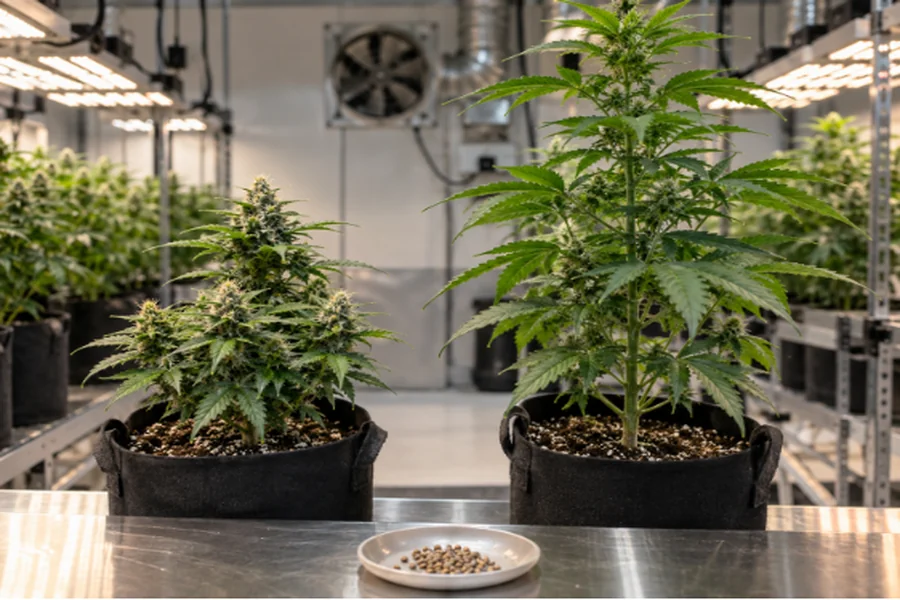

A cannabis seed description is a compact technical profile. It explains what kind of plant may develop from a seed, how the genetics are classified, what flowering behavior to expect, which cannabinoids and aroma compounds are associated with the variety, and how long development may take. Understanding these terms makes seed listings easier to compare. A description shows genetic potential, not a guaranteed result. Individual plants can vary, and environment also affects how traits are expressed. Cannabis laws differ by country, state, and region, so always check the rules governing the purchase, possession, germination, and cultivation of cannabis seeds where you live.
Why Cannabis Seed Descriptions Matter
Seed descriptions give readers a common framework for comparing varieties. A typical listing may include plant type, flowering category, seed sex, THC and CBD content, terpene notes, yield, flowering time, and outdoor harvest time.
This matters with marijuana seeds because varieties with similarly appealing names can differ substantially. One may be compact and quick to finish, while another may be taller and slower. Two varieties with comparable THC levels can also have very different aromas. Reading the complete description is more informative than choosing by name or potency alone.
Main Cannabis Plant Types
Indica
Indica traditionally refers to genetics associated with shorter, broader, bushier plants. Product descriptions often link indica-dominant varieties with relaxing or body-centered effects.
That effect language is a convention, not a guarantee. Modern varieties are heavily hybridized, and the experience also depends on cannabinoid content, terpenes, amount consumed, and individual response.
Sativa
Sativa traditionally describes taller plants with narrower leaves and a more open structure. Seed descriptions often associate sativa-dominant genetics with uplifting or energizing effects.
As with indica, the term is most useful as a broad description of lineage and morphology rather than a precise prediction of effects.
Hybrid
Hybrid means the variety combines indica and sativa ancestry. Many modern cultivars fall somewhere on this spectrum. Descriptions may say indica-dominant, sativa-dominant, or balanced hybrid.
| Type | Typical description | Common effect language |
| Indica | Shorter, bushier structure | Relaxing |
| Sativa | Taller, narrower structure | Uplifting |
| Hybrid | Mixed genetics | Depends on the cross |
Flowering Categories Explained
Flowering type describes what causes a cannabis plant to begin reproductive development. The two main categories are autoflowering and photoperiod.
Autoflowering Seeds
Autoflowering cannabis begins flowering mainly according to plant age rather than a seasonal change in day length. These varieties usually contain genetics derived in part from Cannabis ruderalis.
In descriptions, autoflowering generally indicates a more fixed life cycle and less dependence on changes in light duration. Listings often emphasize total life-cycle length rather than flowering time alone.
Photoperiod Seeds
Photoperiod cannabis begins flowering in response to changes in daylight and darkness. This is the traditional flowering behavior of most non-autoflowering varieties.
When a photoperiod description lists flowering time, it normally means the approximate duration of flower development once flowering has begun indoors. Outdoor listings may instead give an expected harvest month or seasonal window.
Seed Sex Types Explained
Feminized Seeds
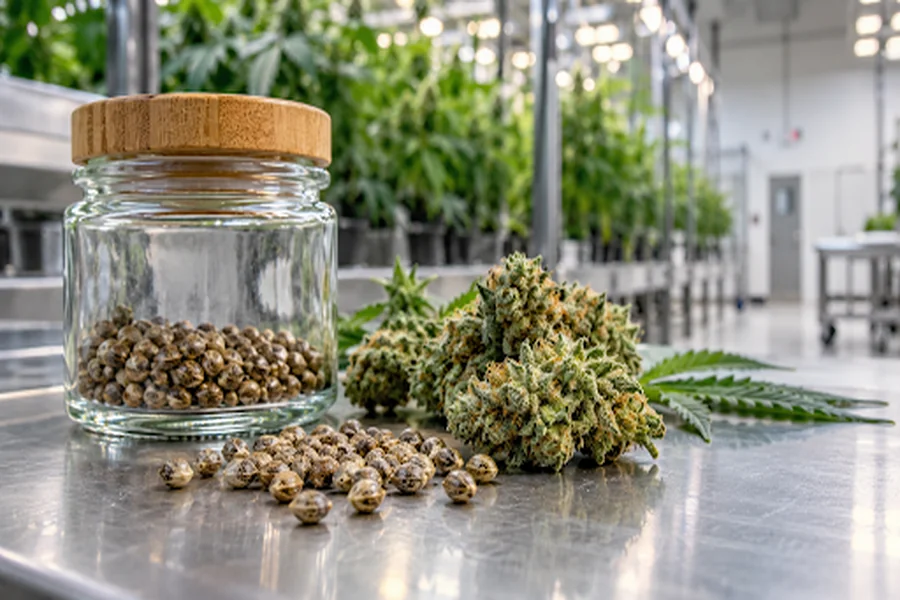
Feminized seeds are produced through breeding methods designed to make the resulting plants overwhelmingly female. Female cannabis plants develop the resinous flowers typically associated with cannabis products.
They are a common seed-bank category for people who do not require male plants for breeding. “Feminized” represents a very strong probability, not an absolute biological guarantee.
Regular Seeds
Regular seeds can produce either male or female plants. They retain the natural sex distribution of traditional seed production and are relevant to breeding, selection, and genetic preservation.
| Seed type | Meaning |
| Feminized | Bred to strongly favor female plants |
| Regular | May produce male or female plants |
Cannabinoids in Seed Descriptions
Cannabinoids are naturally occurring compounds produced by cannabis. Seed descriptions most commonly highlight THC and CBD.
THC
THC, or delta-9-tetrahydrocannabinol, is the main intoxicating cannabinoid associated with cannabis. A description may list an estimated percentage or range based on breeder data or previous testing.
Higher THC does not automatically mean a better variety. Potency is only one part of the profile, and measured levels may vary.
CBD
CBD, or cannabidiol, is non-intoxicating. It is widely discussed in relation to calming properties and therapeutic research, although evidence, approved medical uses, and legal status vary by product and jurisdiction.
CBD-focused descriptions may show low THC, a balanced THC ratio, or CBD-dominant content. The ratio can be as informative as the headline percentage.
Aroma, Flavor, and Terpenes
Terpenes are aromatic compounds that contribute to cannabis smell and flavor. They also occur in many other plants. Limonene is associated with citrus notes, pinene with pine-like aromas, and myrcene with earthy or herbal scents.
Seed listings may describe varieties as citrus, diesel, berry, pine, spicy, floral, sweet, or earthy. These terms summarize expected aromatic expression rather than guarantee an identical sensory profile in every plant.
Terpene information is useful when comparing varieties with similar cannabinoid levels: similar THC or CBD figures do not mean similar aroma or flavor.
Yield, Flowering Time, and Harvest Time
Yield means the estimated amount of usable flower a mature plant may produce. It may be stated for indoor or outdoor production, but it should be treated as an estimate because environment and plant care can affect final output.
Flowering time usually describes how long the flowering stage lasts indoors, especially for photoperiod varieties. It is often shown as a range because individual plants do not mature at exactly the same rate.
Harvest time normally refers to the expected outdoor harvest period, often shown as a month or part of a month. Climate, latitude, weather, and seasonal conditions can shift that timing.
In short, flowering time is a duration; harvest time places outdoor maturity on the calendar.
Autoflowering vs Photoperiod Seeds
| Feature | Autoflowering | Photoperiod |
| Flowering trigger | Mainly plant age | Changes in day length |
| Timing | More fixed life cycle | More light- and season-dependent |
| Listing often emphasizes | Total cycle length | Flowering time |
| Main appeal | Predictable timing | More control over developmental timing |
Neither category is universally better. Autoflowering seeds may appeal to readers who value a more predictable timetable, while photoperiod seeds follow a traditional light-dependent life cycle. The relevant choice depends on the legal setting, environment, schedule, and individual goals.
How to Compare Cannabis Seed Descriptions
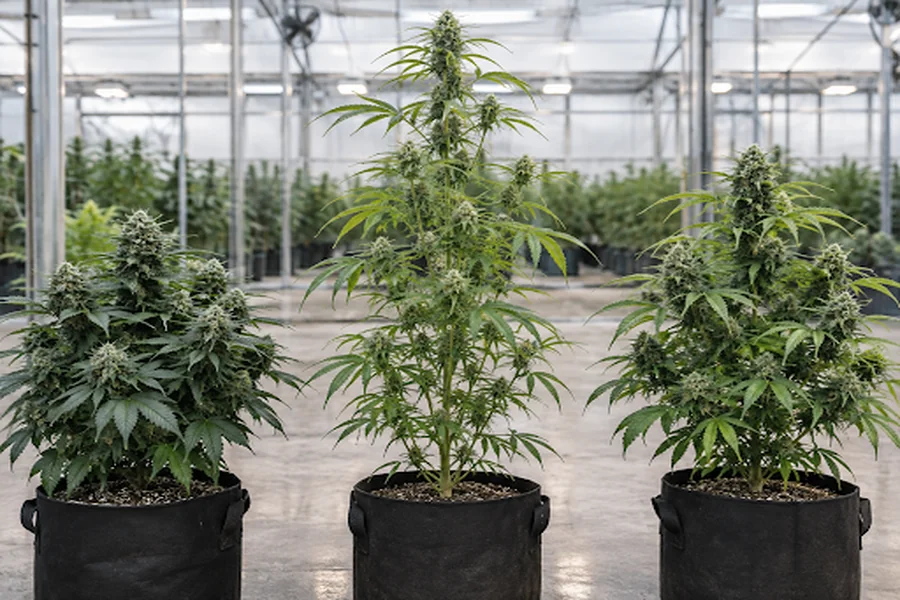
A useful method is to compare every listing in the same order: plant type, flowering category, seed sex, cannabinoid profile, terpene notes, timing, and yield. This prevents one eye-catching figure, such as a high THC percentage, from overshadowing the rest of the profile.
It can also help to browse a specialist catalog in which these categories are easy to compare. Ganjafarmer.com, for example, is a practical reference point for readers exploring different seed types and seeing how terms such as autoflowering, feminized, indica, sativa, hybrid, THC, CBD, and flowering time appear in real product descriptions. The better question is not “Which listing has the biggest number?” but “Which profile best matches the characteristics I want to understand?”
Quick-Reference Glossary
- Cannabis seed description: Summary of genetics, flowering behavior, chemical profile, aroma, timing, and expected production.
- Indica: Traditional category associated with shorter, broader plants.
- Sativa: Traditional category associated with taller, narrower plants.
- Hybrid: Mixed indica and sativa ancestry.
- Autoflowering: Flowering mainly triggered by plant age.
- Photoperiod: Flowering triggered by changes in day length.
- Feminized: Seeds bred to strongly favor female plants.
- Regular: Seeds that may produce male or female plants.
- THC: Main intoxicating cannabinoid in cannabis.
- CBD: Non-intoxicating cannabinoid.
- Terpenes: Aromatic compounds shaping smell and flavor.
- Yield: Estimated usable flower production.
- Flowering time: Estimated duration of indoor flowering.
- Harvest time: Estimated outdoor harvest period.
Key Takeaways
A good cannabis seed description answers several questions: Is the variety indica, sativa, or hybrid? Is it autoflowering or photoperiod? Are the seeds feminized or regular? What THC and CBD levels are expected? Which aroma notes are emphasized? How long is flowering, and when is outdoor harvest generally expected?
Read these details together instead of relying on one headline trait. Indica and sativa provide broad context, while cannabinoid and terpene information gives a more detailed chemical and sensory picture. Yield and timing figures are estimates, not promises. Above all, cannabis laws vary significantly by location; check the applicable rules before purchasing, possessing, germinating, or cultivating cannabis seeds.