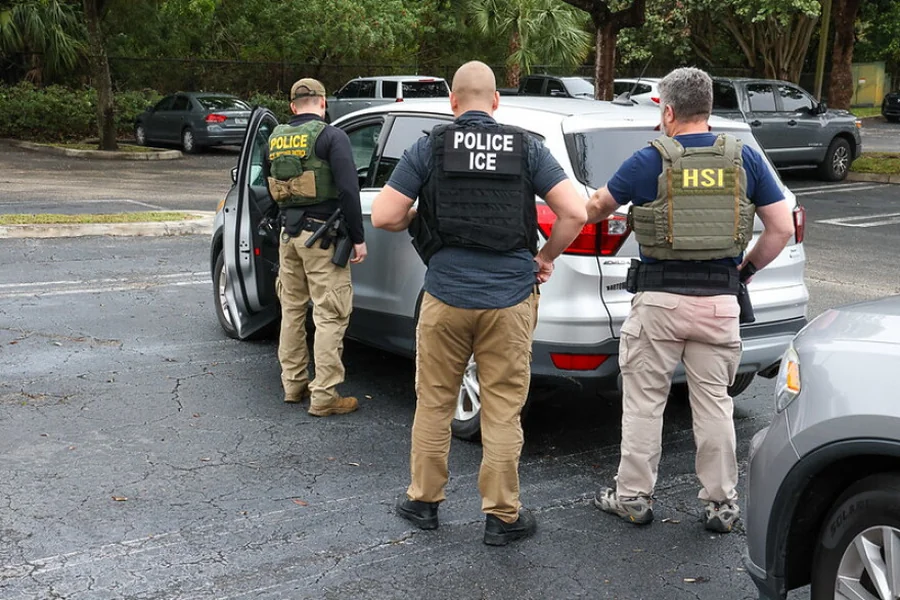
Small offenses like broken taillights or missed court dates used to be local matters. However, in a growing number of counties and cities, those types of cases could potentially end with an immigration hold and a transfer to federal custody. A federal program known as 287(g) has allowed for more arrests of immigrants, and the use of this program has grown over the past two years. For immigrants, agreements between local police departments and Immigration and Customs Enforcement (ICE) could turn routine encounters with police officers into immigration cases that could threaten their status in the United States.
What Is a 287(g) Agreement?
ICE has written contracts with many state or local law enforcement agencies. Under Section 287(g) of the Immigration and Nationality Act, the federal government can train local officers and give them limited authority to perform tasks that would usually be handled by federal agents.
Officers who take part must complete ICE training and work under ICE supervision when carrying out immigration duties. In return, ICE has started offering participating agencies money for salaries, equipment, and other costs, which has encouraged many more departments to sign up.
What Are the Three Types of 287(g) Agreements?
There are three main models for agreements between ICE and local law enforcement, and each may give police officers a different level of power.
- The Jail Enforcement Model allows trained officers to question people who have already been arrested and booked into a local jail about their immigration status. Officers can then start the deportation process or place an immigration hold on the person.
- The Warrant Service Officer Model allows jail officers to serve ICE administrative warrants on specific people who are already in custody. This lets the jail hold a person and hand them over to ICE.
- The Task Force Model allows officers to question and arrest people about their immigration status while on patrol in the community, such as during traffic stops.
How Do State Laws Affect Local Cooperation With ICE?
Because immigration enforcement is mainly a responsibility of the federal government, each state may put laws and policies in place to determine how local agencies will help ICE. This has created very different rules across the country.
In some, cooperation with ICE is required, or officials have taken steps to enter into 287(g) agreements. Texas passed legislation in 2025 requiring county sheriffs who operate jails in counties with populations of over 100,000 people to request 287(g) agreements with ICE. In Florida, every county in the state has entered into ICE agreements.
Other states limit cooperation with ICE. California passed a law that prohibits law enforcement agencies from using state or local resources for federal immigration enforcement. Illinois has prohibited local law enforcement agencies from entering into 287(g) agreements or sharing information with ICE. However, state laws do not stop ICE agents themselves from making arrests.
Why Do 287(g) Agreements Matter More Than Ever?
287(g) agreements give local police officers, sheriff’s deputies, and state troopers the power to help enforce federal immigration law. Thousands of local agencies have signed on to work with ICE, and many new agreements allow officers to question and arrest people about their immigration status during everyday patrol work. As a result, ordinary interactions with local police can now lead to serious immigration consequences.
The growth has been dramatic. More than 29,000 local and state law enforcement officers from over 1,850 agencies across the country are now working with ICE. In January of 2025, when President Donald Trump took office for his second term, 287(g) programs accounted for around 300 immigration arrests. By July of 2026, the number of monthly arrests through 287(g) programs grew to more than 6,600.
How Can an Interaction With Police Lead to Immigration Detention?
Traffic Stops and Street Encounters
In areas with a Task Force Model agreement, an officer may stop someone for speeding, a broken headlight, or driving without a license, and they can ask about the person’s immigration status on the spot. If the officer believes the person is in the country without permission, the officer may arrest them for immigration purposes and turn them over to ICE, even if the original reason for the stop was minor.
Arrest and Booking at the Local Jail
When someone is arrested and booked into jail, their fingerprints may be sent to the FBI. Those fingerprints may then be shared with the Department of Homeland Security, which oversees ICE. If the fingerprints match an immigration record, ICE may learn about the arrest within hours.
ICE may then issue an immigration detainer. A detainer is a request asking the jail to hold a person for up to 48 hours so ICE can pick them up. This can happen even if criminal charges are dropped or the person posts bail.
Warrants and Home Visits
ICE and local officers may use administrative warrants, which are documents signed by an immigration officer, not a judge. An administrative warrant generally does not give officers the legal right to enter a private home without permission. A judicial warrant, which is signed by a judge and lists a court’s name, does allow entry. Depending on the case, officers may use either type of warrant as they take steps to detain immigrants.
Rights During Encounters With Police or ICE Officers
Everyone in the United States has certain constitutional rights, regardless of their immigration status. Understanding what steps to take during interactions with officers can help ensure that a person’s rights will be protected. Issues to understand include:
- A person has the right to remain silent under the Fifth Amendment. They can decline to answer any questions, such as where they were born, how they entered the country, or their immigration status.
- Giving false information to an officer could lead to legal problems and hurt a person’s chances of staying in the country later.
- A person can ask whether they are being detained. If not, they may walk away.
- A person does not have to open their door unless officers show a warrant signed by a judge.
- Speaking to a lawyer before signing any documents can help a person protect their rights. Some documents, such as voluntary departure forms, may waive a person’s right to a hearing and lead to fast deportation.
Legal Help From an Immigration Attorney
Because of the rapid growth of 287(g) agreements, encounters with police officers can lead to immigration risks that may not have affected families before. When a person has been detained, a lawyer can take steps to locate them, seek an immigration bond hearing or file a habeas corpus petition, and identify the potential defenses against deportation or other forms of relief.
Because criminal charges and immigration cases may be closely connected, an attorney can address criminal defense issues and help ensure that a person can avoid an outcome that could trigger mandatory detention or deportation. Speaking with an attorney early can make sure a person understands their options and will be able to take the right steps to protect their future in the United States.