
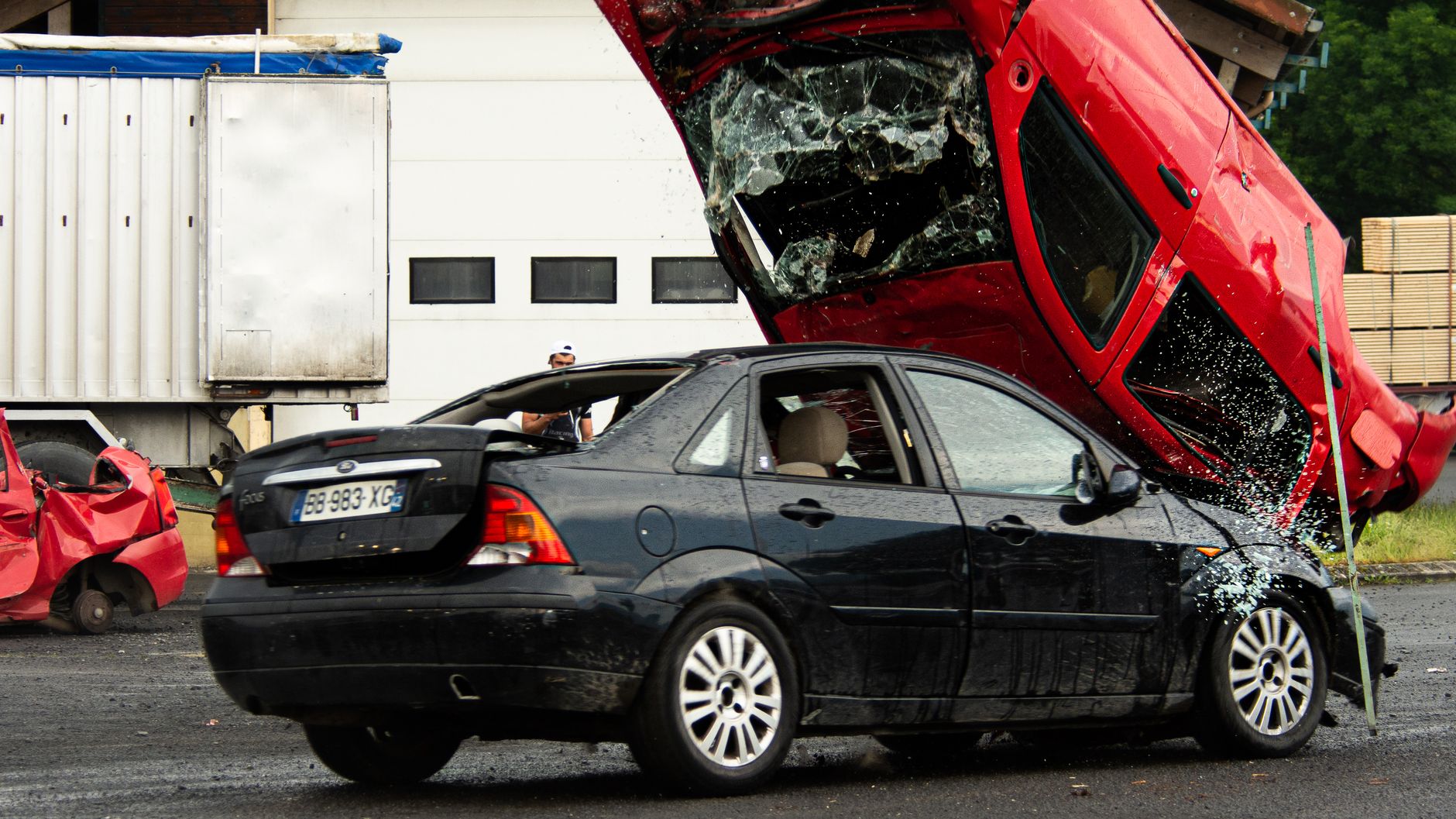

A car accident can happen in seconds. Explaining what happened afterward can take much longer.
Stress, unfamiliar vocabulary, and gaps in memory can make even a straightforward account difficult to communicate. You may remember the sound of the impact clearly but feel uncertain about the exact order of events.
You do not need sophisticated language to describe a collision. The goal is to explain what you observed, identify what you do not know, and avoid filling in missing details with assumptions.
Here are practical ways to make your account clearer and more accurate.
Start With a Simple Timeline
A useful description usually follows three stages: before the collision, during the impact, and immediately afterward.
Begin with your location and direction of travel. Then explain what you observed and what happened next.
For example:
“I was driving north on Oak Street in the right lane. As I approached the intersection with Pine Avenue, a vehicle entered from my right. The front of my car struck the left side of that vehicle.”
This gives the listener a sequence to follow. It is easier to understand than an account that jumps between the vehicle damage, the other driver’s behavior, and something a witness said afterward.
If you cannot remember part of the sequence, say so. An honest gap is more useful than a detail added to make the story sound complete.
Separate Observations From Assumptions
An observation describes something you saw, heard, or experienced. An assumption offers an explanation that you may not be able to verify.
Compare these statements:
- Assumption: “The other driver was texting.”
- Observation: “I saw the other driver looking down before the impact. I could not see what they were looking at.”
The second statement identifies both the observation and its limits.
The same principle applies to speed. “The car was traveling at 60 miles per hour” sounds precise, but that precision is misleading if you did not have a reliable way to measure it.
If you cannot estimate the speed reliably, explain that instead.
Choose Concrete Words Over Dramatic Expressions
Everyday conversation often relies on exaggeration and idioms. After a collision, those expressions can introduce ambiguity.
“The car came out of nowhere” communicates surprise, but it does not explain where the vehicle came from. “I did not see the vehicle until it entered the intersection from my left” provides more useful information.
Similarly, “He was flying down the road” does not establish a speed.
You do not have to remove emotion from your account. Feeling frightened or shaken is part of your experience. However, describe the vehicle movements separately so the listener can understand what happened.
Use straightforward verbs such as “turned,” “stopped,” “reversed,” “entered,” and “struck.”
Be Clear About What You Remember
Memory does not always provide a complete recording of an event. A clear account should reflect your actual level of certainty.
Helpful phrases include:
- “I remember…”
- “I did not see…”
- “I am not certain whether…”
- “I cannot reliably estimate…”
For example, “I remember braking before the impact, but I cannot estimate how many seconds passed” is more accurate than inventing a precise interval.
In its discussion of disputed fault after a California car accident, Frank Penney Injury Law advises readers to avoid guessing and stick to facts they actually remember.
That is also a useful communication principle: confidence in your wording should match confidence in your memory.
Describe Physical Symptoms Without Diagnosing Yourself
When explaining how you feel, describe the symptoms you are experiencing.
“My neck feels stiff when I turn my head” communicates something specific. “I definitely have whiplash” introduces a medical conclusion that requires professional evaluation.
Location, timing, and the effect on movement can help make a description clearer:
“My right shoulder began hurting after the collision, and lifting my arm is uncomfortable.”
Do not minimize symptoms to reassure someone or exaggerate them to make your account sound more serious. Describe your experience accurately and seek appropriate medical attention.
Use Notes and Photographs to Support Your Account
Once immediate safety and medical needs have been addressed, notes can help preserve details you might otherwise forget.
Record the location, approximate time, direction of travel, and what you personally observed. Keep another person’s statements separate from your own recollections.
For example:
“I did not see the traffic signal before impact. A witness later told me it was red.”
This makes the source of each detail clear.
Photographs can also provide context for vehicle positions, damage, and road conditions. Frank Penney Injury Law’s guide to steps to take after a car accident includes documenting the scene and collecting witness information.
Review those materials carefully, while distinguishing between what they show and what you remember independently.
Read Before You Confirm
Before confirming a written account, check whether it accurately reflects your words.
Look for incorrect directions, missing context, or estimates presented as established facts. If a summary says you “saw” something that another person told you, ask for that distinction to be corrected.
Clear communication does not require a flawless memory or an impressive vocabulary. It requires careful wording, a logical sequence, and honesty about uncertainty.
After a car accident, the most useful account is one that helps others understand what you know—and how you know it.