We “fall” in love. Someone “sweeps us off our feet”. A marriage “hits the rocks”, or it “has a spark”. Nobody is actually falling, swept or burning, and yet we say all of it without blinking. The way English speakers talk about love is almost entirely figurative, and the choice of image says a lot about what we expect from it. That is the subject of these love metaphors, taken as a way of thinking and not a list to copy.
If you want ready-made lines, our post of 35 metaphors for love is the place for that. Here I want to ask why these particular pictures keep returning, and what each one quietly assumes.
Why We Talk About Love in Pictures
Love is hard to point at. You can’t hold it up and show it to someone. So people borrow from things they can point at: travel, illness, heat, battle, plants.
The linguists George Lakoff and Mark Johnson made this idea famous in their 1980 book Metaphors We Live By. Their claim, roughly, is that such comparisons are not decoration. They shape how people think about the subject. Whether that goes as far as they say is still argued over, but the patterns they noticed in everyday speech are easy to spot once you look.
Love Metaphors We Use Most
Love as a road trip
“We’ve come a long way.” “We’re at a crossroads.” “It’s been a bumpy road.” The picture here is two people travelling together toward a place. It assumes shared direction and shared effort, and it lets us talk about trouble without blaming anyone: a road can be rough through nobody’s fault.
In a sentence: “Forty years in, we still argue about the map.” (The humor works because both of them are still in the car.)
Love as madness
“I’m crazy about you.” “She drives me out of my mind.” “He’s lost his head.” Here love is something that takes your reason away. This one is a mixed message. It says love is thrilling, and it also says love is a bit dangerous.
In a sentence: “I rearranged my whole week for a coffee that lasted twenty minutes. Call it a fever.” I find this the most honest of the set, since anyone who has been in love at nineteen knows the feeling.
Love as fire and heat
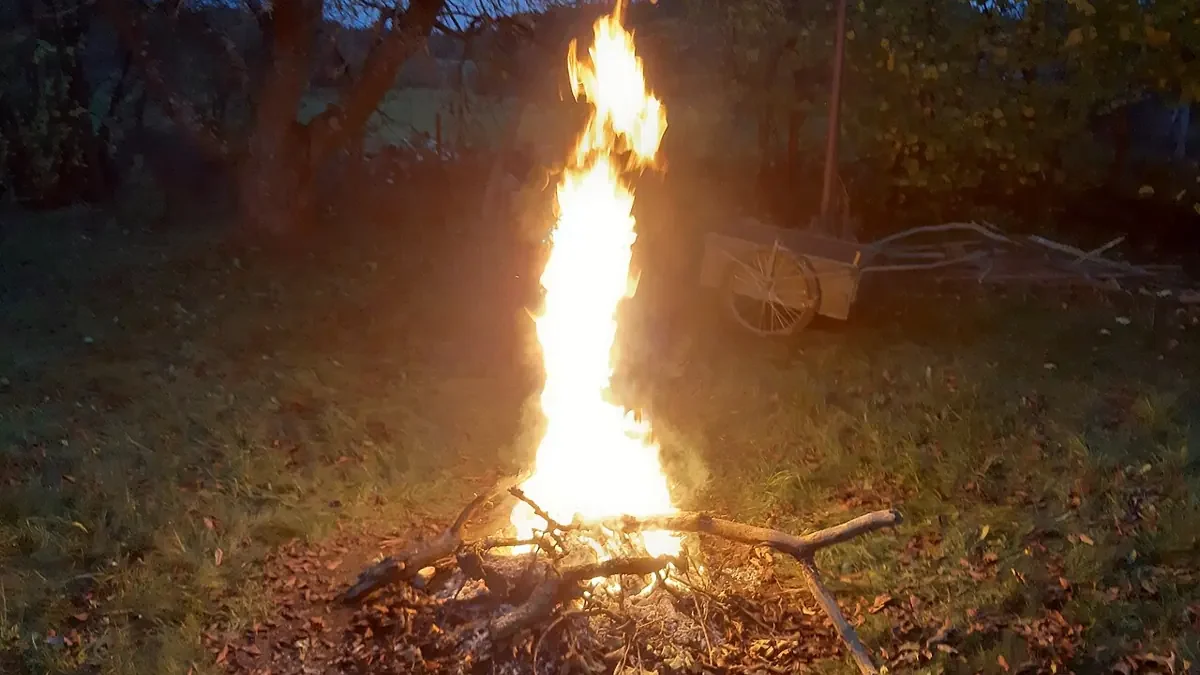
“There was a spark.” “Old flame.” “Their love has cooled.” Heat suggests energy, light and burn. It also suggests that fire needs fuel and can die. If you think about the metaphor for long, it quietly argues that love must be tended. Our similes for passion lean on this family of images.
In a sentence: “The spark was easy. Keeping the stove lit on a Tuesday in February is the real skill.”
Love as war
“She won him over.” “He laid siege to her heart.” “They fought for years and finally surrendered.” The language of pursuit, conquest and defense is old. It treats love as a contest with a winner. That is a poor fit for a good marriage, where, with luck, nobody should be defeated. It is a better fit for early courtship, which can feel like a campaign, or for the end of a relationship. For that second use, see metaphors for divorce.
In a sentence: “We had a cease-fire at dinner, and by dessert we’d signed a treaty over who forgot the milk.”
Love as a garden
“Their love is growing.” “It needs watering.” “Something has taken root.” The garden picture is slower than the others. Nothing happens fast. You plant, you wait, you pull weeds, and some seasons are bare. Of all these images, it is the one I would hand to a couple celebrating a long marriage.
In a sentence: “She still waters the tomatoes he planted, even though he’s not here to pick them.”
Same Feeling, Different Assumptions
Here is the thing about all five. They describe the same emotion and make completely different promises.
A road trip says you go together. Madness says you lose control. Fire says it burns out unless fed. War says someone wins. A garden says patience pays off.
Few people use just one. Real couples switch between them depending on the day. “We’re on the road together” at the anniversary dinner and “we’re in the trenches” during a house renovation. That mixing is normal, and it is probably healthier than clinging to one picture.
Do Other Cultures Use Different Pictures?
Yes, in many cases. English leans on travel and heat, and other languages favor other things, such as hunger, food or the weather. Our piece on love idioms from around the world shows some of these. You can also compare how we describe being drawn to someone in metaphors for attraction.
A Small Experiment
Love metaphors are easy to catch in the wild. Next time you describe a relationship, yours or a friend’s, listen to your own verbs. Are you “working through” something, “falling for” someone, “fighting for” it, or “growing apart”? Each verb picks a picture. Change the picture and the story changes with it. “We lost” and “we drifted” are not the same sentence.
Frequently Asked Questions
What is the most common metaphor for love?
In English, travel is among the most common pictures, with phrases such as “a long road” and “at a crossroads”. Fire, madness and war are close behind.
Why do people use metaphors to describe love?
Love is abstract and hard to point at, so people borrow concrete things like travel, heat or plants to make it easier to talk about.
Is “love is war” a healthy way to think about relationships?
Probably not for a long partnership, since war implies winners and losers. Many people find the garden or road pictures more useful, because they imply shared effort.
How is this different from a list of love metaphors?
A list gives you lines to use. This post looks at the habits of thought behind them, so you can see what each picture assumes before you borrow it.