
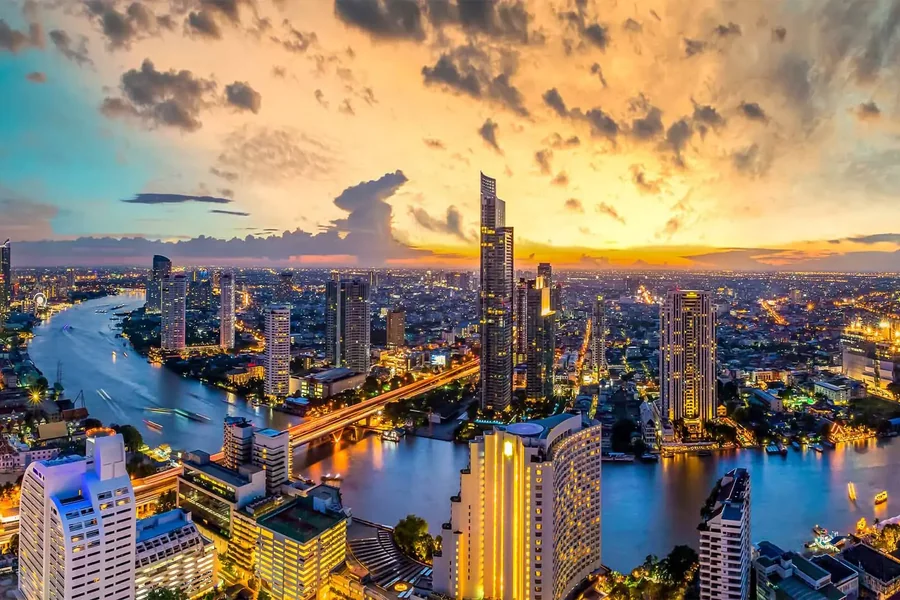

Real estate in Thailand continues to evolve into a magnet for investors chasing robust returns and long-term security in Southeast Asia. With its strategic location, accelerating tech adoption, and growing rental demand, the country offers a rare mix of lifestyle, logistics, and legacy. At the heart of this property ecosystem is Thailand-Real.Estate — a gateway platform connecting buyers and agents across urban cores, beach towns, and emerging economic corridors. In this guide, we dive deep into the data, dissect regional performance, explore rental strategies, and unpack how foreigners can invest in Thai property with confidence.
The Landscape in Motion: Recovery Meets Redirection
The first half of 2025 tells a story of momentum. After a sluggish few years, Thailand’s residential market is not just rebounding — it’s recalibrating. The Bank of Thailand’s residential index moved upward by 2.71% year-on-year in Q2 2025, nudged by gains in townhouses (+4.88%) and detached homes (+2.64%). But numbers alone don’t paint the full picture.
Tourism, the country’s economic engine, is roaring back. With over 12 million international visitors in early 2025 and nearly THB 577 billion in revenue, the hospitality sector is once again injecting demand into coastal and central property markets alike.
Three forces are shaping the market:
- Tourism-led rental appetite — driving up demand for short- and mid-term leases in Phuket, Chiang Mai, and Bangkok.
- Government incentives — lower transfer/mortgage fees (0.01% for homes under THB 7 million) and relaxed loan-to-value ratios.
- Investor psychology — shifting toward premium segments and prime locations, as buyers seek safety in quality amid global uncertainty.
Price Pulse: Where Are Values Heading?
In Thailand, prices are anything but uniform. Geography, asset type, and market maturity all play into valuation trends.
| Region | Asset Type | Avg. Price (THB/sqm) | YoY Growth (%) |
| Bangkok CBD | Condominium | 236,000 | +2.54 |
| Bangkok Suburban | Condominium | 127,000 | +3.60 |
| Nationwide | Detached Houses | — | +2.64 |
| Nationwide | Townhouses | — | +4.88 |
| Southern Resorts | Mixed | — | +5.48 |
Prices in the Bangkok core have stabilized — not overheated, but steadily ascending. Suburban zones, however, are quietly catching up, attracting young families and remote workers looking for affordability with access. Coastal regions are seeing sharper appreciation, bolstered by foreign interest and tourism-driven sales.
Supply & Sales: Pipeline Insights
After a 19% slump in project launches across the Bangkok Metropolitan Region from 2023 to 2024, a course correction is underway. Developers, having offloaded unsold inventory, are gearing up for a 10% bump in 2025. Nationwide, residential transaction volumes are forecast to climb to USD 16.85 billion this year — with a steady CAGR of 4.47% projected through 2029.
Rental Yield Breakdown: Where Income Lives
Cash flow seekers, take note: Thailand’s average gross rental yield stands at 6.20% in Q3 2025 — a marginal uptick from the previous quarter. But the range is wide, and local market knowledge matters.
- Samut Prakan: Two-bedroom apartments yielding up to 8.48% gross.
- Nonthaburi: A respectable 6.45% average across asset types.
- Bangkok: Core condos deliver 4.5–5% gross; suburbs can push 7–8%.
Factor in costs, and net yields typically land 1.5 to 2 percentage points lower — taxes, maintenance, and management fees eat into margins. Still, compared to many developed markets, Thailand holds strong in the yield game.
Foreign Buyers: What the Law Lets You Do
Yes, Thailand restricts land ownership by foreigners — but that’s not the end of the story. It’s simply the beginning of a more creative, structured pathway to ownership.
Options for non-Thai buyers include:
- Condominiums: Up to 49% of total project space can be owned outright by foreigners.
- Leasehold structures: Standard 30-year leases, often with pre-agreed renewals (another 30 + 30 years).
- Thai Limited Companies: Foreigners can set up a local business to acquire land, provided Thai nationals retain at least 51% ownership.
- BOI Incentives: Foreigners investing USD 1 million or more in certain sectors can gain land ownership rights through approved programs.
Legal terrain is complex — clean title deeds, zoning clarity, and due diligence are must-haves. Don’t skip legal representation. It’s not a suggestion. It’s a survival rule.
Case in Point: The Phuket Villa Play
Let’s zoom in on a real scenario. A British investor buys a THB 25 million, three-bedroom villa in Cherng Talay. Six months in, high-season rentals hit THB 100,000 per month — yielding 5% gross per annum. After deducting 30% in taxes and fees, the net comes in around 3.5%. Not a game-changer, but solid — especially in a market where capital gains are likely over time.
What’s the lesson here? Villas in top-tier tourist zones can compete with (or even outperform) condos on yield, but the bar for entry is higher — and passive this is not. You’ll need a management team or boots on the ground.
Where to Buy: 2025’s Smartest Locations
| Hotspot | Segment | Avg. Price Range | Net Yield (%) |
| Bangkok CBD | High-rise Condo | THB 200,000–350,000/sqm | 4.0–5.5 |
| Phuket (Cherng Talay) | Villa | THB 20–40 million/unit | 3.0–4.0 |
| Chiang Mai | Townhouse | THB 3–6 million/unit | 5.0–6.0 |
| Eastern Economic Corridor (EEC) | Industrial Land | THB 8,000–12,000/sqm | N/A |
The EEC — stretching from Chonburi to Rayong — is where industrial development is booming. Chiang Mai and Chiang Rai offer strong domestic demand and lower entry costs. Coastal zones continue to attract lifestyle-driven investors, while Bangkok remains the capital for capital.
Business Investor Checklist: Strategies That Work
Thinking like a business? Good. You’ll need more than emotion and beach dreams to make this work.
- Diversify: Pair high-yield resort villas with stable city condos.
- Use financing wisely: Thai banks offer up to 70% LTV — but compare rates abroad.
- Track policy: BOI incentives shift, lending rules change — stay informed.
- Work local: A great lawyer, a trusted developer, and a reliable manager can make or break your ROI.
Conclusion: A Market Worth Navigating
Real estate in Thailand is no longer just a tropical indulgence — it’s a serious asset class. In 2025, it’s defined by segmented growth, resilient tourism, favorable policy tailwinds, and a digital-first approach to transactions. Whether you’re buying property in Thailand for foreigner or scaling up an existing portfolio, the opportunities are real — if you move smart, act local, and plan long-term.