
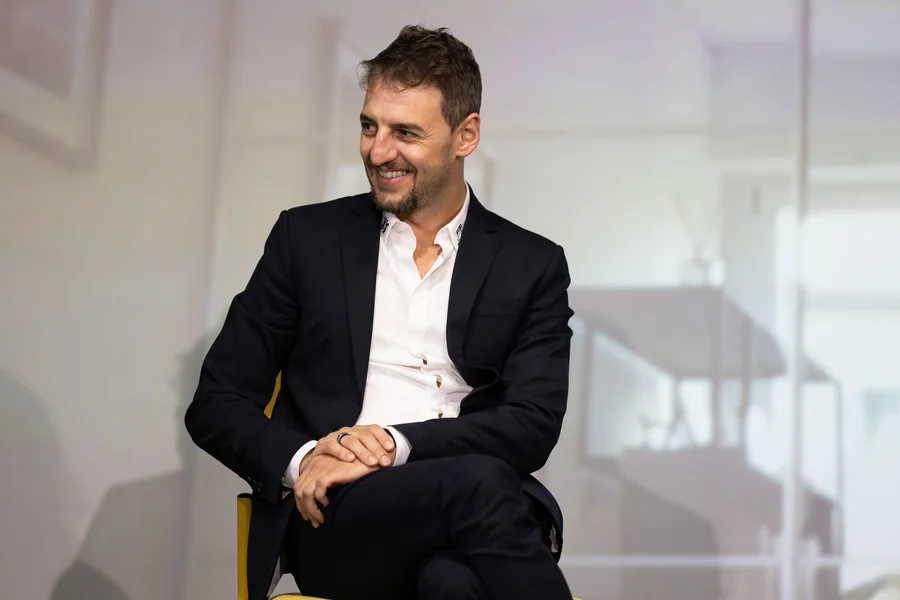

Serhii Tokarev on Deep Tech Accelerator: Ukrainian hardware engineers can compete globally
On 25 April, the Deep Tech Accelerator programme, created by AI HOUSE, came to a close at MacPaw Space. Over the course of four months, nine hardware teams refined their products, attended lectures, and engaged with business founders. Serhii Tokarev, founder of Tokarev Foundation, the driving force behind AI HOUSE, and an investor, spoke about the results of Demo Day.
Why AI HOUSE chose hardware
Due to longer development cycles and higher risks, hardware start-ups usually find it harder to attract investors. That is why AI HOUSE took a different approach: rather than waiting for teams to find their own way to market, it sought to shorten that path through structured acceleration. This led to the creation of Deep Tech Accelerator: Hardware Edition, supported by the Ukrainian Startup Fund and the Kyiv Aviation Institute.
“Over four months, the teams worked with 25 mentors, attended lectures by 30 speakers, and took part in AMA sessions. Additionally, they visited the Esper Bionics production facility and gained access to manufacturing partners,” says Serhii Tokarev, founder of Tokarev Foundation.
Demo Day results: who took part and who won
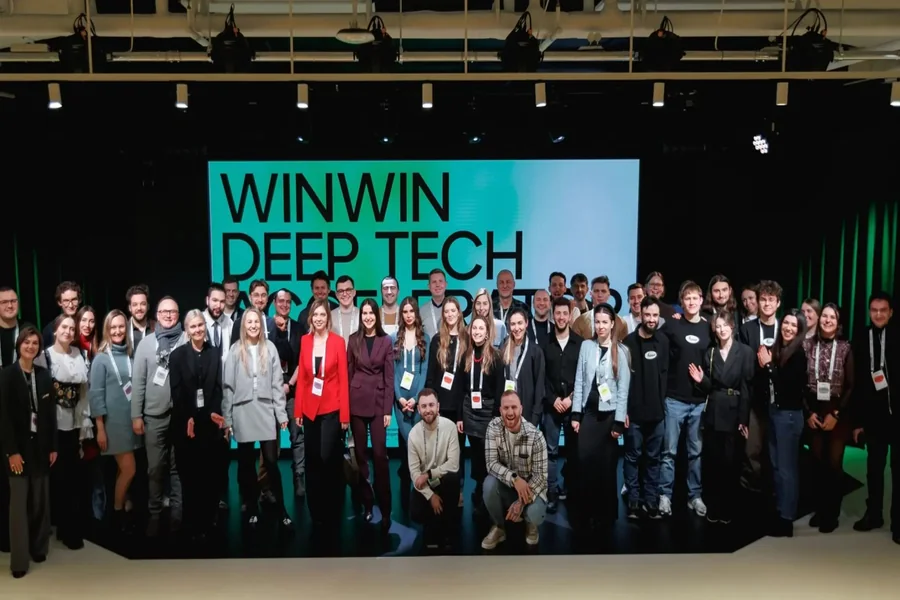
Nine teams from the fields of robotics, industrial tech, energy, and agrotechnology completed the accelerator programme. Each received $25,000 in AWS credits from the Ukrainian Startup Fund. Three start-ups were also singled out for special recognition: Tova Industries, Snipel Systems, and Watcher AI. Their teams each received an additional $150,000 in Microsoft Azure credits.
The winner of Deep Tech Accelerator: Hardware Edition was TechNovator, a start-up that received a $10,000 grant for scaling. Its product is linked to the development of next-generation wireless power transmission, which will help solve the problem of powering devices remotely without cables, overheating, or contact stations. The technology is primarily aimed at robots, medical implants, and drones.
In addition to TechNovator, the following companies took part in the acceleration programme:
- SeedMe — solutions for greenhouse automation and microclimate control for farmers;
- Snipel Systems — AI solutions for the autonomous detection and interception of drones;
- Robol — autonomous coffee shops and humanoid robots;
- Ukrainian Laboratory Instruments — a laboratory station for the automation of chemical processes;
- UA GREEN — vertical wind turbines with an AI-based predictive maintenance system;
- Watcher AI — an edge AI platform for video surveillance with a chat interface, designed for the military and security sectors;
- Vuzoll — an assistant for the service industry with CRM system integration;
- Tova Industries — a hybrid lighting system that transmits natural light via fibre optics.
The programme enabled the teams to significantly improve their products, gain access to direct collaboration with industry experts, and expand their professional networks.
Serhii Tokarev emphasises that nine teams over four months is merely the programme’s first test. AI HOUSE’s main hypothesis was that, in the right environment, Ukrainian hardware engineers can compete globally. Demo Day confirmed this.