Shift Away: The contemporary fitness paradigm is experiencing a distinct behavioral evolution away from high-attrition, extreme weight loss workouts toward…
A Biomechanical Analysis of Training Attrition, Cortisol Regulation, and the Efficacy of Low-Impact Conditioning
The contemporary fitness paradigm is experiencing a distinct behavioral evolution away from high-attrition, extreme weight loss workouts toward more managed, joint-friendly modalities. For decades, standard weight management strategies prioritized maximal caloric expenditure through high-velocity plyometrics and exhaustive intervals, often resulting in musculoskeletal overuse, chronic cortisol elevation, and premature training burnout. Modern exercise physiology emphasizes that sustainable body composition management depends on training consistency and neural recovery rather than acute physical exhaustion. This paper explores the physiological mechanisms behind this shift, focusing on how individuals can lose weight mini trampoline systems as a viable alternative to hard-surface training. By modifying deceleration profiles, bungee-suspension rebounding attenuates significant ground reaction forces, protecting articular structures while maintaining steady aerobic metabolic demand. Integrating low-friction home fitness tools into an adaptive lifestyle design allows individuals to optimize energy expenditure, support systemic circulation, and cultivate a sustainable, lifelong relationship with physical activity.
The Cultural Demise of the Exhaustion Philosophy
The global fitness landscape is undergoing a profound cultural and scientific transformation as health practitioners and fitness enthusiasts increasingly reject the extreme weight loss workouts that once dominated commercial programming. For years, mainstream fitness media popularized an uncompromising approach to body composition management, implying that meaningful physical progress required pushing the human body to its absolute structural limits. This mentality created demanding regimes filled with repetitive high-impact jumping, unmitigated metabolic conditioning, and exhaustive daily circuits performed on rigid surfaces. While these intense methods successfully maximize short-term caloric output, sports medicine and behavioral psychology have identified substantial long-term costs, including high rates of orthopedic injury, chronic physical fatigue, and rapid behavioral burnout.
Consequently, modern exercise science has shifted its focus toward the critical relationship between exercise consistency and systemic recovery. There is a growing understanding that improving personal health should not require living in a state of constant musculoskeletal pain or neural depletion. This realization has generated an accelerating demand for moderate, low-impact exercise modalities that optimize metabolic health and cardiorespiratory fitness without overstressing the skeletal frame. Consumers are seeking versatile, practical solutions that allow them to maintain regular physical activity within their own living spaces, moving away from high-friction fitness models toward a more sustainable, long-term wellness architecture.
Biomechanical Realities of High-Impact Loading and Overtraining
To understand the widespread transition toward lower-impact conditioning, it is necessary to examine the physiological stress that high-impact exercise places on the human frame. High-intensity interval routines and explosive plyometric movements are highly efficient tools for increasing cardiovascular stroke volume and improving insulin sensitivity. However, when these activities are performed excessively or on hard flooring without proper progression, the mechanical forces can accumulate negatively. Every high-velocity foot strike sends a powerful ground reaction force upward through the ankle complex, patellar tendons, knee joints, and lumbar spine, which can cause micro-trauma to articular cartilage and connective tissues over time.
Furthermore, the endocrine response to exercise depends heavily on the balance between training volume and adequate recovery. Intense physical exertion naturally prompts a temporary rise in the primary stress hormone, cortisol, which serves as a necessary biological signal for cellular adaptation. However, when extreme weight loss protocols are executed chronically without sufficient rest or proper nutrition, cortisol levels can remain elevated. Chronic hypercortisolemia can disrupt stable blood glucose regulation, interfere with deep slow-wave sleep cycles, and induce central nervous system fatigue, which saps long-term training motivation. Transitioning a portion of weekly exercise volume to lower-impact activities allows individuals to meet their energetic output goals while managing the overall physical and hormonal load imposed on the body.
Utilizing the Mini Trampoline for Sustainable Weight Management
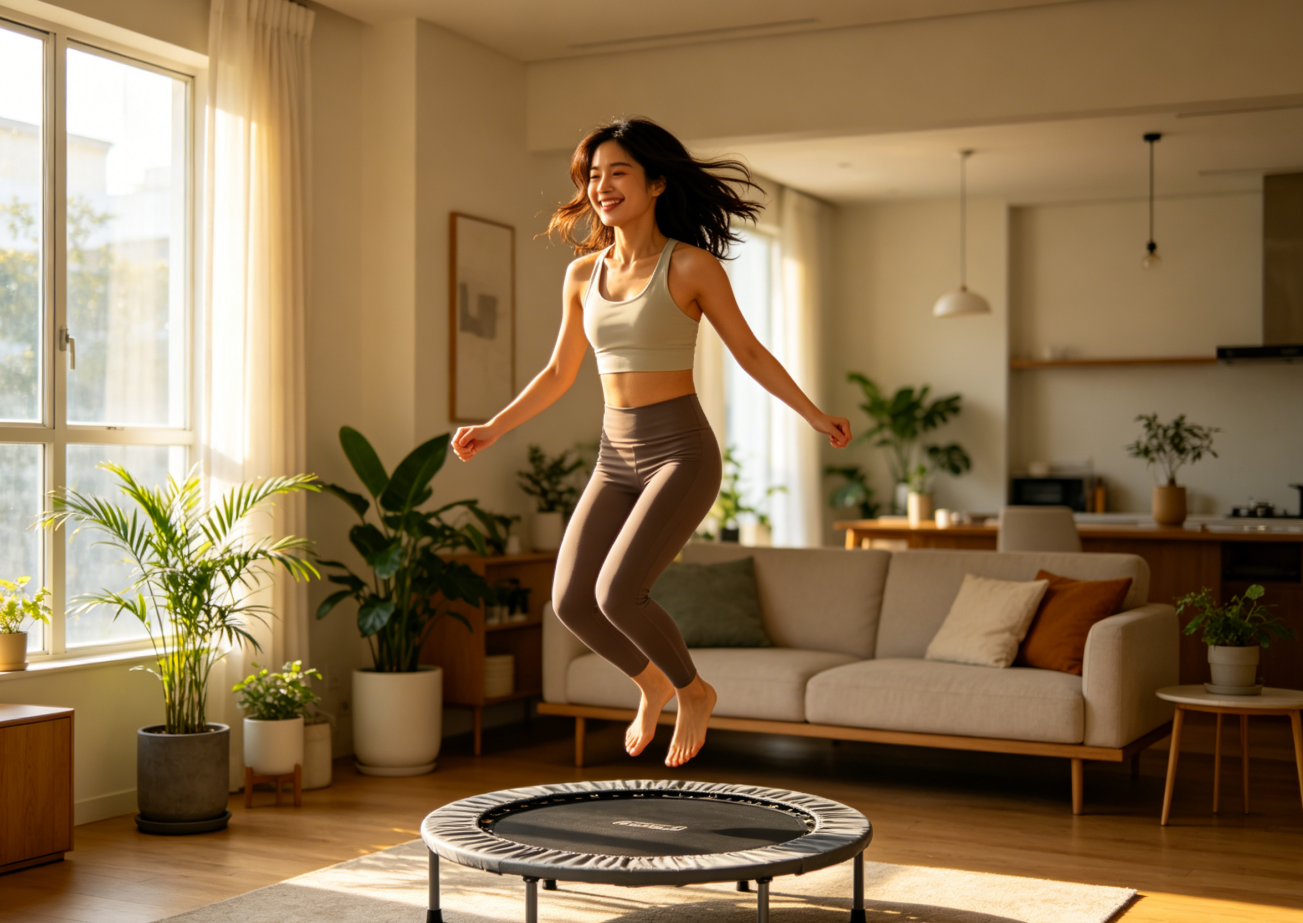
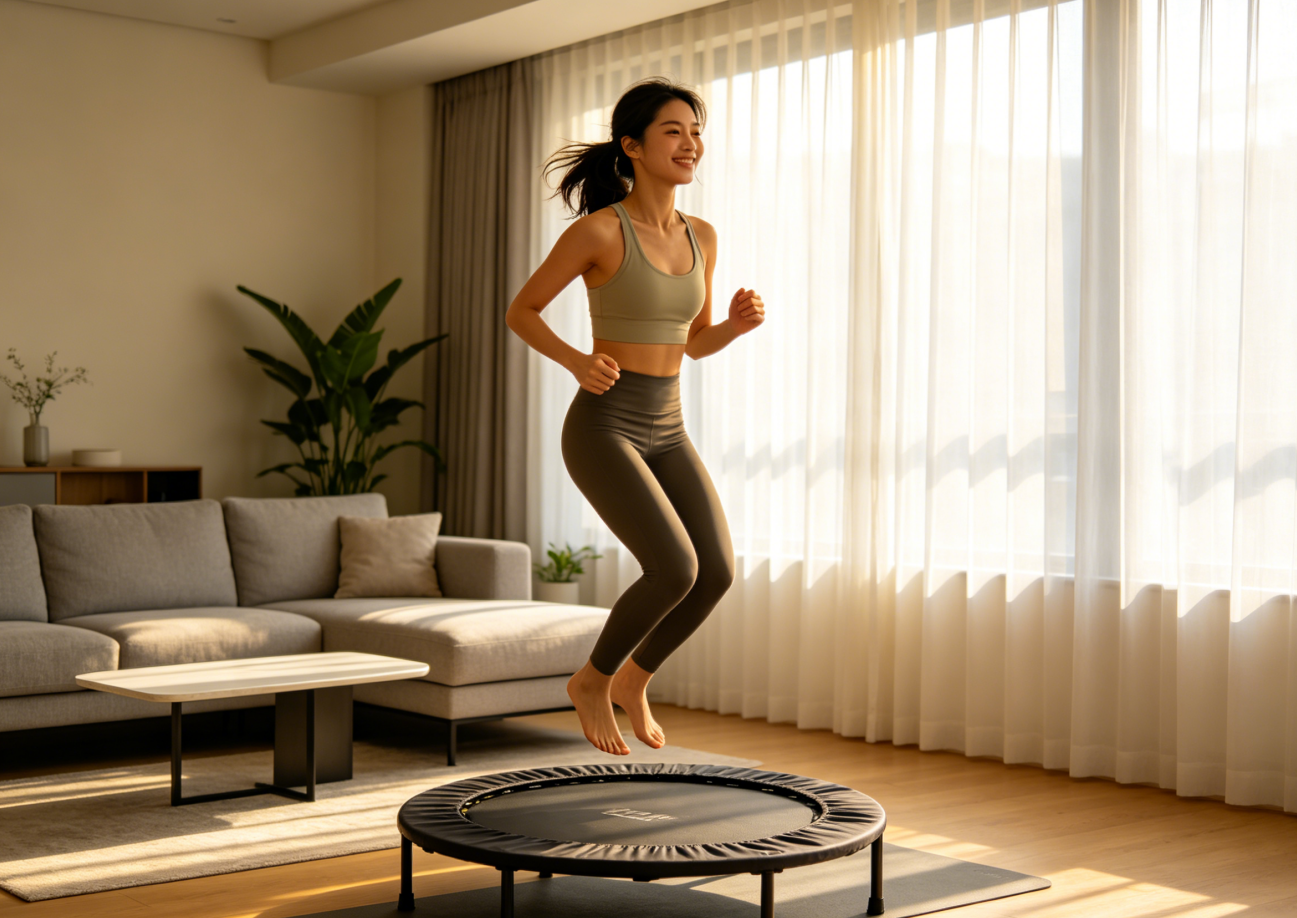
As individuals look for effective ways to manage body composition without excessive joint strain, utilizing specialized home equipment has become a prominent strategy. Specifically, choosing to lose weight mini trampoline training offers a unique exercise profile that combines steady cardiorespiratory conditioning with an exceptionally supportive orthopedic environment. Unlike concrete floors or traditional treadmills, a premium mini trampoline featuring a resilient bungee-suspension system stretches progressively under weight, extending the deceleration phase at the bottom of every bounce.
This elastic compliance significantly buffers the peak force experienced by the lower extremities, protecting the joints from the harsh shocks typical of hard-surface running. This reduced mechanical friction makes rebounding highly accessible to a broad demographic, including those returning to exercise after a sedentary period, individuals managing higher body weight, or anyone recovering from minor overuse injuries. Additionally, the continuous movement required to maintain balance on an unstable surface engages a large volume of deep core and stabilizing muscles, providing a comprehensive physical stimulus that supports functional mobility and joint alignment over time.
Energetic Dynamics and Circulatory Benefits of Rebounding
A foundational principle of modern metabolic health is that a workout does not need to feel punishing to stimulate efficient energy expenditure. Rebounding requires the continuous recruitment of major lower-body muscle groups, including the quadriceps, hamstrings, and glutes. This constant muscle activation maintains a steady metabolic demand, allowing individuals to easily reach and sustain a moderate-intensity aerobic zone, often described as Zone 2 training. Exercising within this zone is highly effective for encouraging lipid oxidation, allowing the body to efficiently utilize stored fatty acids for fuel while preserving precious glycogen reserves.
Furthermore, the physical dynamics of rebounding provide practical support for the body's natural fluid circulation. The rhythmic alternation of acceleration and deceleration creates subtle, continuous pressure changes throughout the musculoskeletal system. Because the passive lymphatic system lacks a centralized pump like the heart, it relies entirely on muscular contractions and movement to facilitate the transport of lymphatic fluid. Bouncing gently on an elastic mat assists this natural fluid movement, helping to clear metabolic byproducts and support total body circulation. While the oxygen consumption and caloric expenditure of rebounding are scientifically comparable to traditional steady-state exercises like brisk walking or moderate jogging, its distinct advantage lies in providing this cardiovascular output with substantially lower orthopedic strain.
Population Caveats and Functional Safety Guidelines
While low-impact rebounding is an adaptable and joint-friendly exercise modality, it requires foundational motor control and may not be suitable for every individual. Because the moving surface demands continuous proprioceptive adjustments, specific populations should approach this training with appropriate caution:
Vestibular or Balance Challenges: Individuals experiencing inner ear imbalances, chronic vertigo, or coordination difficulties may find the rhythmic motion disorienting, which can increase the risk of an accidental fall.
Acute Orthopedic Pathology: Those recovering from recent joint surgeries, severe ligament tears, or advanced osteoarthritis should secure a stable, predictable training surface and seek professional medical guidance before starting a jumping routine.
Advanced Osteoporosis: While moderate weight-bearing activity is vital for bone density, individuals with severe bone loss must avoid aggressive, high-velocity bouncing to protect their structural framework.
For general fitness enthusiasts, safety can be optimized by integrating an adjustable stability handlebar, ensuring the mini trampoline is positioned on a flat, secure surface, and beginning with low-amplitude bouncing where the feet remain in contact with the mat until proper deceleration control is established.
Integrating Adaptive Modalities into a Lifelong Routine
Transitioning away from extreme weight loss strategies involves designing a balanced, flexible fitness routine that values recovery just as much as active training. Rather than relying on a single type of intense exercise, a modern, sustainable routine combines complementary practices to support long-term performance, comfort, and vitality.
A functional weekly structure can easily alternate moderate cardiorespiratory sessions on a mini trampoline with targeted resistance training to maintain lean muscle mass and structured mobility work to preserve joint flexibility. Supporting this physical activity with balanced nutrition—focusing on high-quality proteins for tissue repair and complex carbohydrates for glycogen replenishment—ensures the body has the essential biochemical resources it needs to adapt. Furthermore, prioritizing consistent hydration adjusted for individual output, alongside targeting seven to nine hours of quality sleep, supports optimal hormonal balance and central nervous system recovery. By prioritizing consistency over intensity and choosing adaptive home fitness tools, individuals can protect their bodies from unnecessary wear, ensuring that staying active remains a healthy, life-enhancing practice for years to come.