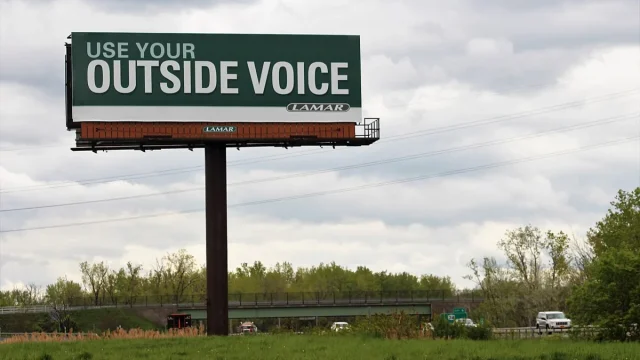
So, what are some metaphors you can spot in the wild? Plenty, and they don’t all look alike. Most people picture “X is Y” lines, but a lot of the best ones hide inside a verb or an adjective. Below are twenty, grouped by their grammatical shape rather than by topic. Sorting this way makes it easier to catch them when you read.
Each one has a short meaning and a sample sentence. Take your time, and read the sentence aloud once. You’ll hear where the comparison sits.
The X is Y Type
- Her mind is a steel trap. Meaning: She remembers everything and misses nothing. In a sentence: Don’t try to fool Marta on the details; her mind is a steel trap.
- The city is a jungle. Meaning: Life there is competitive and a little dangerous. In a sentence: He moved from a village to a city that felt like a jungle, so he learned to watch his back.
- My sister is a night owl. Meaning: She is most alert late at night. In a sentence: Calling before noon is pointless, since my sister is a night owl.
- Our teacher is a walking dictionary. Meaning: She seems to know every word. In a sentence: Ask Mrs. Dube how to spell it; she’s a walking dictionary.
- Words are bullets. Meaning: Words can hurt, and you can’t take them back. In a sentence: Careful what you text him tonight. Words are bullets.
- This job is a treadmill. Meaning: You keep working hard and get nowhere new. In a sentence: Eight years in and the job is a treadmill; I want a change.
- Grandpa’s kitchen was a time machine. Meaning: It took you back to another era. In a sentence: One whiff of his cooking and the kitchen was a time machine.
Metaphors Built on a Verb
- The economy stumbled. Meaning: It did badly for a short time. In a sentence: The economy stumbled in the spring, then recovered.
- Rumors flew around the office. Meaning: They spread fast. In a sentence: By lunch, rumors were flying about who got the promotion.
- He devoured the novel. Meaning: He read it hungrily and quickly. In a sentence: Finished it in one night; he devoured the whole novel.
- Anger boiled inside her. Meaning: She felt rising, hot, pressured anger. In a sentence: Anger boiled inside her while the clerk kept shrugging.
- The deadline crept up on us. Meaning: It arrived before we noticed. In a sentence: The deadline crept up on us while we argued about fonts.
How to Tell What Are Some Metaphors From Plain Statements
Quick test: if the sentence stays sensible only when you stop taking it word for word, it’s a metaphor. “He devoured the novel” fails the literal test because novels aren’t food. “He finished the novel” passes it, and so it isn’t one.
A common mistake is thinking a metaphor needs the word “is.” It doesn’t. Verbs like “stumbled” and “boiled” do the same job from the side. Spotting them takes a little practice. A short walk through our lists, such as metaphors for quick and metaphors for problems, will train your eye in ten minutes.

Adjective and Noun Phrases
- A sea of umbrellas Meaning: A huge crowd seen from above on a rainy day. In a sentence: From the bridge, the street was a sea of umbrellas.
- A frozen stare Meaning: A cold, unmoving look. In a sentence: The manager gave me a frozen stare and said nothing.
- A storm of applause Meaning: Loud, sudden clapping. In a sentence: A storm of applause broke out when the lights came up.
- A bitter silence Meaning: Quiet with anger or disappointment inside it. In a sentence: A bitter silence followed the verdict.
Longer and Stranger Ones
- The classroom was a beehive, and the teacher was the one trying to find the queen. Meaning: Busy, buzzing, a little chaotic, with the leader out of sight. In a sentence: Our room was a beehive on the last Friday before break.
- Memory is a leaky bucket. Meaning: You keep losing what you try to carry. In a sentence: I write everything down because memory is a leaky bucket.
- Debt is a quiet tide. Meaning: It rises slowly, then covers everything. In a sentence: Nobody noticed at first, but debt is a quiet tide.
- He’s a lighthouse in a bad year. Meaning: He stays steady and guides others. In a sentence: When the factory closed, he was a lighthouse for the whole street.
Famous Ones Worth Remembering
Besides everyday lines, a few literary ones are worth knowing by name. “All the world’s a stage” is Shakespeare, in As You Like It. Emily Dickinson’s “Hope is the thing with feathers” is another. Both are so well known that quoting them in an essay is safe and usually welcome. You can read the Dickinson poem or the stage speech and see the writer extend the image over several lines, which is a good way to see how a one-line metaphor grows up.
For a wider survey of poetry, see our list of metaphors for poems. And if you teach, the page on metaphors for teachers is full of classroom-ready pictures.
Make Your Own in Three Moves
Pick a plain sentence: “The meeting was long.” Ask what a long meeting is like. A desert? A swamp? Choose the one with the feeling you want, and write “The meeting was a swamp.” Done. If it makes you smile or wince, keep it. If a reader has to puzzle for ten seconds, swap it.
Check wording against a dictionary now and then. The Oxford Learner’s Dictionaries page on metaphor is clear and quick.
Frequently Asked Questions
What are some metaphors used every day?
“Time is money,” “a heavy heart,” “the price of fame” and “a flood of emails” are everywhere. Most are so familiar we don’t hear them.
How many kinds of metaphor are there?
Different books list different numbers. The easy split is direct, implied and extended, as used above, plus dead and mixed.
Is a metaphor the same as a simile?
No. A simile uses “like” or “as”; a metaphor doesn’t. “Her mind is a steel trap” is a metaphor, while “her mind is like a steel trap” is a simile.
Where can I find more?
Browse the topic lists on this site, from memory to teachers to problems.