
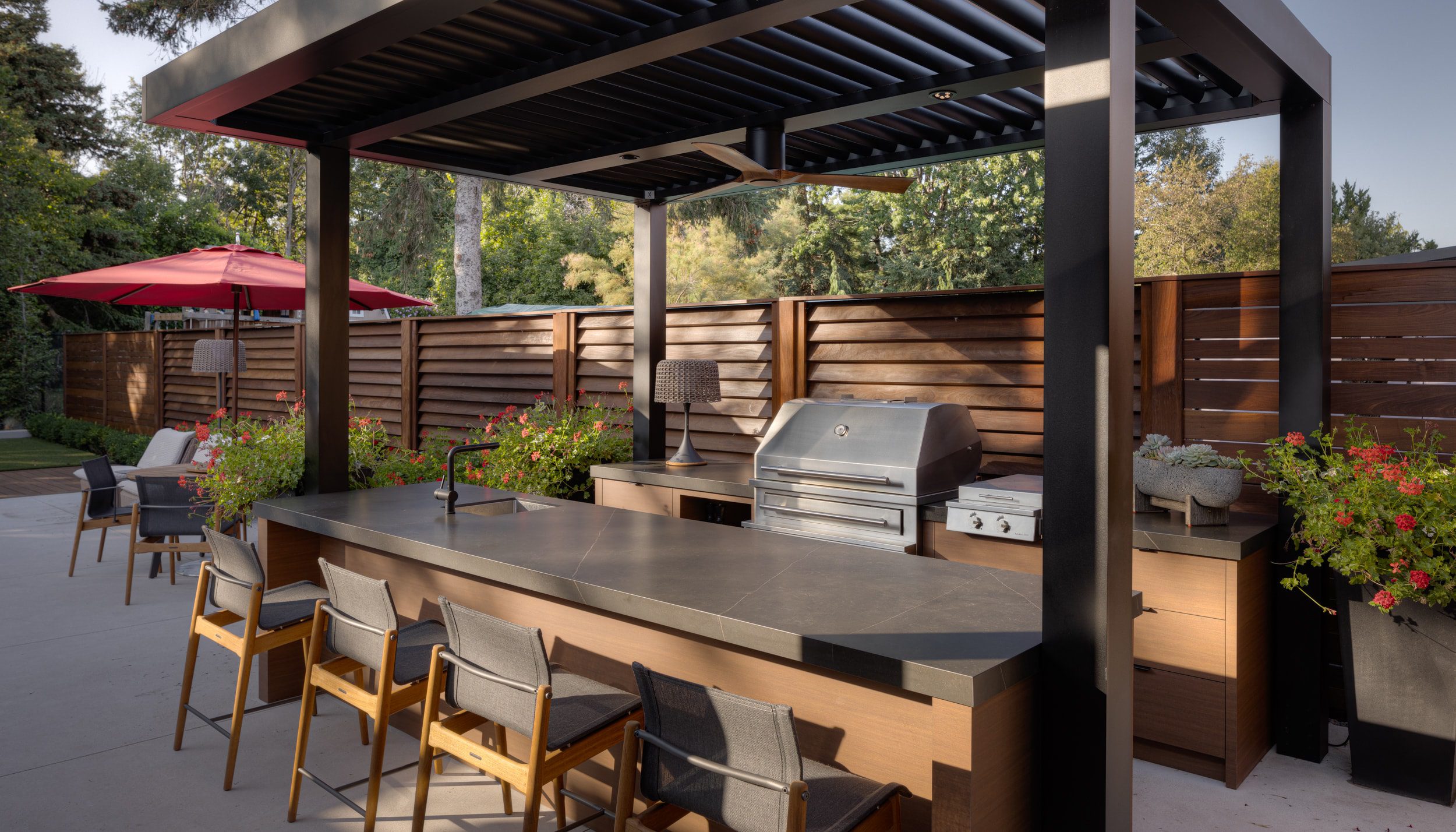

A covered outdoor kitchen can make a backyard more comfortable by providing shade, shelter, and space for cooking throughout different seasons. Many homeowners choose to build these areas close to the house so they can move easily between indoor and outdoor spaces. However, attaching a new cooking shelter to an existing building can introduce roofing problems that are not always obvious when construction is complete.
The concern often develops where the new roof connects to the original exterior wall or roofline. Poorly integrated flashing, unsuitable drainage arrangements, and changes to existing roofing materials can create openings for rainwater. A leak may not become noticeable until several storms have passed, making it difficult to identify which construction detail caused the problem. Understanding these connections can help homeowners protect their houses while improving their outdoor living areas.
Why Can an Outdoor Kitchen Addition Affect the Existing Roof?
A freestanding outdoor kitchen shelter generally has its own structural support and roofing arrangement. An attached structure, however, must connect to the existing house.
That connection can involve exterior cladding, wall framing, flashing, and roofing materials that were installed long before the outdoor kitchen was planned.
New Roof Connections Can Interrupt Existing Weather Protection
The original exterior wall was designed to manage rainwater through overlapping protective materials.
Attaching another roof may require removing sections of siding, installing structural connections, or modifying flashing.
If these changes are not integrated with the existing weather-resistant barrier, water may travel behind the finished surfaces.
A connection that looks neat from outside can still contain concealed openings that allow moisture into the wall.
How Can Improper Flashing Create Water Entry Points?
Flashing protects areas where different building surfaces meet. It directs rainwater away from joints that would otherwise be vulnerable to moisture.
An attached outdoor kitchen roof creates a transition between the new covering and the existing building.
Surface Sealant Cannot Replace Proper Flashing
A common mistake is relying on caulk or roofing sealant as the primary protection along the roof-to-wall connection.
Although suitable sealants may be part of certain approved installation details, they cannot replace properly integrated flashing.
Water can travel behind a sealed joint if the surrounding materials do not direct moisture outward.
Over time, movement and weather exposure may also affect the sealant’s condition.
Correct flashing must work with both the new roofing material and the existing wall’s weather protection.
Why Can Roof Slope Make Outdoor Kitchen Additions Vulnerable?
Covered cooking areas sometimes have relatively shallow roof slopes to maintain suitable headroom beneath the structure.
However, roofing materials have specific minimum slope requirements.
Low-Slope Connections Need Suitable Materials
A roof covering that performs well on a steep surface may not be appropriate for a shallower structure.
Rainwater moves more slowly across low-slope roofing, increasing the importance of suitable membranes, seams, and drainage details.
If the selected roofing system does not match the intended slope, water may enter through vulnerable connections.
The design must also account for how runoff leaves the new structure without overwhelming the existing drainage system.
How Can Outdoor Kitchen Planning Reduce Roofing Problems?
The position of an outdoor kitchen influences more than cooking convenience. It also determines how the proposed shelter interacts with existing walls, roof overhangs, gutters, and drainage outlets.
A layout that appears attractive on paper may require changes once these building details are considered.
The Kitchen Layout Should Respect Existing Drainage Routes
A cooking shelter placed directly below an established gutter or roof valley may interfere with how rainwater leaves the original roof.
Moving the gutter outlet, changing the shelter’s roof slope, or adjusting the structure’s position may be necessary.
Well-planned outdoor kitchen services can account for these physical constraints when determining where cooking equipment, countertops, and overhead structures should be positioned.
The goal is to create a usable cooking area without forcing unsuitable changes to the home’s existing water-management system.
Can Outdoor Kitchen Roofs Cause Water to Collect Against the House?
A new covered structure changes where rainwater falls and how it travels across the property.
If the new roof directs runoff toward the original wall instead of away from it, moisture may collect around vulnerable joints.
Poor Drainage Can Increase Moisture Exposure
Water should leave the roof through an appropriate drainage arrangement.
An incorrectly positioned gutter, blocked outlet, or poorly designed roof intersection may allow rainwater to accumulate where the two structures meet.
Repeated exposure can contribute to deterioration of sealants, finishes, and moisture-sensitive materials.
Water collecting near a connection deserves investigation because the visible problem may involve drainage rather than a puncture in the roof covering.
Why Can Leaks Remain Hidden After Construction?
Not every roofing defect causes an immediate ceiling stain. Water may enter through a small opening and travel along framing before reaching a visible surface.
Outdoor kitchen roof connections can be particularly difficult to examine once decorative ceilings and exterior finishes are installed.
Concealed Framing Can Redirect Water
Moisture entering behind flashing may follow wooden framing or the underside of sheathing.
The resulting stain could appear near an exterior doorway, inside an adjoining room, or beneath the covered cooking area.
This distance between the entry point and visible damage can complicate diagnosis.
Homeowners should not assume the source is directly above the stain without examining the surrounding construction.
What Warning Signs Suggest an Attached Roof Has Developed a Leak?
Some warning signs appear around the new connection before noticeable interior damage develops.
Peeling exterior paint, damp trim, and discolouration beneath roof-to-wall joints may indicate repeated moisture exposure.
Small Changes Can Reveal Concealed Problems
Water stains near the upper edge of a covered patio, swelling in wooden finishes, or recurring dampness after rainfall deserve attention.
Loose flashing and visible gaps around the roof connection can provide additional clues.
However, these symptoms do not automatically confirm a roof leak. Plumbing issues, condensation, or moisture entering through other exterior openings can produce similar effects.
The actual source should be identified before repairs begin.
When Does a Roof Connection Need More Than Surface Patching?
Applying sealant to a suspicious joint may seem like a convenient solution, especially when the leak appears minor.
However, repeated water intrusion may indicate that the original flashing or weatherproofing arrangement was never completed correctly.
Repairing the Underlying Connection Matters
A contractor may need to remove limited sections of roofing or exterior cladding to examine the concealed materials.
If water has entered behind the wall protection, the repair may involve restoring flashing, replacing damaged components, and correcting the drainage arrangement.
Quality roof leak repair depends on identifying the actual moisture pathway and restoring the protective details rather than repeatedly covering visible openings.
The necessary work should reflect the condition of the existing materials and the roofing system’s installation requirements.
Can Outdoor Cooking Heat Affect Nearby Roofing Materials?
Grills and other outdoor cooking appliances produce heat that may affect nearby building materials if they are installed without suitable clearances.
Covered cooking areas require particular attention because overhead structures can restrict the dispersal of heat and smoke.
Appliance Clearances Must Influence Roof Design
Roof coverings, structural framing, soffits, and decorative ceiling materials may have different limitations around heat-producing equipment.
Cooking appliances should be installed according to their manufacturers’ clearance and ventilation requirements.
A roof designed to keep rain away must also be suitable for the cooking equipment operating beneath it.
Heat-related deterioration and water intrusion are separate concerns, but both should be considered before selecting the shelter’s materials and dimensions.
How Can Existing Outdoor Kitchen Roof Problems Be Corrected?
Repairing a leaking outdoor kitchen cover begins with examining the connection between the new structure and the house.
The assessment should include flashing, roof slope, drainage paths, and any evidence of moisture inside the adjoining wall.
Repairs Should Consider Both Structures
Correcting only the outdoor kitchen roof may not resolve a defect involving the original building’s siding or weather-resistant barrier.
Likewise, replacing damaged interior finishes before stopping the water entry can conceal an unresolved problem.
Where the leak involves both assemblies, the repair sequence should allow affected materials to be examined and protective connections restored.
Any damaged or wet materials should be assessed before the area is closed again.
What Should Homeowners Check Before Adding a Covered Kitchen?
A covered outdoor kitchen should be designed around the existing building rather than treated as an isolated backyard feature.
The location of gutters, exterior doors, wall materials, and roofing transitions can influence where the shelter is practical.
Existing Roof Details Should Be Examined Early
Before construction, the proposed roof connection should be reviewed for structural support, flashing requirements, drainage, and compatibility with the existing exterior.
Homeowners should also understand how future maintenance will be performed around the new connection.
A roof joint that becomes inaccessible behind permanent finishes can make later inspections and repairs more disruptive.
Addressing these details before construction reduces the likelihood of discovering hidden problems after the cooking area is completed.
Conclusion
A covered outdoor kitchen can improve how a backyard is used, but attaching one to an existing house changes the building’s exterior construction. Roof connections, flashing, drainage, and material compatibility all influence whether the new structure remains properly protected from rainwater.
The most troublesome leaks often develop where old and new materials meet. Water can enter through concealed openings and travel beyond the original defect before becoming visible.
Careful planning, suitable roofing details, and prompt investigation of recurring moisture can help prevent small construction weaknesses from causing larger problems. A well-built outdoor cooking area should provide shelter without compromising the weather protection of the home beside it.