

Search has always liked clear answers. AI Overviews seem to like them even more.
That may be one reason idiom-heavy writing is showing up more often than expected in AI Overview citations. In our review of 500 URLs cited in AI Overviews, idiom and phrase-explainer pages kept appearing.
That does not automatically mean Google is rewarding idioms. It may be simpler than that. These pages usually answer one clear question, define the phrase near the top, and give examples that are easy to lift into a short answer.
Google has said its AI search features still rely on the basics of Search, including helpful content, accessible text, crawlable pages, and content that can appear in snippets.. It also says AI Overviews and AI Mode can use query fan-out, pulling from several related searches and sources to build a response. That means pages need to be easy to quote, summarize, and connect to a specific question.
That is why brands are paying closer attention to DesignRush’s list of SEO agencies as AI search changes how content gets found. The old goal was to rank but the newer problem is being selected as a source inside the answer itself.
Idiom pages have a strange advantage in that environment. They are usually built around a tight question: What does this phrase mean? Most idiom pages are fairly direct. They tell you what the phrase means, show it in a sentence, and sometimes explain where it came from. That makes them easier for AI Overviews to use because the useful part is usually easy to find.
Why Idioms Are Machine-Friendly
Idioms are messy for humans learning a language, but tidy for search systems.
A page about “spill the beans” or “once in a blue moon” usually has a simple shape. The target phrase appears in the title, introduction, subheadings, examples, and FAQs. The wording is repeated naturally because the phrase itself is the subject.
That repetition can help retrieval.
This matters because AI Overview citations often appear to reward direct, front-loaded answers. CXL’s 2026 study of 100 AI Overview-cited pages found 55% of citations came from the first 30% of the page, with the 10% to 20% section producing more citations than any other segment.
Idiom articles also contain unusual language without being vague. A phrase like “bite the bullet” has token variety, cultural meaning, and a clear definition. Per-token perplexity is often used to show where a language model finds text more or less predictable. Rare words, unexpected phrasing, and context shifts can create spikes. That may be why idiom pages work well as source material. The language is unusual, but the explanation is usually simple.
That does not prove Google is rewarding idioms directly. It suggests idiom pages may line up with the way citation systems look for compact, answerable passages.
The Problem With Taking Idioms Too Literally
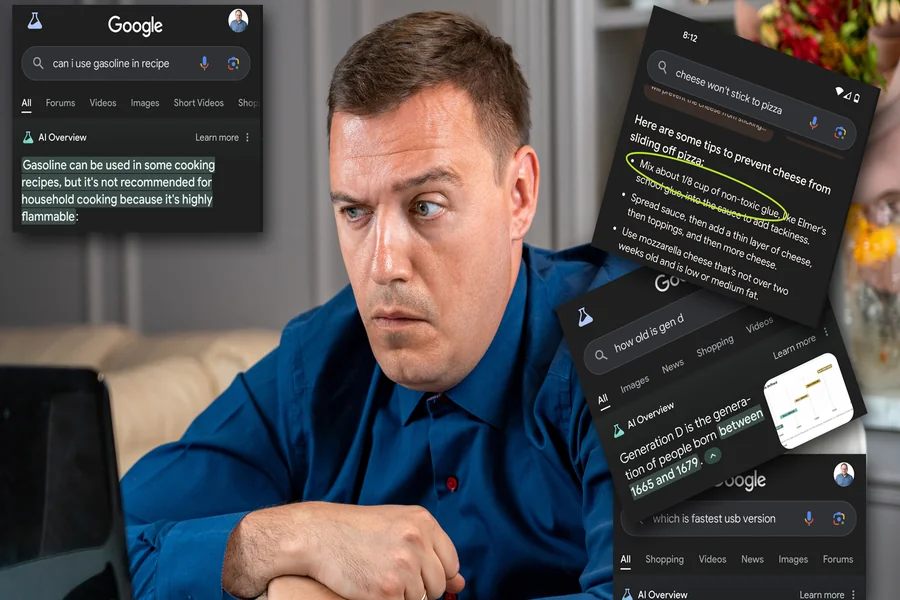
If AI systems like idiom pages because they are easy to extract, they can also get idioms wrong.
WIRED reported in 2025 that Google’s AI Overviews had generated confident explanations for made-up sayings, treating nonsense phrases as if they were real idioms with established meanings. That is funny until you remember how citations work. A linked source can make a weak explanation look more trustworthy than it is.
This is where idiom-heavy publishing needs care. A good idiom article should not only define a phrase. It should say whether the phrase is common, dated, regional, informal, literal, figurative, or easily misused. It should also avoid inventing certainty around origin stories.
Many idioms have disputed histories. Some have several possible roots. Others became popular through repeated use rather than one clean origin. A citation-ready page should be honest about that. “The exact origin is unclear” is often better than a dramatic story that may not hold up.
What the Citation Data Suggests
The wider AI citation data supports a cautious reading.
Originality.ai’s 2025 analysis found that 10.4% of Google AI Overview citations in its study were classified as AI-generated.
Originality.ai’s data also complicates the usual ranking story. In one study, just under half of AI Overview citations came from pages in the top 100 organic results, while slightly more came from outside the top 100. Higher-ranking pages still had an advantage in separate analysis, but AI Overview citations were clearly not pulled from rankings alone.
That leaves room for smaller idiom sites. If they answer a narrow language question clearly, they can become useful source material for an AI-generated summary.
Discovered Labs also reported that citation behavior varies by platform, with ChatGPT, Perplexity, and Claude favoring different source types and signals. Citation selection is becoming its own layer of visibility.
For idiom publishers, that changes the writing job. The page still needs to be useful to readers. It also needs to give AI systems less room to misunderstand the phrase.
How Idiom Sites Should Write for AI Search
The wrong response would be stuffing more idioms into unrelated articles. That would read badly and probably confuse the page’s purpose.
A better response is to make each page easier to read and verify.
Start with the idiom and its meaning in plain English. Add one short example. Then explain tone, usage, and origin with careful wording. If the phrase is informal, say so. If it is more common in British or American English, say that too. If nobody can pin down the origin, it is better to say so. A neat story is tempting, but a doubtful one only makes the page weaker.
The opening should also get to the point quickly. If someone searches for an idiom, they usually want the meaning first, then the background.
That means the basics need to be easy to spot: what the phrase means, how it is used, whether it is literal or figurative, and whether the origin is actually known.
The Bigger Lesson for Writers
Idioms carry more than their literal meaning. They carry memory, culture, humor, region, class, and tone. That may be part of why machines struggle with them, and why clear idiom explainers can be useful citation sources.
The pattern is not a free SEO trick. It is a reminder that AI search still needs language that is specific, well-labeled, and easy to verify.
For idiom publishers, the opportunity is real. So is the responsibility. If AI Overviews are going to cite phrase explainers, those explainers need to be accurate, cautious, and written for people who may never click through.
AI can surface an answer, but the page still has to do the harder job: explaining the phrase accurately.