
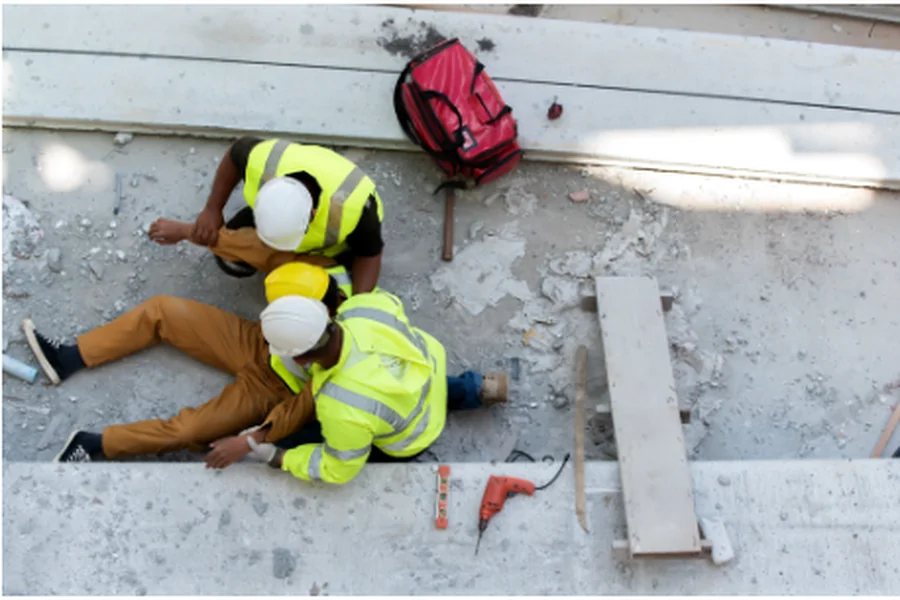

A construction site rarely pauses after an accident; it keeps moving while paperwork starts forming in the background. Most workers step into recovery thinking there is only one path for support, usually through employer insurance. That belief feels simple and safe, but the system underneath is far more layered than it appears.
Different responsibilities, different companies, and different insurance channels often exist in the same incident without being clearly visible at first. This hidden structure quietly shapes outcomes long before most people understand it. The following sections break down how those layers work and why they often go unnoticed from the start.
The One Claim Assumption That Shapes Most Injury Cases
Most construction workers believe that after an accident, everything falls under one system and one claim. That system is usually workers’ compensation, which becomes the first and most familiar step. It feels straightforward, paperwork is filled out, medical care begins, and wages are partially covered. Because of this early structure, many people assume there is nothing beyond it.
This is where things quietly become limited. A construction accident compensation lawyer often sees that workers are not told how many separate legal paths may actually exist. That single assumption becomes the reason many additional claims are never explored or even considered.
The First Layer of Support – Workers’ Compensation
Workers’ compensation is designed to provide basic financial and medical support after a job site injury. It covers treatment costs, partial income replacement, and immediate injury-related expenses.
What it supports
It helps workers access medical care without waiting and provides some income stability during recovery. This system is structured to move quickly and avoid long disputes.
What it does not cover
It does not include full financial loss, long-term impact on earning ability, or personal damages such as pain or reduced quality of life. This gap is where other legal possibilities begin to appear.
The Hidden Second Layer – Third-Party Responsibility
Construction sites often involve multiple companies working side by side. This creates situations where someone other than the direct employer may be responsible for the accident.
Who can be involved
Subcontractors, equipment suppliers, property owners, or outside contractors may all share part of the responsibility depending on how the accident happened.
How responsibility appears
Fault can come from unsafe machinery, poor supervision, defective tools, or unsafe site conditions that were not corrected on time.
Why is it often missed
Workers usually only deal with employer paperwork first, so they never realize another legal path exists outside that system.
Why Construction Sites Often Carry Multiple Legal Paths
Construction work is rarely handled by one company alone. Different teams operate under different agreements, but all contribute to the same environment.
This creates overlapping responsibilities that are not always visible during or immediately after an accident. Each party may also carry separate insurance coverage, which means one incident can legally connect to multiple claims without being obvious at first glance.
How Workers Accidentally Limit Their Own Options
After an accident, most workers focus on recovery and basic paperwork. In that process, important details can be overlooked.
- Early acceptance of workers’ compensation as the only option.
- Not reviewing how the accident actually occurred in detail.
- Missing equipment or site safety issues that point to outside responsibility.
- Delaying proper legal review until key information is already lost.
Each of these steps quietly narrows what could have been a wider claim structure.
Why Multiple Claims Matter in Real Terms
The difference between one claim and multiple claims is not just technical; it directly affects the outcome of recovery.
Workers’ compensation provides basic support, but third-party claims can cover broader financial and personal losses that are not included in the first system.
These may include:
- Full wage loss instead of partial coverage.
- Long-term medical treatment costs.
- Loss of future earning ability.
- Additional damages tied to the impact beyond medical bills.
This is why identifying all possible claims early can change the direction of the entire case.
Real Construction Situations Where More Than One Claim Exists
Certain job site situations often carry hidden legal layers.
- Equipment failure involving outside manufacturers
- Unsafe working conditions created by site management
- Mistakes made by subcontractors working under separate agreements
- Multiple contractors sharing responsibility for one unsafe area
In each case, responsibility does not stop with one party, even if it appears that way at first.
How Early Legal Review Changes the Entire Picture
Early review helps separate different layers of responsibility instead of treating everything as one system. It allows each party’s role to be identified clearly and ensures no opportunity is missed due to early assumptions.
This is also where a construction accident compensation lawyer becomes important, as early direction helps identify whether the case involves only workers’ compensation or additional claims that may significantly change the outcome.
Summing up
Construction injuries often appear simple at first glance, but the structure behind them is rarely simple at all. One system handles basic support, while another layer may exist outside it without being immediately visible.
When all possible claims are recognized early, the entire direction of recovery becomes clearer and more complete. Ignoring those layers often means accepting less than what the situation actually allows, not because options are unavailable, but because they were never identified in time.