
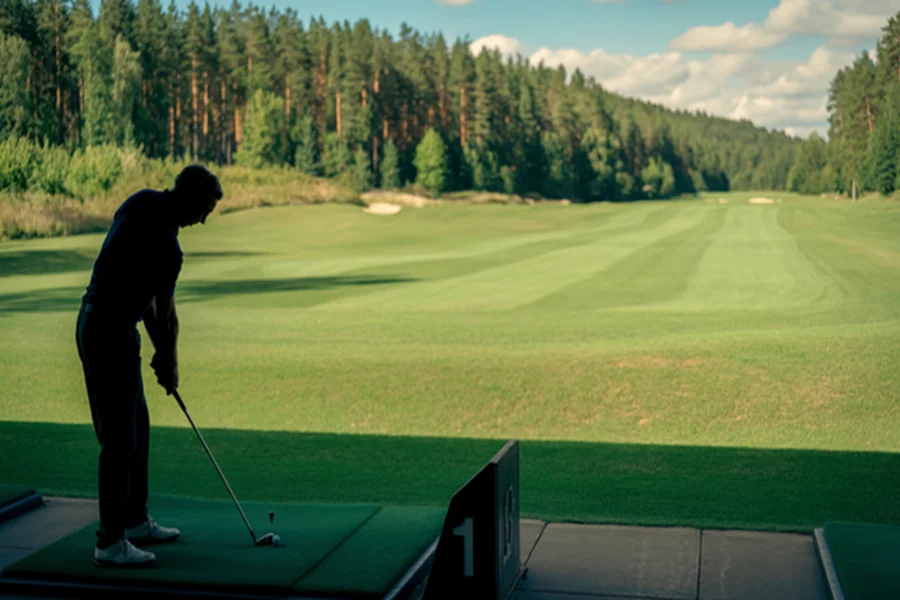

Here’s a truth most golfers won’t admit out loud: life got in the way. The old routine, pack the bag, burn 45 minutes driving to the course, wait for a bay at the range, actually practice, drive home, doesn’t fit anymore. Not for most people. Schedules are messier now, range fees keep climbing, and the daylight window after work is laughably short in winter.
Portable golf practice tools showed up right when golfers needed them most, and the numbers don’t lie about what happened next. According to the National Golf Foundation, simulator users jumped from 3.6 million to 8.1 million between 2019 and 2024, a 126% surge (ngf.org). That’s not a niche trend. That’s a fundamental shift.
The Push Toward At-Home Practice: What’s Actually Behind It?
Two separate forces collided to make this happen. One is logistical. The other is cultural. Both matter.
Time, Money, and the Overhead Nobody Talks About
USGA research put the average round at 4 hours and 30 minutes, a record high (usga.org). Stack driving time and warm-up on top of that, and you’ve quietly lost half a Saturday before you’ve hit a single purposeful shot. At home golf practice strips all that overhead away. A 20-minute session in the garage is genuinely 20 minutes. No travel. No bucket fees are stacking up. No Tuesday night session cancelled because it’s raining sideways outside.
That’s the simple part. Portable golf practice tools turn a garage corner or spare room into a functional training space, and honestly, once you’ve done it, going back to the old way feels almost absurd.
Golf Got Smarter, and Golfers Noticed
A 2025 coaching survey found that only 2% of instructors teach without a launch monitor (proponent-group.com). Think about that for a second. The tool has gone from a luxury gadget to a professional standard almost overnight.
YouTube coaches, social media instructors, and data-obsessed amateurs pushed that culture further into everyday golf. Now golfers expect the same precision feedback from their own practice sessions that tour players get in sessions with coaches. Indoor golf practice equipment has answered that expectation, portable golf simulator now bring measurable, tour-caliber data into living rooms and basements without requiring a coaching appointment.
Now you know why golfers are moving their practice home. Let’s talk about what they’re actually getting from it.
Real Benefits That Go Deeper Than Convenience
Convenience gets all the credit. But the case for portable tools runs much deeper than that.
Practice When You Actually Have Energy
The best practice session is the one you can actually do. Travel-friendly golf training aids fit in a carry bag and work in a spare bedroom, a backyard, or a hotel room on a business trip. When the barrier to practicing is low, you practice more often. And frequency, not duration, is what actually moves the needle over time.
Reps Without the Crowd-Induced Freeze
There’s something about a packed driving range that makes golfers tighten up and hit faster than they should. The social pressure is real. A golf swing trainer at home removes that entirely. You can slow down, isolate one specific fault, and repeat it until the correction starts to feel natural. That’s how muscle memory actually forms, not through rushed, self-conscious reps at a busy bay, but through focused, low-stakes repetition done consistently.
The Feedback You Actually Need
“Feel vs. real” is one of golf’s cruelest jokes. What you think your swing is doing and what it’s actually doing are often wildly different. Swing path trainers, alignment sticks, and impact bags close that gap in real time, faster than guessing ever could. That faster feedback loop also has a financial argument baked right into it, fewer wasted range sessions chasing a fix you never actually found.
The Long-Term Cost Makes Sense
Buy a tool once. Stop paying per bucket forever. Portable golf practice tools lower the entry point significantly for beginners, the group most likely to quit before they ever reach the fun part of this sport.
The Tools Worth Knowing About
The category is wider than most golfers assume. Here’s a quick look at what exists.
Mechanics and Swing Plane Trainers
A solid golf swing trainer targets specific faults, such as clubface control, early extension, and over-the-top path, that are genuinely hard to diagnose on your own at the range. Best suited for mid- and high-handicappers rebuilding fundamentals from the ground up.
Putting and Short-Game Equipment
Putting mats with alignment guides and distance markers might offer the best return-on-investment of anything in this category. Pair one with a portable chipping net, and you’ve covered the part of the game most directly tied to your scorecard. Short-game practice is ideal for indoors because the movements are small, safe, and highly repeatable.
Speed and Fitness Tools
Overspeed training sticks and resistance bands are fully portable golf practice tools requiring almost no space. Measurable swing speed gains within weeks aren’t unusual, and those gains show up on the course whether or not you realize what caused them.
When You’re Ready to Bring the Whole Course Indoors
A net and a quality mat are the natural entry points for indoor golf practice equipment. They handle full swings, require minimal setup, and don’t demand a dedicated room. A lot of golfers stop there, and that’s genuinely fine.
But others get hooked and want more. More feedback, more variety, more of a reason to keep showing up in the garage. That’s exactly where a portable golf simulator changes the conversation entirely.
TruGolf’s Starter 10 is built specifically to be set up and broken down without drama, no permanent installation, no contractor required. It gives you access to famous licensed courses and delivers precise shot data: carry distance, spin rate, face angle, swing path. That’s the gap between purposeful practice and just hitting balls into a net. Packages start around $6,995 and come as a complete solution, including a launch monitor, enclosure, and hitting mat.
Quick Answers to the Questions Golfers Always Ask
Will at-home practice tools actually improve your game?
Yes, provided you use them with intention. Consistent, feedback-driven sessions at home frequently produce faster mechanical improvement than sporadic range trips, especially when your weekly practice window is tight.
How much space do you really need?
A net and mat fit comfortably in a one-car garage or spare room. Simulator enclosures like the Starter 10 need approximately 10 feet of width plus enough ceiling height for a full swing.
How often should you use a golf swing trainer?
Three to five short sessions per week reliably outperform one long one. Ten to fifteen focused minutes daily build motor patterns far more effectively than occasional hour-long efforts.
The Honest Bottom Line
Portable golf practice tools don’t just add convenience; they fix structural problems that traditional practice has never been able to solve. Time, cost, weather, geography. At home golf practice supported by a solid golf swing trainer, quality indoor golf practice equipment, and when you’re ready, a portable golf simulator puts real, consistent improvement within reach for nearly every golfer, regardless of schedule or budget.
The tools have genuinely caught up with the ambition. So the only question left is a pretty direct one: are you using them yet?