
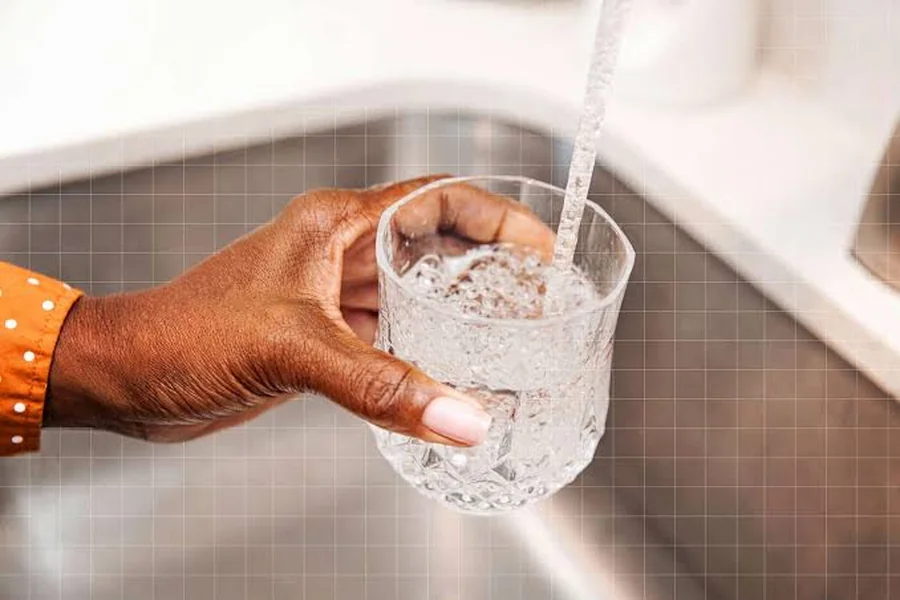

My neighbor swore her water was better than mine, and she was right. We live nine miles apart, share the same ZIP-adjacent grocery store, and our tap water might as well come from two different planets. Hers pours clean and neutral. Mine left a chalky film on the ice cubes that I scrubbed off for two years before I got curious enough to figure out why.
Here’s the short version: water picks up its personality from the ground it travels through and the pipes it sits in. Two towns can pull from the same aquifer and still hand you wildly different glasses. Once you understand what’s actually in the water and where it came from, the fix gets a lot less mysterious, and a lot less expensive than the bottled stuff you’ve been hauling home.
Same aquifer, different glass
Water is a solvent. I know that sounds like a chemistry lecture, but stick with me, because that one property explains almost everything about your kitchen faucet.
As water moves through rock and soil, it dissolves minerals along the way. Limestone and chalk deposits load it up with calcium and magnesium, the two minerals behind what we call hardness. Granite and sandstone leave it softer. That’s why your water can taste great and your cousin’s water twenty minutes down the highway tastes like a swimming pool, or vice versa.
Municipal systems treat water before it reaches you, so chlorine and chloramine often show up in the finished product, along with fluoride in many communities. Private wells skip that step entirely but inherit whatever the surrounding ground hands them. Neither setup is automatically better. They’re just different starting points.
What “hard water” actually means for your house
Hard water is the most common complaint I hear, and it’s the least glamorous. It doesn’t make you sick. It just quietly taxes everything it touches.
Those calcium and magnesium ions cling to surfaces. They build up inside your water heater, which makes it work harder to do the same job. They leave spots on glasses, film on shower doors, and that weird dullness on your dishes that no dishwasher pod seems to fix. Soap lathers poorly in hard water, so you use more shampoo, more detergent, more dish soap without realizing you’ve been paying a soft monthly fee for the privilege.
You can check this yourself tonight. Fill a clear glass with tap water, let it sit uncovered on the counter overnight, and look at the bottom in the morning. A chalky ring or a crusty film near the waterline is a solid hint that hardness is your problem. You can also look up your utility’s annual water quality report, which many municipalities publish online, and scan for a hardness number.
If you’d rather talk through a specific test protocol for your address, learning how Public Water System Services In PA & NJ are handled locally gives you a much better frame of reference before you call anyone.
Chlorine, iron, sulfur, and the smell test
Hardness isn’t the only guest at the party. Three other characters show up constantly, and each one announces itself differently.
Chlorine and chloramine smell like a pool. Municipal systems add them to kill bacteria, and the levels are safe, but some people notice the taste more than others. Letting a pitcher sit in the fridge overnight knocks a lot of it down.
Iron and manganese show up as orange or brown staining in sinks, tubs, and laundry. Well owners see this constantly, and it has nothing to do with safety.
Hydrogen sulfide is the rotten egg smell. It’s the one that makes people call a plumber the same day. It’s common in wells drilled into certain rock formations and it’s more of an annoyance than a hazard, but nobody wants to brush their teeth with it.
Different problems need different fixes. A softener handles hardness. Carbon filtration handles taste and odor. Iron and sulfur usually need their own dedicated treatment stage. Buying the wrong one is the most common money-waster in this whole category.
Reading your own water report without a chemistry degree
Every public water supplier in the country has to test its water and publish the results, and that requirement traces back to federal law enforced by the Environmental Protection Agency. The report is usually called a Consumer Confidence Report, and your utility either mails it or posts it on its website.
Here’s what to actually look for instead of scrolling past page one:
- The hardness range, usually listed in grains per gallon or milligrams per liter
- Any detected contaminants and how they compare to the legal limit
- Which source your water comes from, surface water or groundwater
- The disinfectant used, since chlorine and chloramine need different filters
Private well owners don’t get a report. You have to test it yourself, and testing is cheap compared to guessing. A basic lab panel covers hardness, iron, bacteria, and pH, which is enough to make a smart treatment decision.
Why the geology under your town matters
This is the part people skip, and it’s my favorite part.
The United States Geological Survey studies how water moves through the ground, and its work makes clear that the rock beneath a region shapes what ends up in the water above it. According to the U.S. Geological Survey, groundwater chemistry varies enormously depending on local geology, which is exactly why a town on limestone and a town on shale end up with different tap water. Your water is a fingerprint of your local ground.
This is also why moving one town over can change everything about your water routine. Same state, same weather, completely different minerals. It’s not random. It’s geology doing its quiet thing underneath your driveway.
The Thursday night water test
I’ve started recommending what I call the Thursday Night Water Test because it takes fifteen minutes and answers most of the questions people pay someone else to answer.
Grab a clear glass and a white paper towel. Fill the glass from the cold tap and let it sit for a few minutes. Hold it against the paper towel and look through it for cloudiness or color. Smell it. Then rub a drop between your fingers and feel for that slippery, soapy texture. Finally, boil a small pot dry and inspect the residue left behind. White crust means minerals. Nothing left behind means your water is already soft.
Pair that five-minute read with a look at your dishes, your shower door, and your water heater’s age. If two or more of those are telling the same story, you know which way to go.
So what should you actually do?
Start with information, not equipment. Look up your water report or order a well test, then match the treatment to the problem you actually have. A softener for hardness, carbon for taste and odor, iron and sulfur treatment for well water that smells or stains.
If your water comes from a public system, call the utility first. They’ll tell you the source and the disinfectant in about three minutes, which shapes your whole shopping list. Homeowners in the Mid-Atlantic juggle a lot of different water sources in a small radius, so a quick conversation with someone who works in that region will save you from buying the wrong filter twice.
What does your morning glass of water actually taste like, and when did you last think about why?