Two straight weeks of rain, a sump pump that quits at 2 a.m., and by Friday your basement smells like a forgotten gym bag. Welcome to spring in Central Minnesota. Every year, a lot of good homeowners stand in front of a patch of dark fuzz on a joist and ask the same question: is this the end of my house, or just a weekend chore?
Most of the time it’s closer to the weekend chore than you fear. But not always. The difference between scrubbing off a little surface mold and calling in the cavalry comes down to three things: how much water got in, how long it sat, and how porous the surface is. Get those right and you’ll know exactly which lane you’re in.
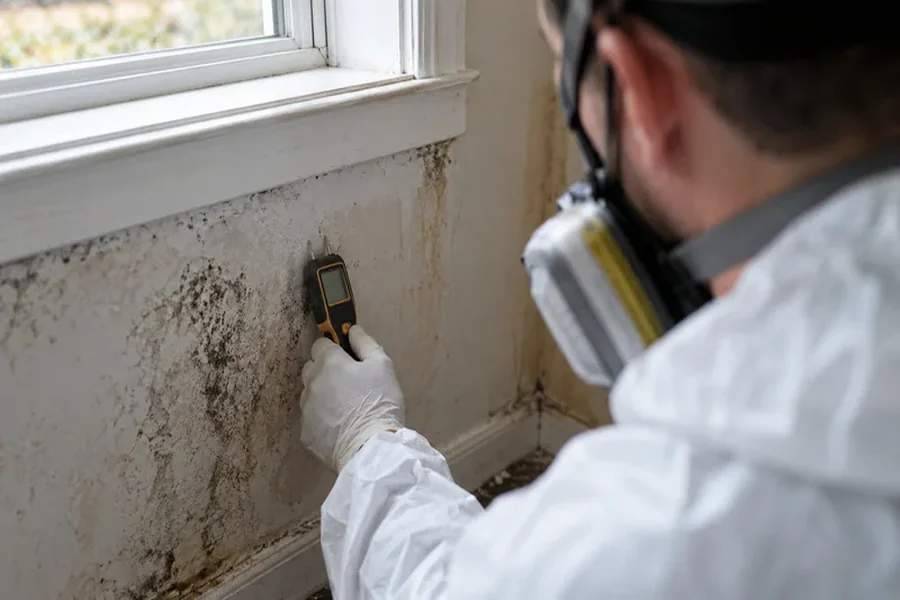
If you’ve had a wet season with more than one event, flooded carpet, or a finished basement with soaked drywall, don’t gamble on a home store mop and a fan. That’s the point where you look into Certified Mold Remediation and Cleanup Services in Central Minnesota, which handles moisture mapping, testing, and structural repair instead of just a bottle of spray. This guide will help you figure out whether that’s your situation.
Where mold actually gets a foothold in Minnesota homes
Plenty of the mold calls I’ve seen start from something a homeowner never noticed: an ice dam that pushed water under the shingles, a humidifier cranked to 60 percent all winter, a gutter that dumps rain right against the foundation. The mold itself is just the visible symptom. The wet story underneath is what matters.
Here are the spots that come up again and again:
- Basement rim joists and sill plates, where cold wood meets warm indoor air and condensation forms
- Underneath bathroom tile and behind the shower surround, where a slow leak hides for months
- Attic sheathing, from warm air escaping up through ceiling gaps in January
- Window framing and the drywall return, after a storm drives water sideways against the house
- Finished carpet and padding after a sump pump or washing machine failure
I’d argue the carpet scenario is the sneakiest. Carpet and pad hold water for days, look fine on top, and trap mold spores below where you’ll never see them until the smell shows up. If your basement carpet soaked up a flood and sat wet for more than a day, that pad is probably trash no matter how good it looks.
Does a little mold always mean a big problem?
No. Half of this decision is about the size and location of what you’re looking at. A few ounces of surface mold on concrete or a painted board, in a room you can dry out, is often a homeowner job. The other half is about what the moisture has already done to the materials.
The table below is the one I’d have taped to the shop fridge. Use it as a gut check before you buy anything or call anyone.
| What you’re seeing | Likely moisture source | The call I’d make
|
|---|---|---|
| Small speckled patch on concrete, under a few square feet | Humidity or minor condensation | Treat it yourself and run a dehumidifier |
| Dark fuzz spreading along baseboard and drywall | Wicking from a wet slab or leak behind the wall | Get an inspection, drywall may need to come out |
| Any mold on soaked carpet, pad, or insulation | Flood or plumbing failure | Those materials are usually not savable, call a pro |
| Smell with no visible growth | Hidden cavity moisture | Get moisture mapping and testing |
| Mold keeps coming back after cleaning | Source never found or fixed | Diagnosis first, cleaning second |
Notice how much of that is about the source, not the mold. Scrub a wall without fixing the leak and you’re just scheduling this conversation for next year.
What I tell people who want to handle it themselves
You can totally handle a small job, and the Environmental Protection Agency’s guide on mold cleanup is the closest thing to a homeowner manual you’ll find. Its general position is that a patch under roughly ten square feet, on a hard surface you can dry quickly, is fair game for DIY.
Here’s the routine I’d follow:
- Find the moisture source first. Nothing else counts until the leak, the humidity spike, or the drainage issue is fixed.
- Dry aggressively. Fans and a dehumidifier for at least a couple of days. Multiple days of airflow, not a single afternoon with the window open.
- Suit up. N95 respirator, goggles, gloves. Spores get airborne the second you start scrubbing.
- Treat the surface. Damp wipe with a mild soap and water mix or a diluted bleach solution on a nonporous surface, then dry it hard.
- Bag the mess. Seal what you remove in a garbage bag and take it outside. Don’t set it in the hallway while you finish.
- Check back in a week. Look for any return of the discoloration or the smell.
Skip all of that if the mold is on drywall, insulation, particleboard, or anything you can’t get truly dry. Those materials hold water inside, and there’s no amount of wiping that reaches it. Also skip it if you’re looking at more than ten square feet, or if you’ve been sick in ways that ease when you leave the room and hit again when you come home.
The parts most homeowners forget
Two things trip people up after the cleanup. First, the repair. Too often the remediation wraps up and the drywall and trim get slapped back without addressing why it was wet: a bad gutter alignment, missing flashing, a grading issue pushing water at the foundation. Second, the air. Cleaning surfaces doesn’t automatically address what drifted into ducts and cavities. A remediation crew usually checks both, and a crew that skips them hasn’t finished the job.
It’s also worth knowing what your insurance will and won’t take. The Housing and Urban Development site has useful homeowner resources if you want to understand the difference between sudden water damage and long-term seepage, because most policies split those two very differently. Homeowner resources won’t replace a call to your agent, but it’ll help you ask better questions.
The health conversation gets overblown on one side and waved off on the other. The Centers for Disease Control and Prevention moisture and mold guidance lands somewhere practical: mold is common indoors, some people are sensitive to it, and drying things quickly and fixing the moisture is what matters most. No need to panic, no need to ignore a persistent smell either.
The five-point rule I’d start with
I use a simple test I call the Five-Day Rule. Any material that was wet for five days or more gets assumed contaminated until proven otherwise. That covers carpet, pad, drywall, ceiling tile, insulation, and the particleboard under cabinets. It’s not a code standard, just a practical line I’ve found reliable over plenty of wet seasons.
Picture it in practice. A basement in St. Cloud takes on two inches of water from a sump failure on a Tuesday. You get a pump running that night, pull the soggy boxes out, and dry things by Thursday. The lower drywall and the carpet pad still absorbed water for nearly 48 hours, which is under five days but close enough that I’d want a moisture meter on it before I call it done.
Conversely, a summer cabin where the baseboard sat wet from the spring melt for a week? That’s a full mold evaluation whether it looks bad or not. The rule re-centers you on time and material, which are the two variables that actually drive the outcome.
When it’s time to hand it over
Give it to a certified crew when the moisture source is hidden, when materials have soaked and stayed wet, or when the job needs to come out before it goes back together. Remediation here means containing the space, removing the affected materials, treating the framing, running air scrubbers to catch airborne spores, and then repairing what came out. That’s not a kit you pick up on a Saturday.
Before you hire anyone, ask two things: will you show me the moisture readings, and can you fix the source, not just the mold. Any answer that skips those is a red flag. If you’ve had a rough wet season and you’re standing in a basement that smells like a locker room, get the inspection done, fix the source, then stop worrying about the fuzz. Your house is fine. You just need to get ahead of the water.