Mine died eleven minutes before my in-laws arrived for Thanksgiving. Not during the prep, not after dessert. Eleven minutes before the doorbell. If you’ve lived through a cold shower ambush, you already know the water heater doesn’t fail on a convenient Tuesday. It fails on the morning of a job interview, the night before a flight, or right when eight people expect to shower in sequence.
Here’s the good news buried under the wet towels: a dead water heater is usually a solved problem, and the fix is faster than you think once you stop panicking and start diagnosing. You’ll learn why these things quit, how to tell a cheap repair from a replacement, and how to pick the right person to call. If you’re in southeastern Pennsylvania and want a number worth keeping on the fridge, these local Montgomery County plumbers handle the emergency side of this exact scenario, which is why I keep the name handy.
The short version of what follows: figure out whether it’s a pilot, a heating element, or a tank that’s given up, then decide if you’re calling someone today or pricing a replacement this week. Skipping the diagnosis step is how people pay emergency rates for a problem a reset button could’ve fixed.
Why water heaters fail at the worst possible moment
They don’t actually have it out for you. The timing feels cruel because water heaters degrade quietly and then fail all at once. A tank doesn’t announce that the anode rod wore through. It rusts from the inside, holds pressure for months, and then lets go on the coldest morning of the year, which is exactly when it’s working hardest and your household is drawing the most hot water.
Cold weather makes everything worse. Incoming water is colder, so the unit runs longer to hit the same temperature. That extra runtime pushes a tired tank past its limit. According to the U.S. Department of Energy, water heating is one of the largest energy expenses in a typical home, which tells you how hard these units work day after day. A machine that runs that much is going to wear out. The question is just when.
My honest take: most “sudden” failures were visible weeks earlier. A little rust in the hot water, a popping sound, a puddle you blamed on the dog. If you noticed any of that, the heater didn’t surprise you. It gave you a warning and you missed it. I missed mine too.
Is it broken, or just offended? A quick diagnosis
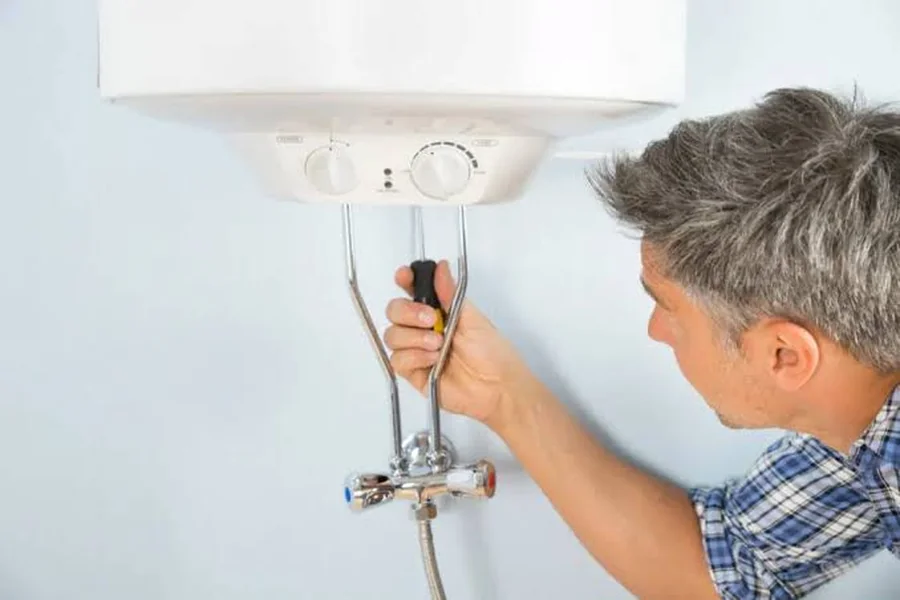
Before you call anyone, spend five minutes ruling out the boring stuff. You’ll either save yourself a service call or give the technician a clearer picture, and both outcomes are wins.
- No hot water at all: check the breaker or the gas pilot first. A tripped breaker is free to fix and common after a power flicker.
- Warm but never hot: in an electric unit, a failed heating element or thermostat is the usual suspect. In gas, it’s often the thermostat or a sediment buildup.
- Hot water runs out fast: sediment on the tank floor steals capacity. A flush can bring some of it back.
- Water around the base: this one you don’t troubleshoot. A leaking tank is a replacement, not a repair, and no amount of plumber’s tape changes that.
One more thing. If you smell gas near a gas unit, stop reading and get out, then call your utility. That’s not a plumbing inconvenience. That’s a safety event, and it’s the one time I’ll tell you not to DIY the diagnosis.
Repair or replace? Here’s how I’d decide
Plenty of guides dodge this question because the answer depends on the unit. So here’s the rule I actually use, and it’s simple enough to write on a sticky note. I call it the Age Plus Puddle test.
Two questions. How old is the tank, and is it leaking? A gas unit typically gets you ten to twelve years, an electric one maybe a year or two more. If your heater is past that window and leaking, replace it. Don’t debate it. If it’s young and the problem is a heating element or a thermocouple, repair it and move on. The gray zone is a ten year old unit with a failing part and no leak. There, I lean replace, because you’re about to spend real money on a machine that’s near the end anyway, and you’ll be back here soon.
| Situation | My call | Why
|
|---|---|---|
| Under 8 years old, part failure, no leak | Repair | Plenty of life left, cheap fix |
| Over 10 years, leaking tank | Replace now | Leaks don’t reverse, and the unit is due |
| Over 10 years, no leak, failing part | Lean replace | You’ll pay twice if you patch it |
| Any age, rusty hot water | Replace soon | The tank is corroding from inside |
I’d pick replacement earlier than most people do. Paying for a repair on a dying tank feels like progress, but it’s really a down payment on the replacement you’ll buy in eighteen months anyway.
Choosing someone to call when the water’s already cold
Once you’ve decided to call, the selection process matters more than the phone number looks. A few filters save you from the worst outcomes.
Ask for the license number and confirm it’s current. A licensed plumber carries insurance, which protects you if something goes sideways in your basement. Get a written estimate before work starts, not a verbal ballpark, and confirm whether the emergency call carries a premium.
Reputable shops tell you the rate up front. The National Institute of Standards and Technology publishes measurement standards that underpin how equipment like water heaters is rated, and it’s a decent reminder that “we’ll figure out the price later” is never the right answer.
Then there’s the efficiency question, which affects your wallet long after the plumber leaves. The Environmental Protection Agency runs the Energy Star program, and its labeling helps you compare replacement units on real efficiency rather than marketing claims. A slightly pricier high efficiency model can pay you back over its life, especially if your household uses a lot of hot water. I’d rather spend more on the unit than on the emergency surcharge. Both cost money, only one keeps the hot water flowing for the next decade.
The steps that turn a cold morning around
Here’s the sequence I’d follow if it happened again tomorrow, in order.
- Shut off power or gas to the unit if you suspect a leak, and shut the water supply valve.
- Check the breaker and pilot.
- Confirm the age from the sticker on the tank.
- Run the Age Plus Puddle test.
- Call a licensed local pro with a written estimate, and ask about same day availability.
- If replacement is the answer, compare efficiency ratings before you commit.
None of that requires special tools. It requires not standing in the shower yelling at a machine that’s already dead.
Keep the number before you need it
The water heater that quits at the worst time was always going to quit. The only variable you control is how fast you respond and who you call. Diagnose first, run the Age Plus Puddle test before you spend a dime, and keep a licensed number where you can find it without Wi-Fi.
So here’s your small assignment: find your water heater’s age sticker today, while everything’s working. If it’s past ten years, you’re living on borrowed hot water. What’s your plan when it goes?