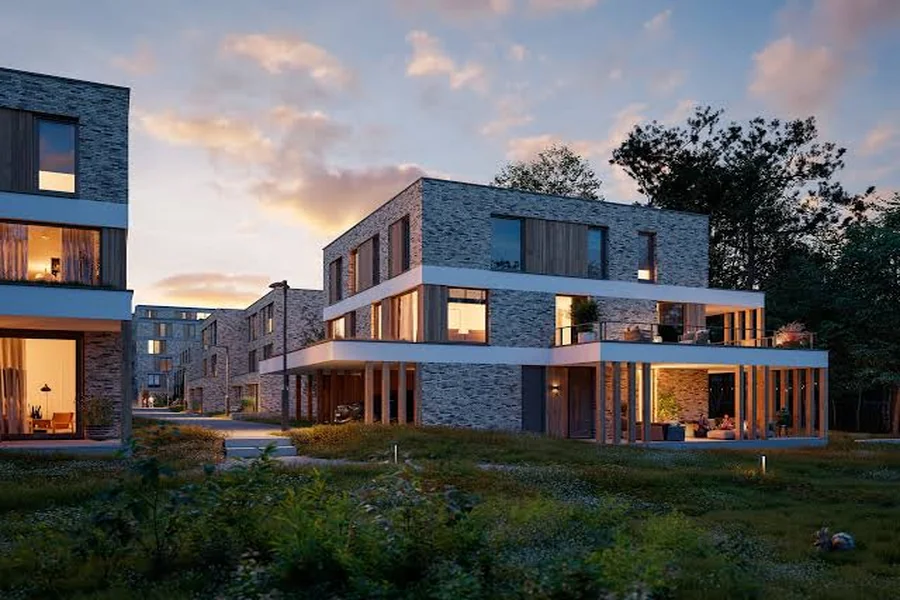
Picture an empty block in Brunswick. There is a temporary fence, a few weeds, and a sign out the front promising twelve townhouses.
Now picture a buyer standing on the footpath, trying to imagine living there. It’s a big ask. They can’t walk through the front door, feel the morning light in the kitchen, or check the view from the balcony. The building only exists on paper.
Yet off the plan projects sell every week across Melbourne. Very often, the thing doing the selling is architectural visualisation.
Why Floor Plans Aren’t Enough
Architects and builders read drawings easily. Most buyers don’t.
A floor plan shows where the walls go, but it says very little about how a home will feel. Is the living room bright? Does the kitchen bench face the garden? Will the street look leafy or bare?
Buyers are making one of the biggest purchases of their lives based on a promise. Anything that helps them see that promise clearly makes the decision easier.
What a Good Render Does
A well-made render turns a set of drawings into a picture of real life.
It shows the timber cladding catching the afternoon sun, the stone benchtop, and the light falling across a polished concrete floor. It can place the building in its actual street, with the tram line, the neighbouring terraces, and the gum tree on the corner.
That’s why developers looking for 3d rendering services in Melbourne often care most about local accuracy. Melbourne buyers know their suburbs. A render that captures the feel of Fitzroy, Hawthorn, or Footscray earns trust much faster than a generic image.
Renders also work hard across every channel. The same images can go on a sales website, a billboard on site, a brochure, and a real estate listing.
Where Animation Takes It Further
Still images show a moment. Movement tells a story.
With 3d architectural animation, a buyer can follow a path through the home. The camera moves from the street, through the front gate, past the entry, and into an open living area that looks out onto a courtyard.
This helps buyers understand space and flow in a way a single image can’t. They see how rooms connect, how high the ceilings feel, and what the walk from the garage to the kitchen is like.
Animation is also easy to share. A short video works well on social media, in email campaigns, and on screens in a display suite. Interstate and overseas buyers can explore a Melbourne project without boarding a plane.
More Than a Sales Tool
Visualisation helps long before the first deposit is paid.
During design, it lets architects and clients test ideas early. Swapping a brick colour or moving a window is much easier in a render than on a half finished site.
It also supports planning and community consultation. Councils and neighbours often want to understand how a new building will sit in the street, how tall it is, and how it related to nearby homes. Clear visuals make those conversations calmer and more productive.
What Makes Visualisation Convincing
Not every render works. The ones that sell share a few qualities.
Accuracy comes first. The images should match the approved plans, finishes, and site conditions, so buyers get what they were shown. That honesty protects the developer’s reputation as much as the buyer.
Lighting matters too. Natural, believable light makes a space feel lived in. Small touches, like a bowl of lemons on the bench or a bike leaning on the fence, help people picture themselves there.
Finally, the story should suit the buyer. First home buyers might care about the open plan living area. Downsizers might want to see the single level layout and the low maintenance garden.
A thoughtful 3d architectural animation brings all of this together, guiding the viewer through the moments that matter most to them.
Where Ecompapi Studio Fits In
Ecompapi Studio creates architectural visualisation for developers, architects, builders, and real estate teams. The focus is on detailed, accurate imagery and animation that helps people understand a project and feel confident about it.
For teams searching for 3d rendering melbourne services, working with a studio that understands local streetscapes and buyer expectations make a real difference to how a project is received.
Getting Started
Start with what you need the visuals to do. That might be launching sales, supporting a planning application, or presenting to investors.
Gather your drawings, finishes schedule, and site photos. Then agree on the key views and the story you want to tell. A clear brief makes the whole process quicker and the results stronger.
If your project is heading to market soon, adding 3d architectural animation to your campaign gives buyers a way to walk through their future home today.
Frequently Asked Questions
What’s the difference between a render and an animation? A render is a still image of a space. An animation is a moving sequence that takes the viewer through it.
When should I start visualisation? Ideally during design, so the images can support planning, marketing, and sales.
Can renders show real Melbourne streets? Yes. A local 3d rendering melbourne studio can use site photos and location details to place a building in its actual surroundings.