

Modern life runs on systems we rarely notice, until something goes wrong. Electricity flows, appliances function, meals are prepared, and routines unfold with minimal friction. But behind this apparent simplicity lies a complex network of dependencies. When even one part becomes unreliable, the ripple effects can disrupt the entire day.
For many households, the response is shifting from passive reliance to intentional design. Instead of assuming that systems will always work as expected, people are beginning to build layers of reliability into everyday life. This doesn’t require drastic change. It starts with understanding how small, practical improvements, particularly in energy and food preparation, can create consistency and control.
Rethinking Energy as a Foundation
Energy is the backbone of nearly every modern routine. From cooking and refrigeration to communication and climate control, the stability of daily life depends on a steady power supply. Yet most households remain fully dependent on centralized systems, with little redundancy when disruptions occur.
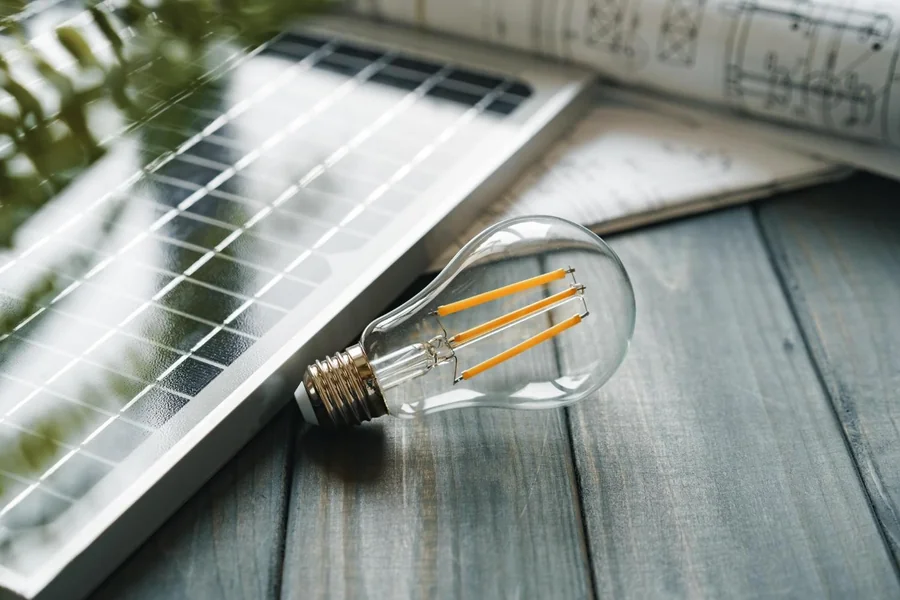
This is why more homeowners are exploring ways to diversify how they access and manage energy. Even modest solar setups can introduce a level of resilience that traditional systems alone cannot provide. Rather than replacing the grid entirely, these systems act as a supplement, supporting essential functions and reducing vulnerability during outages or fluctuations.
Sourcing the right components is a key part of this process. Exploring options through The Solar Store allows homeowners to better understand how solar solutions can be tailored to specific needs, whether that involves backup power, improved efficiency, or long-term cost stability. The goal is not complete independence, but a more balanced and reliable energy framework.
According to the U.S. Department of Energy, distributed energy resources such as solar can enhance resilience by minimizing the impact of localized disruptions. Even partial integration can make a measurable difference in how households maintain continuity during unexpected events.
Reliability in the Kitchen: Where Precision Matters
If energy is the foundation, the kitchen is where reliability becomes visible. Food preparation is one of the most routine activities in any household, yet it is also one of the most sensitive to inconsistency. Small variations in temperature, timing, or technique can significantly affect both quality and safety.
This is especially true when cooking proteins or preparing meals that require precise internal temperatures. Guesswork may work occasionally, but it often leads to uneven results. Overcooking reduces quality, while undercooking can introduce health risks.
Tools designed for accuracy help eliminate that uncertainty. Using thermopro thermometers during cooking allows for real-time monitoring, ensuring that food reaches safe and optimal temperatures without relying on estimation. Over time, this level of precision creates consistency, making it easier to achieve the same results repeatedly rather than adjusting on the fly.
The importance of temperature control is well established. The U.S. Department of Agriculture emphasizes that proper internal temperatures are essential for preventing foodborne illness. Reliable tools are not just a matter of convenience, they are part of maintaining a safe and controlled environment in the kitchen.
Connecting Systems: Energy and Food in Practice
At first glance, energy systems and cooking tools may seem unrelated. One operates at the level of infrastructure, the other at the level of daily routine. But both serve the same purpose: creating predictable outcomes.
A household that invests in stable energy and precise food preparation tools is, in effect, reducing uncertainty across multiple areas of life. Power interruptions become less disruptive. Meals become more consistent. Daily routines become smoother.
This interconnected approach reflects a broader shift in how people think about reliability. Instead of addressing problems individually, they build systems that support one another. Energy reliability supports cooking. Cooking consistency supports health. Health supports overall well-being. Each element reinforces the others.
Moving from Convenience to Capability
Convenience is built on the assumption that systems will always function as expected. Capability, on the other hand, acknowledges that systems can fail, and prepares for that possibility.
This doesn’t mean abandoning convenience altogether. It means complementing it with awareness and preparation. A household that understands its energy use, maintains its equipment, and uses tools designed for accuracy operates differently from one that relies entirely on default systems.
The shift is subtle but significant. It transforms daily life from something reactive into something more controlled and intentional.
The Value of Incremental Improvements
One of the reasons many people hesitate to pursue greater reliability is the perception that it requires large, immediate investments. In reality, the most effective systems are often built gradually.
A small solar installation can be expanded over time. A single reliable kitchen tool can change how meals are prepared. Each improvement builds on the last, creating a layered system that becomes more effective as it develops.
This incremental approach also allows for adjustment. Households can refine their systems based on real experience rather than assumptions, ensuring that each addition serves a clear purpose.
Building Confidence Through Consistency
Reliability is not just about avoiding problems, it is about creating confidence. When systems function predictably, decision-making becomes easier. There is less second-guessing, less stress, and more room to focus on what matters.
In the kitchen, this might mean knowing exactly when a meal is ready without cutting into it repeatedly. In energy use, it might mean having the assurance that essential devices will continue running even during disruptions.
These are small moments, but they accumulate. Over time, they shape how a household operates, creating an environment that feels stable rather than uncertain.
A Practical Approach to Everyday Resilience
From power to plate, the principle remains the same: reliability comes from intention. It is built through systems that prioritize consistency, supported by tools and resources that reduce guesswork.
This approach does not require extreme changes or complete independence. It requires awareness, incremental improvement, and a willingness to move beyond passive reliance on default systems.
In a world where complexity continues to grow, there is value in simplifying outcomes. When energy is more stable and food preparation is more precise, everyday life becomes easier to manage, not because it is less complex, but because it is better supported.
That is the essence of building reliable systems: not eliminating uncertainty entirely, but reducing it enough to create confidence in how each day unfolds.