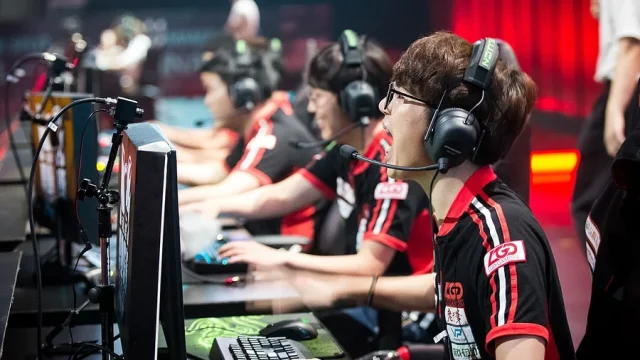
Online multiplayer lobbies can feel like foreign countries to anyone unfamiliar with contemporary digital jargon. When you enter a match, the text feed fills up with rapid shorthand, sudden balance debates, and tactical callouts that sound completely cryptic at first glance. Understanding gaming slang helps you decode these fast conversations, follow competitive broadcasts, and coordinate effectively with teammates. This guide breaks down the most prominent everyday gaming expressions, explores where they originated, and illustrates how players deploy them in real matches.
The Foundation of Match Etiquette
Every competitive community develops its own shorthand for closing out games and setting conversational boundaries. Some phrases serve as basic digital handshakes, while others reveal how players negotiate tension in competitive spaces.
GG (Good Game)
“GG” is arguably the oldest piece of modern multiplayer etiquette, tracing back to early dial-up strategy titles and tournament servers in the late 1990s. Players typically type “GG” into all-chat at the end of a match as a sign of mutual respect, mirroring the physical handshake between sports teams.
Context determines everything with this acronym. Typing “GG” after the final whistle signals genuine sportsmanship. Conversely, calling “GG” five minutes into a thirty-minute contest is often considered bad form, essentially telling teammates that the match is already lost before it has truly begun. Variations include “GGWP” (Good Game, Well Played) and “GGEZ” (Good Game, Easy), the latter widely viewed as unsportsmanlike taunting.
Salty and Tilting
When an outcome does not go as planned, emotional reactions quickly ripple through the lobby.
- Salty: Derived from urban slang and popularized across fighting game tournaments, being salty describes someone who is visibly bitter, irritated, or resentful after taking a loss.
- Tilt / On Tilt: Originating in poker when an emotional player makes reckless decisions after a bad beat, tilting in gaming happens when frustration compromises mechanical discipline. A tilted player rushes into unnecessary fights, ignores team communication, and compounds their mistakes.
Mechanics, Balance, and the Numbers Game
Modern games receive continuous patches and balance adjustments. As developers tune weapons, heroes, and abilities, an entire technical vocabulary has evolved to describe how game mechanics rise and fall in effectiveness.
Nerf and Buff
When a particular weapon, champion, or tactic dominates matchmaking, developers reduce its power to restore balance. This reduction is known as a nerf. The term gained traction in early online role-playing games during the late 1990s, when players remarked that developers reduced the stopping power of specific weapons so severely that they felt like harmless foam Nerf toys.
The inverse adjustment is a buff, which refers to increasing an element’s stats, utility, or damage to make it competitive again. When patch notes drop, tracking weapon tuning and roster tier lists on dedicated competitive outlets like DotEsports.com helps players prepare for shifts in matchmaking balance before queuing into ranked ladders.
DPS, Aggro, and RNG
To coordinate tactical roles, players classify specific tasks using concise mechanical labels:
- DPS (Damage Per Second): Both a raw statistical metric measuring offensive output and a category label for characters whose primary duty is dealing sustained damage.
- Aggro (Aggression): In team games, managing enemy attention is critical. To “draw aggro” means intentionally pulling hostile fire away from vulnerable support teammates toward high-health frontline defenders.
- RNG (Random Number Generation): Algorithms dictate unpredictable elements such as loot drops, critical hit chances, and procedural maps. When a player misses an easy opportunity due to probability rather than skill, they usually blame bad RNG.
The table below contrasts how these core mechanical concepts operate across popular competitive genres:
| Term | Primary Definition | Common Role or Setting | Typical Chat Example |
| Nerf | Decreasing power or utility | Balance patch update | “They nerfed the sniper rifle’s reload speed.” |
| Buff | Increasing power or efficiency | Balance patch update | “Support heroes received a massive health buff.” |
| DPS | Damage output per second / Attacker role | Shooters, MOBAs, MMORPGs | “We need more DPS to break through their frontline.” |
| Aggro | Enemy targeting priority | Co-op games, Raids, MOBAs | “Hold aggro while the rest of us flank.” |
Strategy, Positioning, and Strategic Shifts
Strategic awareness separates casual play from ranked competition. As players learn maps and optimal decision paths, certain terms describe overarching strategy versus localized maneuvers.
Meta (Most Effective Tactic Available)
While “meta” historically derives from the Greek prefix meaning beyond or transcending, the gaming world frequently uses it as a backronym for the Most Effective Tactic Available. In practice, the meta represents the dominant strategies, optimal character choices, and item configurations collectively agreed upon by elite players.
Metas are fluid. A single balance adjustment or an innovative counter-strategy can render a popular playstyle obsolete overnight. Players who adhere strictly to the top-tier setup are said to be “playing the meta,” while unconventional thinkers who build counters against those setups are running “anti-meta” strategies.
Camping and Flanking
Positional terminology describes how competitors navigate map geometry:
- Camping: Sitting motionless in a single concealed location, often near a doorway, objective, or spawn point, waiting for unsuspecting opponents to walk past. While tactically viable, camping is frequently criticized in casual lobbies for slowing down gameplay pace.
- Flanking: Navigating around the perimeter of the active combat zone to strike an opposing team from the side or rear, bypassing their primary defenses.
High-Stakes Performance Under Pressure
Certain terms exist purely to capture individual brilliance during clutch moments, as well as the frustrating mistakes that hand victory to the opposition.
Clutch
A clutch occurs when a player pulls off a win in a seemingly unwinnable, high-pressure scenario. In tactical shooters, being the last remaining team member against three surviving opponents and successfully eliminating all three to win the round is the definitive clutch. A clutch player stays calm, relies on situational awareness, and turns disadvantage into victory.
Choke
The direct opposite of a clutch is a choke. A choke happens when a team or player holds an overwhelming lead or an easy victory path, only to lose focus, make unforced errors, and drop the match. Choking reflects a breakdown in mental composure rather than a lack of raw technical skill.
Carrying and Feeding
Team-based competitions often feature uneven contributions across the roster:
- Carrying: When one standout competitor produces exceptional results, essentially lifting their struggling squad to victory through individual effort.
- Feeding: Repeatedly dying to opposing players due to careless positioning or overextension. In titles where eliminations grant gold, experience, or ability power, an ally who repeatedly dies is quite literally feeding resources to the opponent.
For additional insight into how digital terminology evolves into everyday speech, explore our detailed breakdown on how idioms need a second review when translating documents across different cultural contexts.
Communicating Clearly in the Lobby
Gaming language operates as functional shorthand designed to transmit complex strategic concepts in a fraction of a second. Far from meaningless noise, terms like GG, Nerf, Meta, and Clutch summarize balance history, map control, and competitive psychology. Familiarizing yourself with these definitions clarifies match commentary, sharpens your collaborative teamwork, and makes participating in online communities considerably more rewarding.