
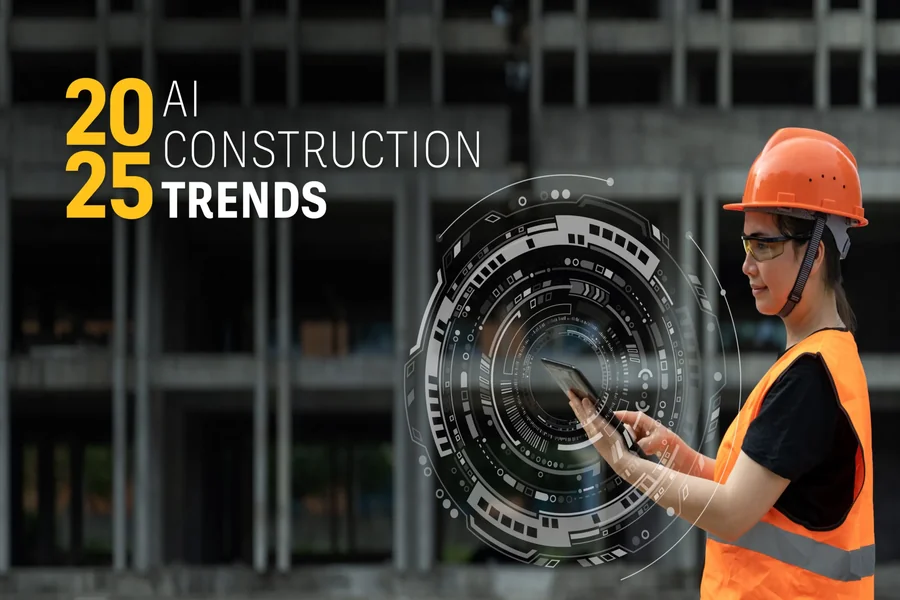

The advertising industry has entered a thrilling era of digital transformation. Once ruled with the aid of guide calculations, paper blueprints, and prolonged bidding processes, today’s advent estimation is being revolutionized by means of Artificial Intelligence (AI). In 2025, AI-powered equipment isn’t always just improving accuracy—it’s shaping how tasks are deliberate, priced, and delivered.
From system mastering models that are waiting for fabric prices to AI-pushed takeoff structures that analyze blueprints in seconds, estimation has by no means been smarter. This shift is growing quicker workflows, fewer human mistakes, and additional profitability across the board. Let’s find out how AI is transforming every layer of estimation and redefining the function of experts in this ever-evolving field.
The Rise of AI in Modern Construction Estimation Services
AI has added first-rate precision to Construction Estimating Services, allowing professionals to move past spreadsheets and guesswork. Traditional estimation relied heavily on guide labor and right of entry, frequently leaving room for expensive mistakes. AI tools, as a substitute, use algorithms skilled in many historical responsibilities to supply reliable, statistics-driven fee predictions. These smart systems examine mission blueprints, material specs, and hard work requirements within minutes. They even issue in variables like marketplace volatility, inflation, and local material shortages—factors that human estimators regularly find tough to quantify in real-time.
For example, a system that can gain knowledge of can forecast how cloth fees may additionally change over the undertaking’s length. Computer vision generation now examines and translates virtual drawings mechanically, casting off the time-eating manual takeoff method. As a result, contractors can prepare bids speedily and in a protracted manner with greater self-assurance, giving them a competitive advantage in the market.
How AI Enhances Accuracy and Efficiency in Cost Estimation
Accuracy has constantly been the spine of successful task manipulation. AI ensures precision with the useful resource of integrating real-time records from carriers, marketplace tendencies, and previous undertaking outcomes. In 2025, AI-driven estimating structures don’t simply calculate charges—they look at every new undertaking to refine future estimates.
Through predictive analytics, the system discovers cost overruns and inefficiencies before production even begins. They, moreover, assist in finding patterns that might indicate danger, which includes underpricing certain materials or misjudging hard work productivity costs.
This degree of automation reduces human errors and saves sizable quantities of time. What once took days can now be performed in hours—or perhaps minutes. Furthermore, AI-powered dashboards allow assignment managers to visualize value breakdowns dynamically, making it much less hard to alter and optimize budgets throughout the development lifecycle.
Techsslash AI technology enables machines to think, learn, and make decisions like humans. By analyzing data and recognizing patterns, Techsslaash AI continuously improves itself over time, making modern technology smarter, more efficient, and capable of solving complex problems faster than traditional computing systems.
The Competitive Edge for Modern Construction Estimation Companies
As AI becomes a well-known tool, Construction Estimating Companies that undertake this technology are primarily the agencies. They’re leveraging AI not just to win more bids but also to consistently deliver on budget and on time. The gain lies in their functionality to mix human understanding with gadget intelligence—developing an unbeatable synergy.
AI affords these organizations with real-time insights that were previously inaccessible. For instance, algorithms can evaluate hundreds of supplier prices to pick out the awesome mixture of fee and great. Additionally, natural language processing (NLP) allows AI to investigate contracts and discover functionality discrepancies, reducing the opportunity for disputes later within the assignment. Clients increasingly decide to operate with estimation agencies that use AI tools, as they show transparency, accuracy, and adaptability. In reality, AI-powered reporting lets clients see precisely how every dollar is being allocated, fostering more transparency and collaboration between stakeholders.
Reinventing Collaboration and Transparency in Construction Estimation Companies
The integration of AI is likewise changing how construction estimation companies collaborate with contractors, architects, and customers. In the past, estimates have been regularly viewed as static documents. Today, thanks to AI and cloud-based technologies, they’ve grown to be living, interactive systems. Teams can now access the identical real-time facts, adjust figures collaboratively, and immediately see how changes in format or materials have an impact on the general expenses. AI chatbots and virtual assistants even assist corporations in managing queries, scheduling updates, and speaking efficiently in the course of an assignment.
This new stage of connectivity promotes transparency. Clients no longer need to wait days for revised estimates or clarifications—AI systems can generate accurate updates on the call. Such transparency isn’t always clearly about enhancing project effects but also approximately enhancing client pride and long-term relationships.
Why Every Construction Estimation Company Must Embrace AI
For any construction estimation company in 2025, ignoring AI isn’t always a choice—it’s a matter of survival. Those nevertheless relying absolutely on guide techniques are finding it increasingly more difficult to keep up with the competition using advanced technology.
AI systems streamline operations via automating repetitive obligations alongside record access, size, and charge monitoring. This offers estimators more time to focus on strategic planning, the patron circle of relatives and contributors, and value engineering. Moreover, AI can integrate seamlessly with Building Information Modelling (BIM), making allowance for a unified, fact-rich environment that complements every stage of the construction process.
Adopting AI additionally enables smaller companies to compete with big players. Cloud-based estimating equipment makes superior AI solutions available without huge upfront funding. This democratization of technology is leveling the gambling area and pushing the entire industry toward smarter, extra sustainable practices.
The Future Outlook for AI inside the Construction Estimation Company Landscape
Looking ahead, AI will keep making estimation even more intuitive and predictive. For each Construction Estimating Company, the focal point will shift from reactive modifications to proactive choice-making. Future structures will, possibly, integrate AI with augmented reality (AR) and Internet of Things (IoT) sensors, providing real-time price tracking based on on-site data. Imagine estimators using AR glasses to visualize rate implications as they investigate an internet site, or AI bots that automatically modify budgets based on stay supplier updates. Such innovations are not far off—they’re already in development and will speedily define the next section of innovation overall performance.
Moreover, sustainability will become a key consciousness. AI can observe the environmental consequences of materials and manufacturing strategies, assisting companies in selecting greener alternatives without compromising on price variety or overall performance. As regulatory necessities tighten, AI might be critical in ensuring compliance while preserving profitability.
Final Thoughts
AI has redefined what’s feasible in production estimation. From superior data evaluation and predictive modelling to real-time collaboration and sustainability insights, these technologies are transforming how specialists paint and compete. What has soon become a tedious, error-prone manner has emerged as a dynamic, facts-based technological approach. Estimators are clearly empowered to make faster, smarter, and more informed alternatives than ever in advance. In 2025 and beyond, AI isn’t in reality an advantage—it’s the foundation for fulfillment in advanced estimation. The businesses that consist of it these days are setting new nestastandardsrinnovationrency, and industry’s destiny.