
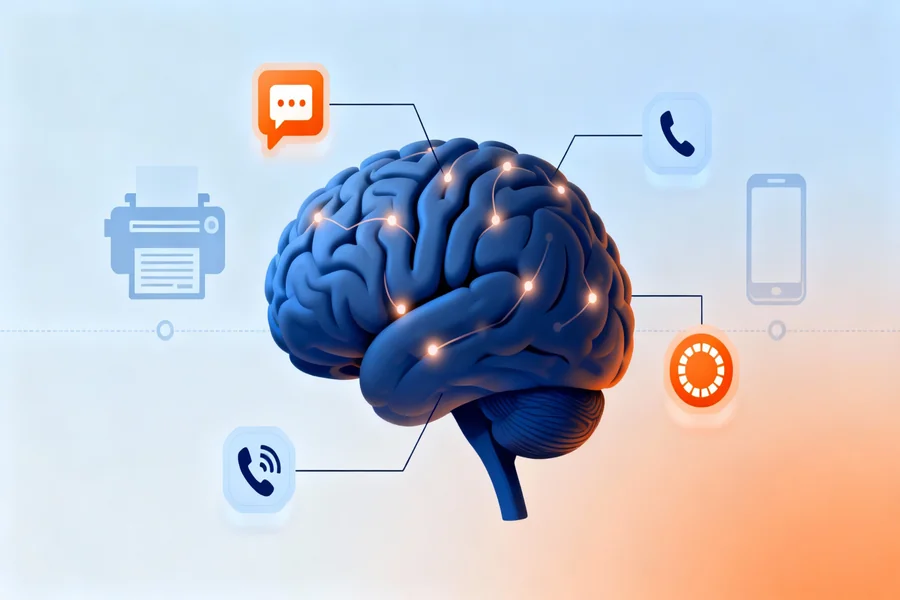

Language isn’t some frozen set of rules, it’s a living, breathing creature that changes alongside us. Right now, language evolution has hit a speed we’ve never seen before. Innovation is simply moving faster than our ability to document it. Think back to the printing press or the first telephone—each big invention forced us to find new ways to describe our world. Today, the mix of technology and language means we don’t just talk, we ping colleagues, sync up on projects, or admit our brains are buffering when we’re flat-out exhausted.
The Evolution of Idioms in the Digital Age
If you look at old-school idioms, they usually sound like they belong on a farm—think beating around the bush. But idioms in the digital age tell a completely different story. Our metaphors have moved from the fields into the virtual world. When things get too intense, we say we “lack the bandwidth” for another task. If a plan goes south and we need a fresh start, we simply hit the reset button.
These modern idioms act as a quick shorthand for our high-tech lives. Even going viral has totally ditched its medical roots to become a standard for social success. These linguistic trends prove that as our gadgets get smarter, our talk becomes more hardware-centric, effectively blurring the line between human feelings and machine logic.
Metaphors, Imagination, and Predictive Language
We’ve always used language to wrap our heads around the future, using symbolism to navigate “what if” scenarios. Interestingly, our metaphors are starting to lean heavily on predictive tech to describe what might happen next. For example, people are starting to reference an ai baby generator online to talk about imagined possibilities or satisfy that basic human curiosity about what’s coming down the line.
Where we used to rely on “blue-sky thinking,” we now use digital tools to anchor our digital metaphors. Relying on technology and language to map out the unknown helps us turn fuzzy, abstract ideas into something we can actually visualize. Whether we’re discussing the programming of our habits or complaining about glitches in our plans, we’re constantly stealing logic from the digital realm to explain the human experience.
AI as a Source of Linguistic Inspiration
AI is no longer just a cool idea; it’s a massive engine driving language evolution. The way AI concepts are leaking into our casual speech is honestly fascinating. Take the word “hallucination”—it was once strictly for psychology, but now it’s how we describe a bot making a mistake. It’s a strange way of personifying code without even realizing it.
When we talk about being “re-wired” after a long break, we’re tapping into digital metaphors that treat our brains like a neural network. These linguistic trends suggest that we’re starting to see ourselves through the lens of our own tech. The boundary between a figurative phrase and a technical process is fading, making our modern idioms feel more data-driven every single day.
Language Learning and Cultural Context
For anyone trying to learn English as a second language right now, this is a lot to handle. Understanding modern idioms isn’t just a nice to have—it’s essential. You can know every word in a dictionary and still be lost in a meeting if you don’t catch the tech references. Cultural literacy in 2026 means knowing how idioms in the digital age actually work in the real world.
If a colleague says they’re “working in a silo,” a literal translation won’t help you. Truly grasping technology and language means knowing these terms come from software and corporate structures. Staying updated on language evolution is the only way to keep communication fluid, so learners don’t feel like they’re “running on an old OS” while everyone else has upgraded.
Balancing Innovation and Linguistic Clarity
Even with all these cool new words, we have to be careful not to lose the human part of communication. Nobody likes a jargon-fest. Keeping things clear is still the most important part of talking to each other. While linguistic trends definitely lean toward the technical, the whole point of language is connection.
If we lean too hard into digital metaphors, we might alienate people who aren’t plugged in. Good communication uses technology and language as a bridge, not a wall. As we adopt more idioms in the digital age, we need to make sure they actually help us be understood instead of hiding our meaning behind tech-speak.
Conclusion
The link between how we speak and what we build defines our era. As language evolution moves forward, it’s going to keep soaking up the logic of our latest breakthroughs. From everyday conversations to experimenting with tools such as an AI baby generator online, we are constantly using technology to shape the way we express our hopes and expectations. By understanding modern idioms and the weight of our digital metaphors, we get a real look at what our society values. Ultimately, technology and language will grow together, making sure our expressions stay as innovative as the tools we hold in our hands.