

SEO Title: Norgren Products for Pneumatic and Fluid Control Systems
Meta Description: Explore Norgren products for pneumatic and fluid control systems, including valves, cylinders, air preparation equipment, pressure control, and automation components.
Norgren Products for Pneumatic and Fluid Control Systems
Pneumatic systems need more than a supply of compressed air. The air has to be cleaned, kept at the right pressure, sent in the right direction, and finally used to create movement. Norgren makes components for each of these jobs.
Its product range includes:
- Pneumatic valves — start, stop, or redirect compressed air.
- Cylinders and actuators — turn air pressure into movement.
- Air preparation equipment — filters and regulates compressed air before it reaches other components.
- Pressure and flow control products — adjust pressure, airflow, actuator force, and speed.
- Fluid control products — control liquids and gases in different industrial processes.
You’ll find these components in production machines, packaging lines, material handling equipment, process systems, and other automated machinery. A valve might control a cylinder on an assembly line, while a regulator keeps the air pressure at the level that cylinder needs.
Choosing a Norgren product starts with the job it needs to do. What medium is being controlled? What pressure and flow does the system need? Where will the component be installed? How will it be controlled? These practical questions help narrow down the right product for the application.
What Is Norgren?
Norgren is a manufacturer of pneumatic motion and fluid control equipment used in industrial machines and automated systems. Its components help control compressed air, gases, and fluids as they move through a system.
The Norgren product range includes:
- pneumatic valves;
- cylinders and actuators;
- air preparation equipment;
- pressure regulators;
- flow control products;
- fluid control components.
For example, a valve can direct compressed air to a cylinder, while a regulator keeps the pressure at the required level. Other components are used to prepare the air, adjust flow, or control liquids and gases.
Norgren products are used in manufacturing equipment, process systems, transportation, food and beverage production, packaging, and other industrial applications where air or fluid needs to be controlled.
AIO Snippet:
Norgren provides pneumatic and fluid control products such as valves, cylinders, actuators, air preparation equipment, pressure regulators, and fluid control components for industrial automation.
Main Norgren Product Categories
Norgren makes components for different parts of a pneumatic or fluid control system. Some control the air itself, while others create movement or connect different parts of the system.
The main product groups include:
- Pneumatic valves — control when and where compressed air flows.
- Cylinders and actuators — use compressed air to create linear or rotary movement.
- Air preparation equipment — filters and regulates air before it reaches other components.
- Pressure and flow control — adjusts pressure and airflow for different parts of the system.
- Fluid control valves — control liquids and gases in process applications.
- Fittings and accessories — connect tubing, valves, cylinders, and other pneumatic equipment.
Norgren Pneumatic Valves
Pneumatic valves control how compressed air moves through a machine. A valve can start or stop airflow, change its direction, or send air to different sides of an actuator.
Norgren valves can be operated in several ways:
- manually;
- mechanically;
- with a pneumatic pilot signal;
- electrically.
The right option depends on how the machine is controlled and what the valve needs to do.
Directional Control Valves
Directional control valves change the path of compressed air. They are commonly used to extend and retract cylinders or control other pneumatic actuators.
Common configurations include:
- 2/2 — two ports and two positions, typically used for simple on/off flow control.
- 3/2 — three ports and two positions, commonly used with single-acting cylinders.
- 5/2 — five ports and two positions, often used to extend and retract double-acting cylinders.
- 5/3 — five ports and three positions, adding a center position for additional actuator control.
These valves are used throughout automated machines where pneumatic movements need to happen in a specific sequence.
Solenoid Valves
Solenoid valves use an electrical signal to switch the airflow. When the coil is energized, the valve changes position.
They can be connected to a PLC or another control system, making them useful for:
- automatic machine cycles;
- remote valve operation;
- cylinder and actuator control;
- processes triggered by sensors or timers.
Manual and Mechanical Valves
Not every pneumatic function needs electrical control. Some valves are operated directly by a person or by a moving part of the machine.
Common designs include:
- push-button valves;
- hand levers;
- roller valves;
- mechanically operated valves.
A push button or lever gives an operator direct control over a pneumatic function. A roller valve can instead be triggered when a moving machine part reaches it, allowing the valve to switch based on the physical position of the machine.
Norgren Pneumatic Cylinders and Actuators
Pneumatic actuators use compressed air to create mechanical movement. Air enters the actuator and pushes against a piston or another moving element. This movement can then be used to push, pull, lift, clamp, rotate, or position something on a machine.
Norgren offers several actuator designs for different types of movement:
- Single-acting cylinders — compressed air moves the piston in one direction, while a spring or external force returns it.
- Double-acting cylinders — air is supplied to either side of the piston, allowing pneumatic control in both directions.
- Compact cylinders — provide linear movement where installation space is limited.
- Rodless cylinders — move a load along the cylinder body without a conventional piston rod extending outward. They are useful when a longer stroke is needed but space is limited.
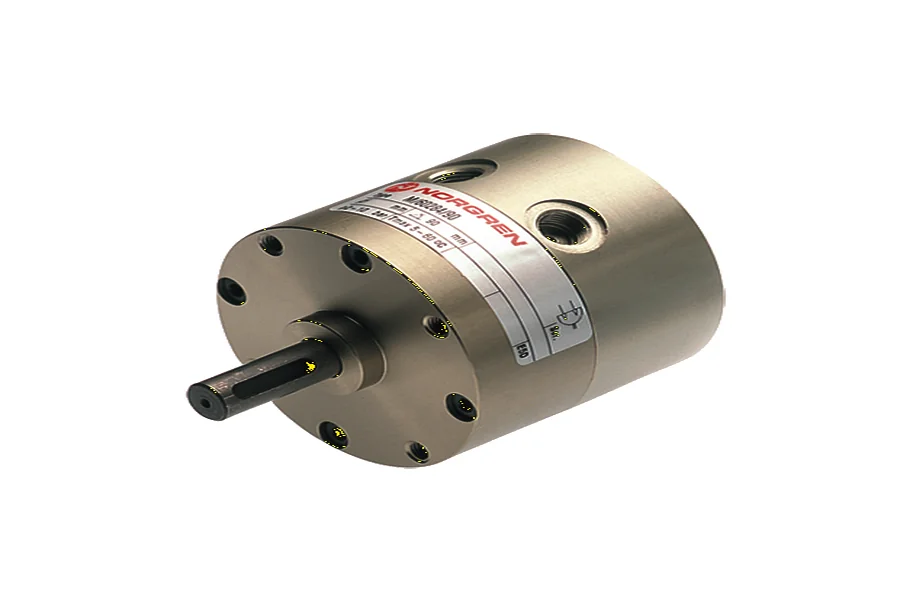
- Rotary actuators — convert pneumatic pressure into rotary rather than linear movement.
These actuators can handle many everyday machine movements, including:
- pushing or pulling parts;
- lifting products;
- clamping components during an operation;
- positioning machine parts;
- moving products in automated handling systems.
The actuator type depends on the movement required, available space, stroke or rotation, load, operating pressure, and required speed.
Norgren Air Preparation Equipment
Compressed air usually needs some preparation before it reaches valves, cylinders, and other pneumatic components. Air coming from a compressor can contain water, particles, and other contamination, while its pressure may also be higher than the equipment actually needs.
Air preparation equipment helps provide cleaner air at the right pressure.
Filters
Filters remove solid particles, water, and other contamination from the compressed-air supply.
Cleaner air helps reduce problems such as:
- blocked valve passages;
- damaged seals;
- premature component wear;
- unreliable valve or cylinder operation.
Pressure Regulators
A pressure regulator reduces the incoming air pressure and keeps the downstream pressure at the required level.
Different parts of a machine may need different pressures. For example, one cylinder may need more force than another. A regulator allows the pressure for each part of the system to be set according to its actual requirements.
Lubricators
Some pneumatic equipment requires a small amount of oil in the compressed air. A lubricator adds this oil in a controlled amount as air passes through it.
Lubrication isn’t required for every modern pneumatic system, so it should only be used when specified for the components in the circuit.
FRL Units
Filters, regulators, and lubricators are often combined into an FRL unit:
Filter → Regulator → Lubricator
Each stage has a separate job. The filter cleans the air, the regulator sets the pressure, and the lubricator adds oil when required.
Correct air preparation can provide:
- a cleaner air supply;
- more stable operating pressure;
- longer component life;
- fewer problems with valves and actuators.
The exact setup depends on the pneumatic equipment. Some systems need a complete FRL assembly, while others may only require filtration and pressure regulation.
Norgren Pressure and Flow Control Products
Pressure and airflow affect how a pneumatic system behaves. Norgren pressure and flow control products are used to set the required pressure, adjust actuator speed, and monitor what is happening in the system.
Common products include:
- Pressure regulators — reduce supply pressure and keep the downstream pressure at the required level.
- Precision regulators — provide finer pressure control for applications where small pressure changes matter.
- Pressure relief devices — help prevent pressure from rising above a set limit.
- Flow control valves — restrict airflow to control how quickly a cylinder or actuator moves.
- Pressure switches and sensors — monitor pressure and provide a signal when a set value is reached or pressure changes.
Pressure also determines how much force a pneumatic cylinder can produce:
Cylinder Force = Pressure × Piston Area
For the same cylinder, increasing pressure increases the available force. Flow works differently: changing the airflow mainly affects how quickly the cylinder moves.
Together, these components can be used to control:
- actuator force;
- cylinder speed;
- operating pressure;
- pressure monitoring and alarms.
Norgren Fluid Control Valves
Norgren products aren’t limited to compressed-air systems. Fluid control valves are also used with liquids and gases in industrial and process applications.
Depending on the particular valve design, the controlled medium may include:
- water;
- gases;
- liquids;
- steam;
- other compatible process media.
Solenoid-operated valves are a common option when the flow needs to be switched electrically. An electrical signal opens or closes the valve, making automatic control possible.
Process valves are used where the application has specific requirements for flow, pressure, temperature, or media compatibility.
Before choosing a fluid control valve, check:
- the medium being controlled;
- operating pressure;
- process temperature;
- required flow;
- valve body material;
- seal material;
- connection type;
- actuation method.
Material compatibility is especially important. A seal that works well with water may not be suitable for a chemical or high-temperature medium. The valve body and seals should both be checked against the actual fluid and operating conditions.
Where Norgren Products Are Used
Norgren components are used in machines and process systems where air, gas, or liquid needs to be controlled. The exact products depend on what the equipment needs to do.
Manufacturing and Automation
Pneumatic valves, cylinders, and other components are commonly used in:
- assembly equipment;
- production machinery;
- machine tools;
- automated workstations.
They can handle jobs such as moving a part, holding it in place, or controlling a machine sequence.
Packaging
Packaging machines use pneumatic components for many repeated movements, including:
- product handling;
- filling;
- positioning;
- sealing.
For example, a cylinder can position a package while a valve controls when the cylinder extends and retracts.
Material Handling
Pneumatics are also common in equipment that moves products and materials around a facility.
Typical applications include:
- conveyors;
- lifting systems;
- sorting equipment;
- pneumatic grippers.
Food and Beverage
Norgren products can be used in food and beverage processing, filling, and packaging equipment. Here, clean operation and suitable component materials are particularly important.
The selected product needs to match the application, including any requirements for washdown, corrosion resistance, or contact with specific process media.
Process and Fluid Control
Norgren valves and control products can also handle gases and liquids in process systems.
Common tasks include:
- pressure control;
- gas and liquid handling;
- automatic flow control;
- opening and closing process lines.
How to Select Norgren Products
Start with the job the component needs to do. Replacing a valve, regulator, or cylinder based only on its size or appearance can easily lead to the wrong choice.
Check:
- Required function — what does the component need to do?
- Medium — compressed air, gas, water, or another liquid?
- Operating pressure — what pressure will it see during normal operation?
- Flow capacity — how much air or fluid needs to pass through?
- Temperature range — what are the minimum and maximum temperatures?
- Port size and connection — will it fit the existing pipe or tubing?
- Actuation method — manual, pneumatic, mechanical, or electrical?
- Supply voltage — for solenoid valves and other electrical components.
- Body and seal materials — are they suitable for the medium and environment?
- Environmental conditions — dust, water, chemicals, vibration, or outdoor use.
- Mounting requirements — how and where will the component be installed?
- Controller compatibility — does the electrical signal match the PLC or control system?
When replacing an existing Norgren component, the part number is a useful starting point, but it shouldn’t be the only check. Similar-looking products can have different pressure ranges, flow ratings, seals, voltages, or functions. The complete specification should match the actual system requirements.
Common Selection Mistakes
Many problems with pneumatic and fluid control equipment start with a component that doesn’t quite match the application. The connection may fit, but that doesn’t mean the valve, cylinder, or regulator will work correctly in the system.
Common mistakes include:
- Choosing a valve only by port size — two valves with the same connection can have very different functions and flow capacities.
- Ignoring flow capacity — insufficient flow can make cylinders move slowly or create a large pressure drop.
- Selecting the wrong valve configuration — a 3/2, 5/2, and 5/3 valve each controls airflow differently.
- Using the wrong voltage or electrical interface — the solenoid and electrical connection need to match the machine’s power supply and control system.
- Not checking operating or pilot pressure — some valves need a minimum pressure to switch correctly.
- Using incompatible seals or materials — the body and seals need to suit the air, gas, liquid, or chemical being controlled.
- Ignoring temperature limits — both the process temperature and surrounding temperature should stay within the component’s specified range.
- Incorrect cylinder sizing — a cylinder that is too small may not produce enough force, while an unnecessarily large cylinder can use more compressed air.
- Poor air preparation — water, dirt, or unstable pressure can shorten component life and cause unreliable operation.
- Replacing a component without checking its full specification — a similar part number or appearance doesn’t guarantee the same pressure range, flow, voltage, materials, or function.
Expert Insight:
“When selecting a pneumatic or fluid control component, start with what it needs to do in the system. Then check pressure, flow, media, connections, materials, actuation, and operating conditions before choosing a specific model.”